You are currently viewing a placeholder content from Google Maps. To access the actual content, click the button below. Please note that doing so will share data with third-party providers.
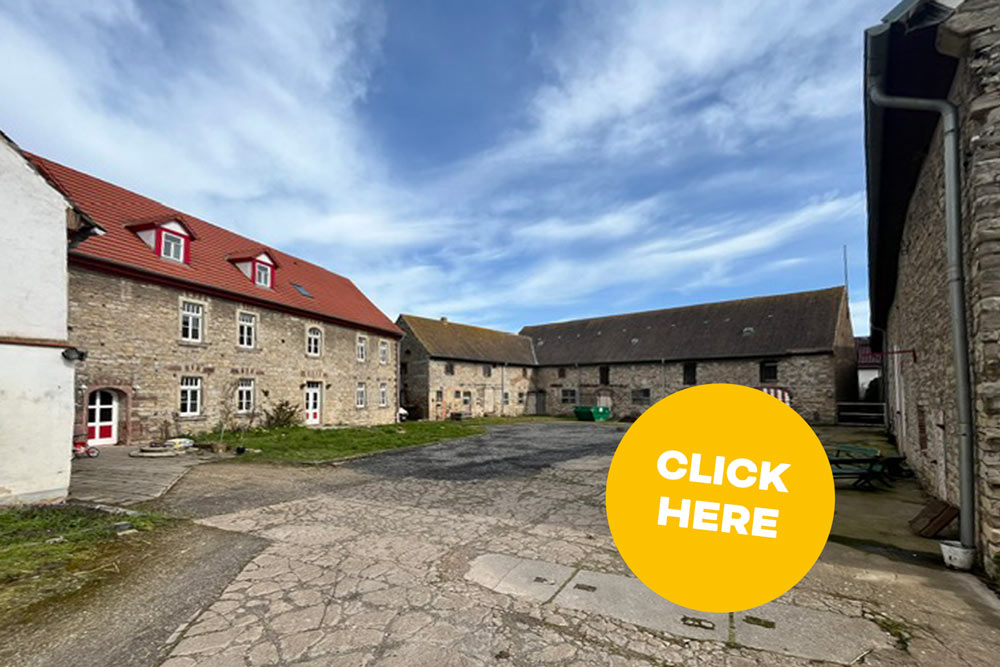
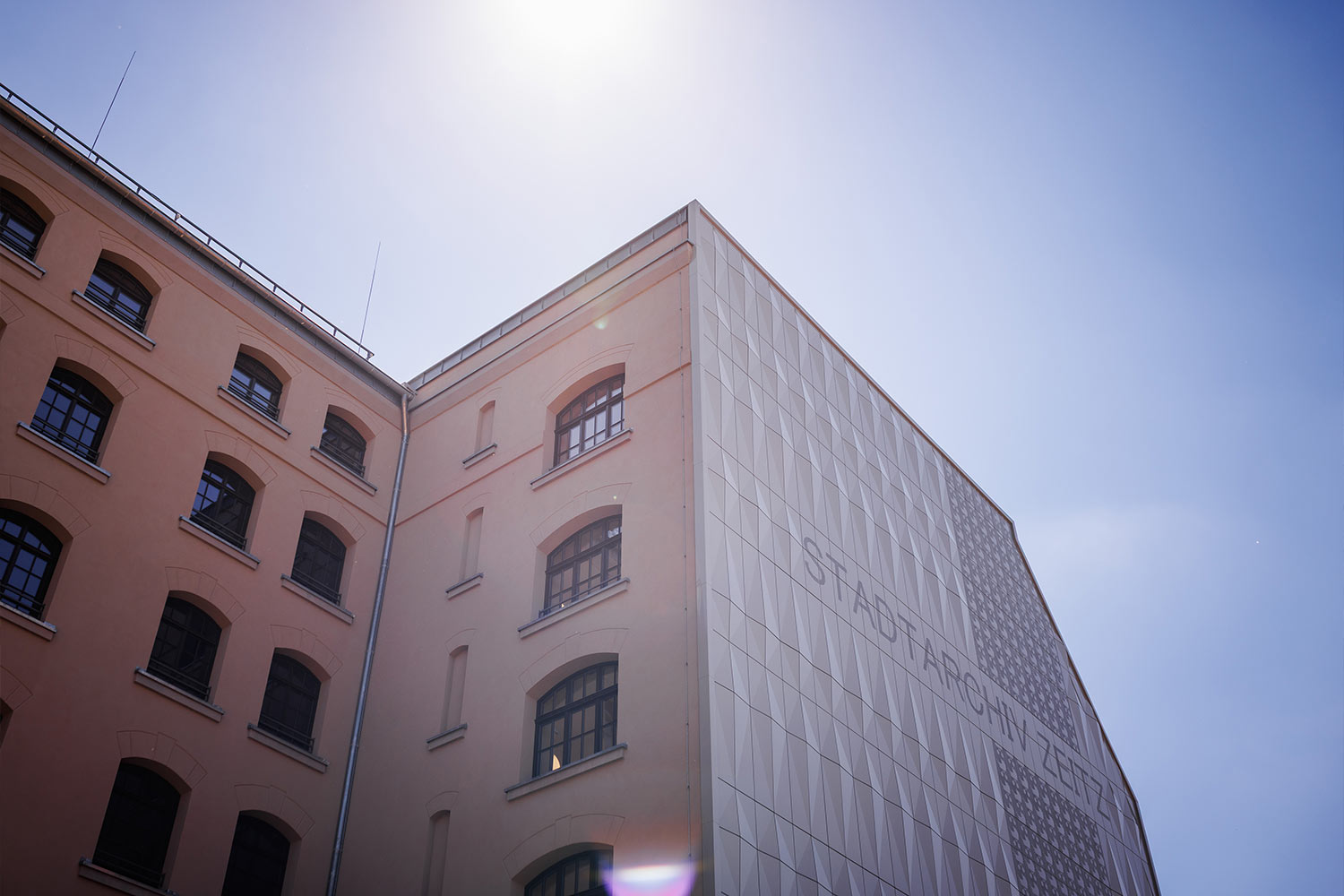
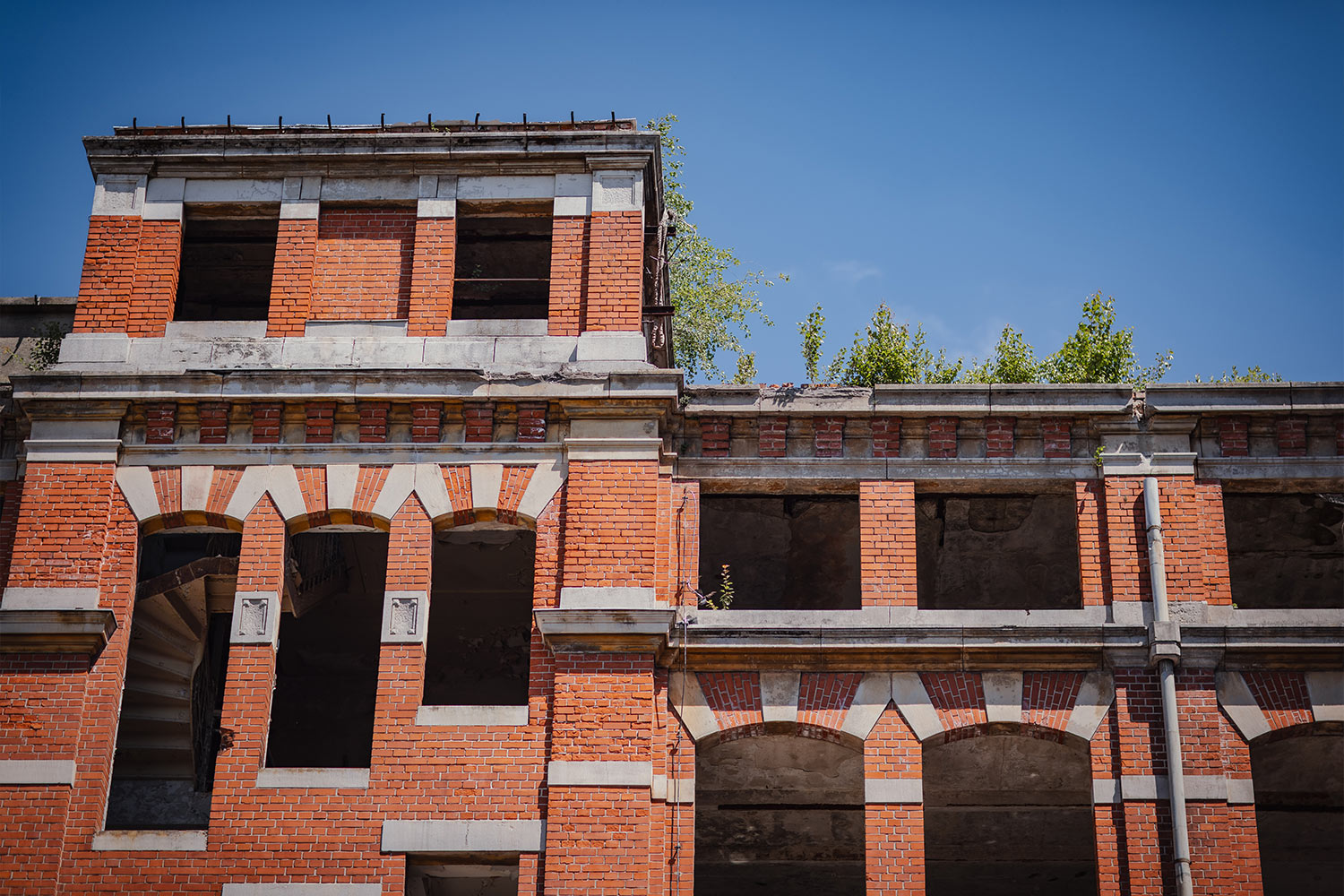
More InformationThe Real World Laboratory ZEKIWA Zeitz (Reallabor ZEKIWA Zeitz, short: RZZ) is being established on the historic site of the former ZEKIWA pram factory in Zeitz, a location that shaped the city’s industrial history for over a century and today stands as a symbol of the challenges of structural transformation. The site is located in Zeitz’s Badstubenvorstadt, an inner-city quarter extending from the ZEKIWA premises through adjacent areas to the Elster floodplain. This neighbourhood forms a central transitional space between the city center and the former industrial site. The two historic ZEKIWA buildings constitute the central spatial and visual landmarks for the surrounding neighbourhood.
Zeitz is situated in the Weißenfels brown coal mining region. For nearly 150 years, the region was dominated by brown coal mining, leading to a radical transformation of the formerly rural environment and shaping both the working and social life of local communities. The industrial structural break of the 1990s and the imminent coal phase-out present the city – like many mining and energy regions in Europe – with profound ecological, social, and cultural challenges. The RZZ addresses this context within an area that still partially hosts active open-pit mining and explores how innovation, participation, and education can support structural transformation in line with the European Green Deal. Against this backdrop, the Real World Laboratory uses the ZEKIWA neighbourhood to experiment with new approaches to sustainable construction, cultural transformation, community living, and forward-looking urban development.
At the RZZ, science, design, municipal administration, civil society, and local initiatives work closely together. This transdisciplinary collaboration creates an experimental field in which ideas are not only developed but also tested on-site with the people of Zeitz. The Real World Laboratory understands building as a social process: It links the architectural revitalization and energy renovation of the industrial monuments with processes that strengthen community, design, and cultural learning. Material, social, cultural, and digital aspects interact. Spaces are restored, use cases are tested, and new forms of collaboration, knowledge exchange, and cultural participation are established.
The Real World Laboratory ZEKIWA Zeitz is led by a multidisciplinary consortium consisting of Anhalt University of Applied Sciences, the Bauhaus Dessau Foundation, Burg Giebichenstein University of Art and Design Halle, Martin Luther University Halle-Wittenberg, Forum Rathenau e. V., and the City of Zeitz. The diversity of participating institutions forms the basis for an open, inclusive, and experimental process. The project is funded by the European Union and the State of Saxony-Anhalt through the Just Transition Fund (JTF) and is guided by the principles of the New European Bauhaus: beautiful, sustainable, together.
The RZZ aims to develop the historic factory site of the former pram production into an open model space where spatial, social, cultural, and ecological future issues can be explored and further developed together with the urban community. The RZZ understands building as an interplay of spatial, social, cultural, and ecological processes. The project’s work is structured around six interrelated thematic priorities:
Building reactivation and spatial transformation
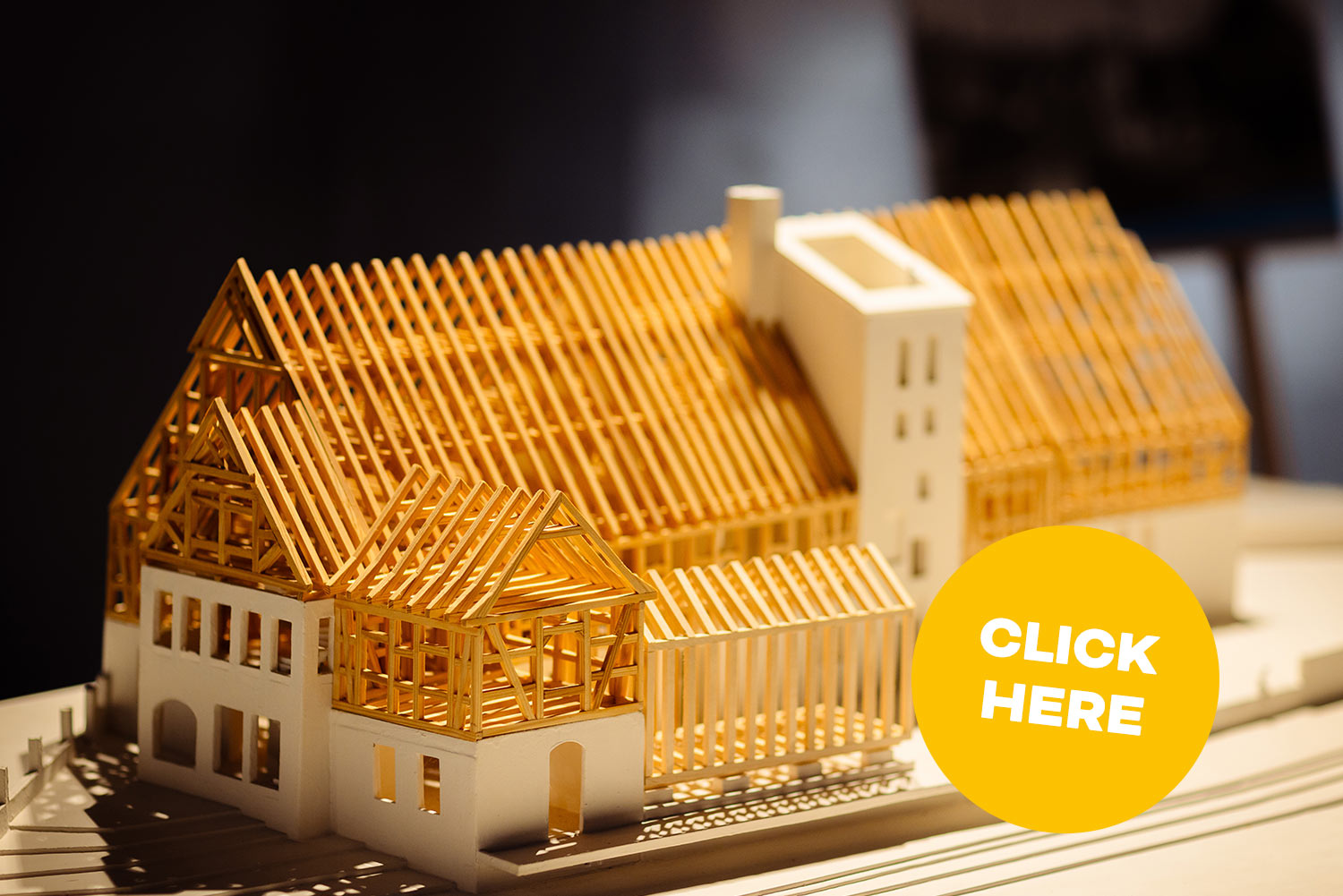
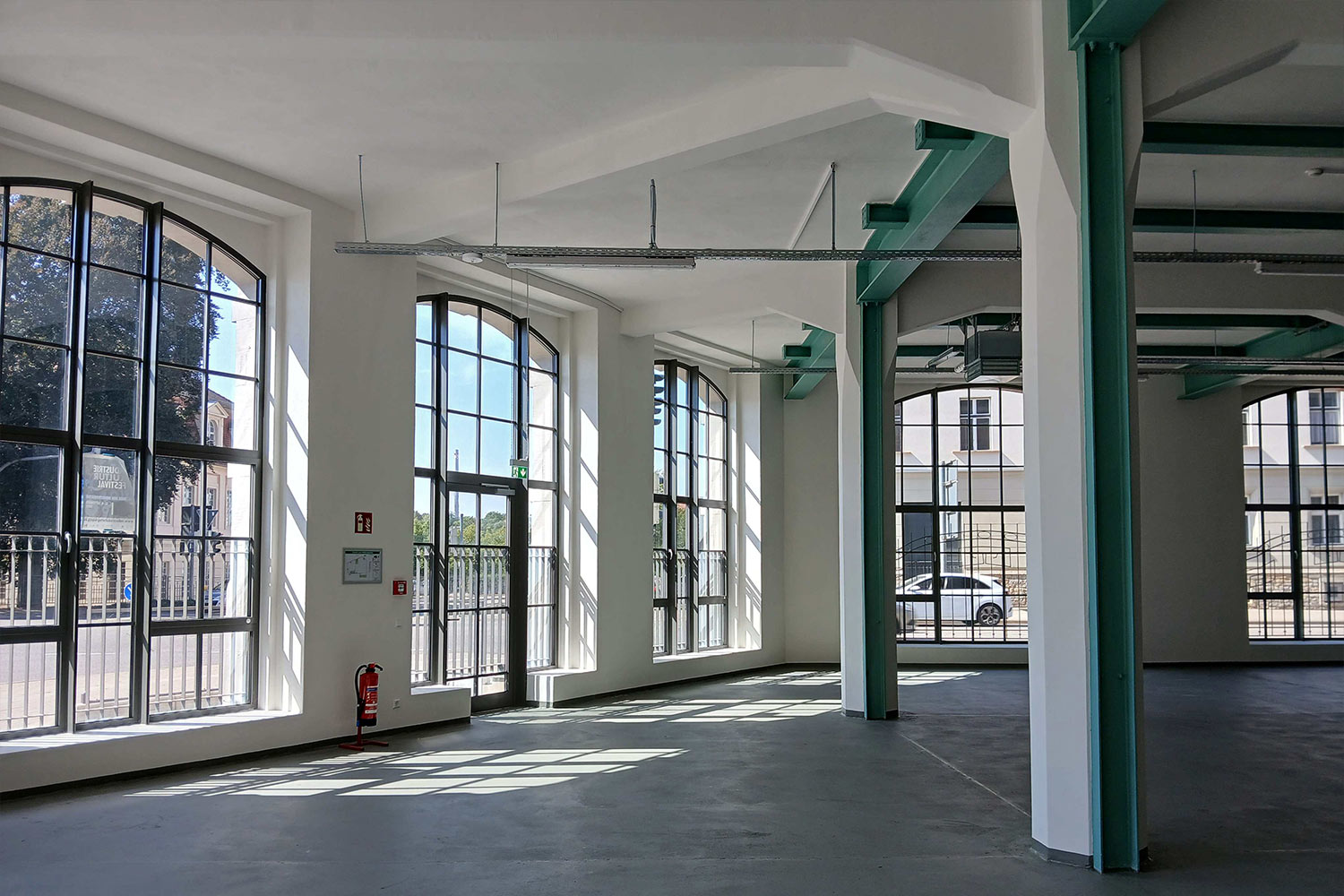
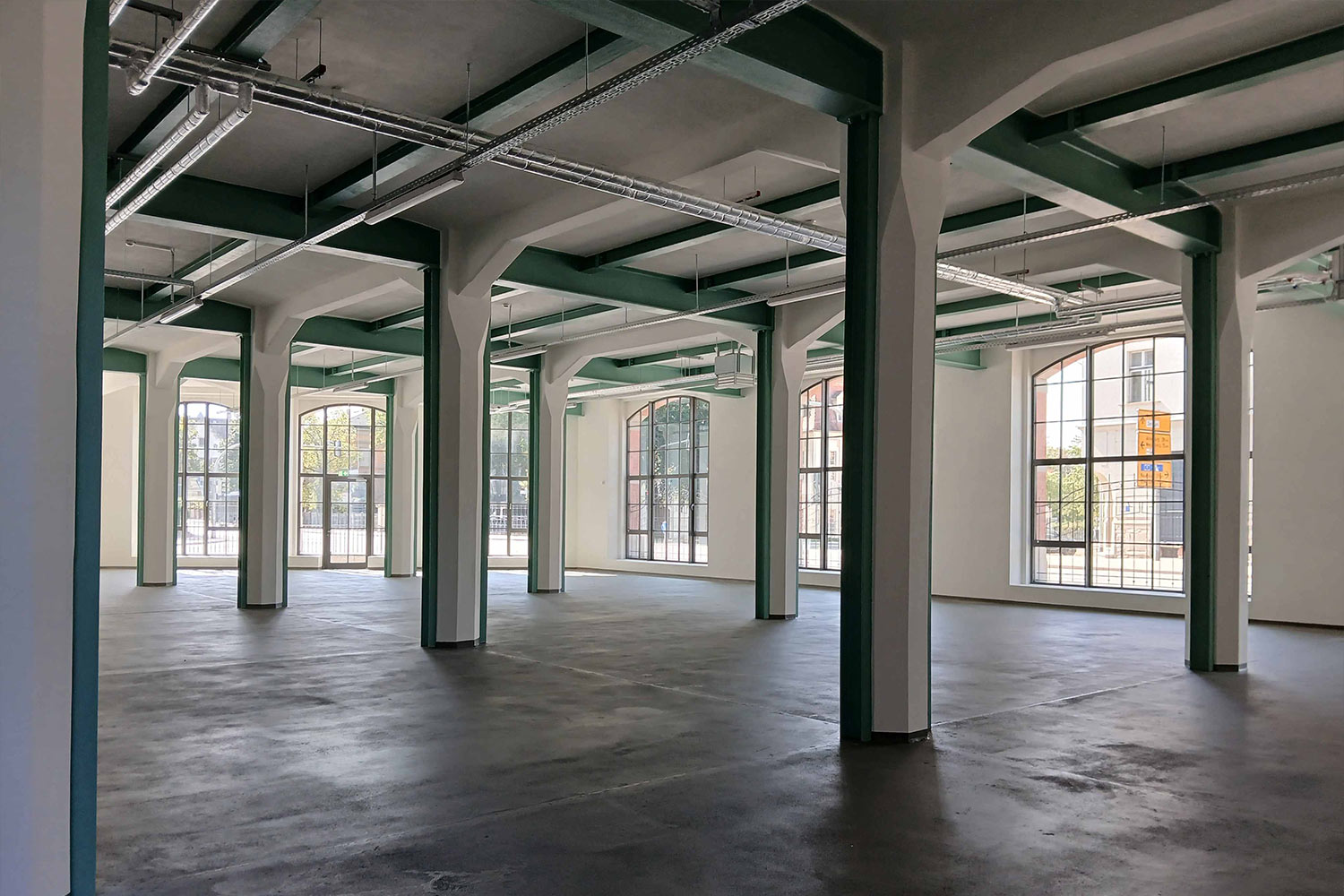
The historic ZEKIWA site is being gradually revitalized and made future-proof. The listed industrial buildings and the former main building are being structurally secured, spatial potentials examined, and technically and financially feasible conversion and expansion scenarios developed. Flexible use concepts, minimally invasive interventions, and sustainable renovation strategies form the basis for creating resilient spaces for mixed-use and evolving traditional models toward open, community-oriented approaches. In parallel, temporary use scenarios for the “Room of Possibilities” (Raum der Möglichkeiten) on the ground floor of the ZEKIWA main building are tested as part of the Real World Laboratory. The open-use “Room of Possibilities” is being gradually developed and accompanied by designs for interior fittings, furniture, and prototypical elements. Its development represents a key component toward a sustainable operational concept for the entire site.
Material innovations, circular economy, and digital tools
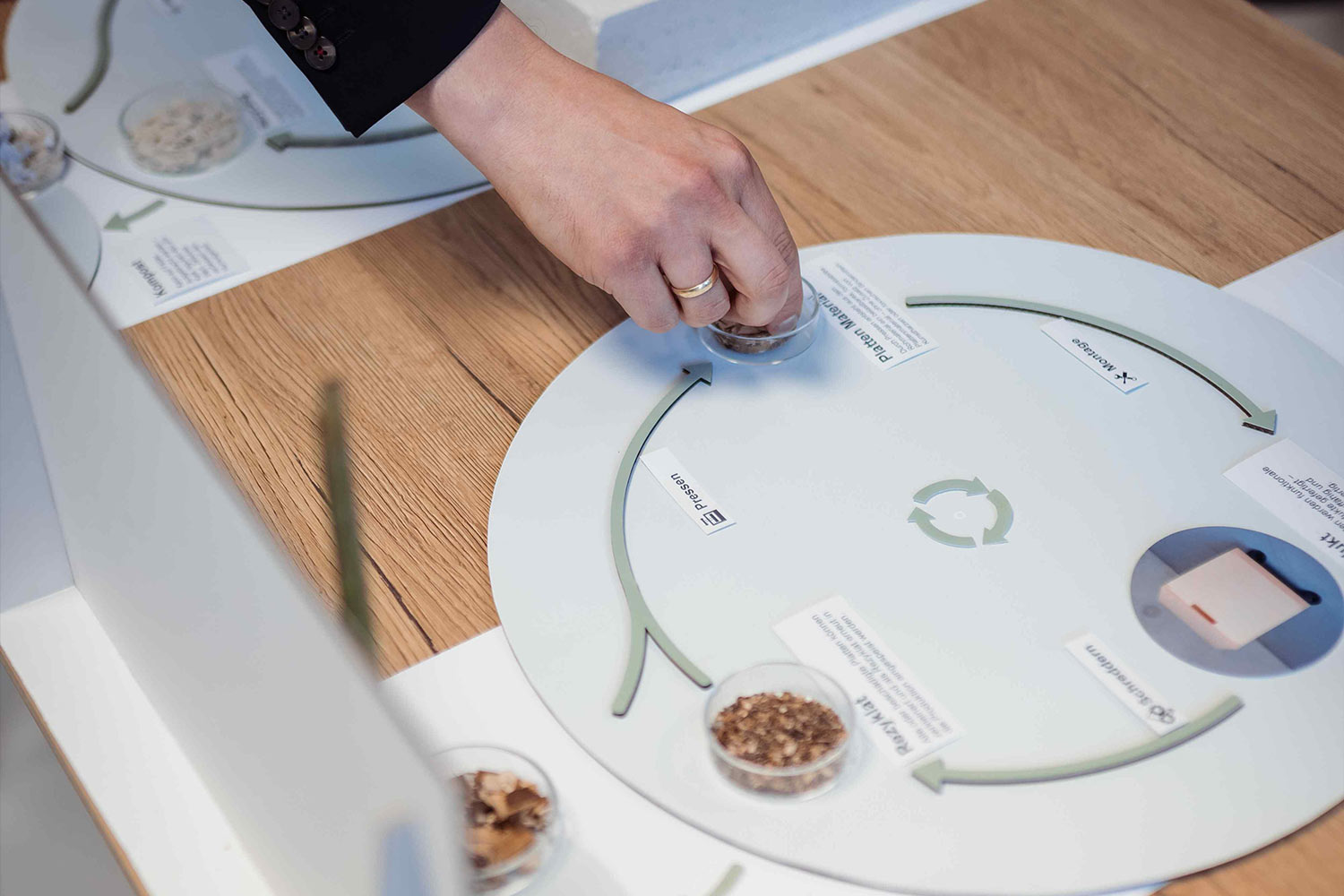
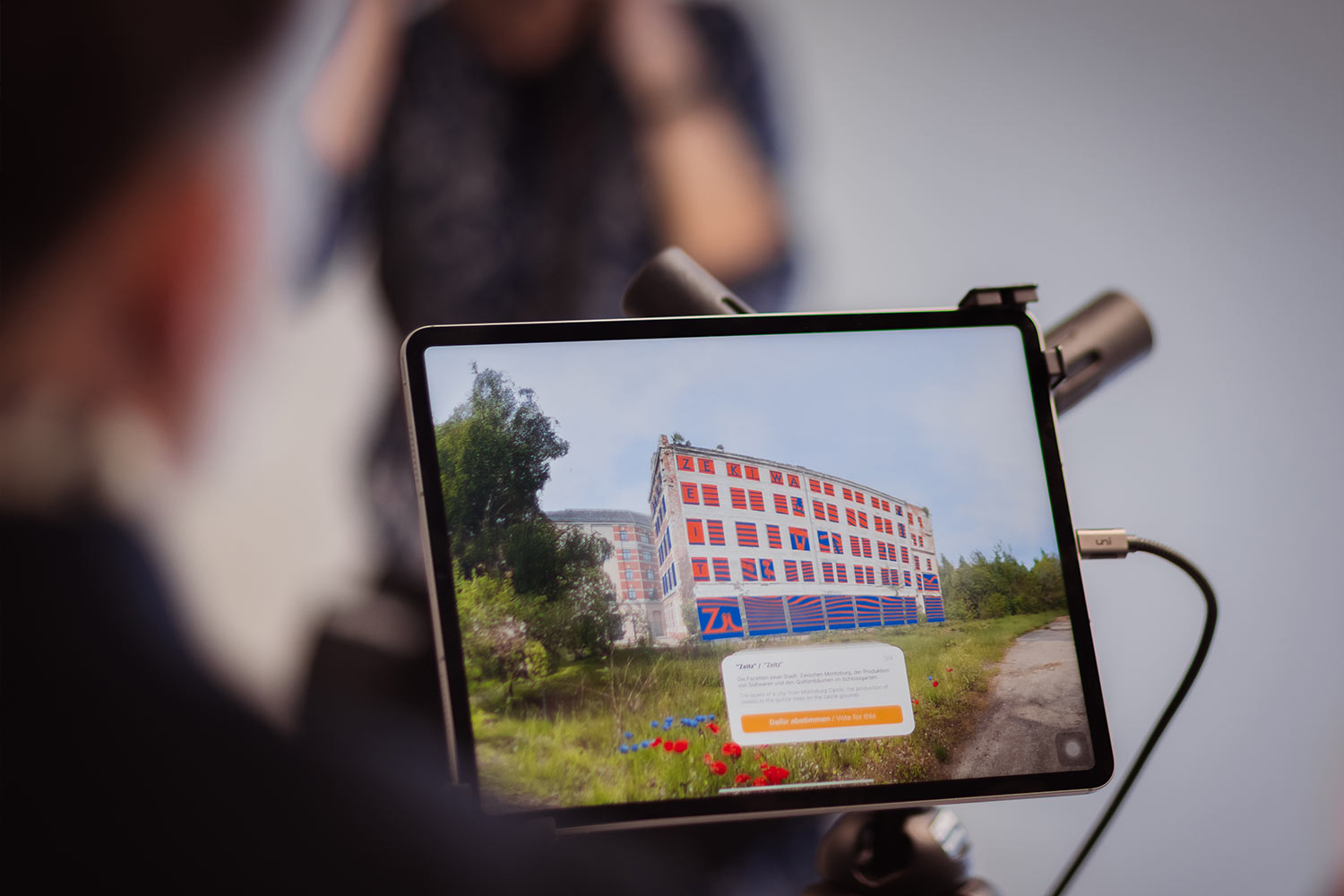
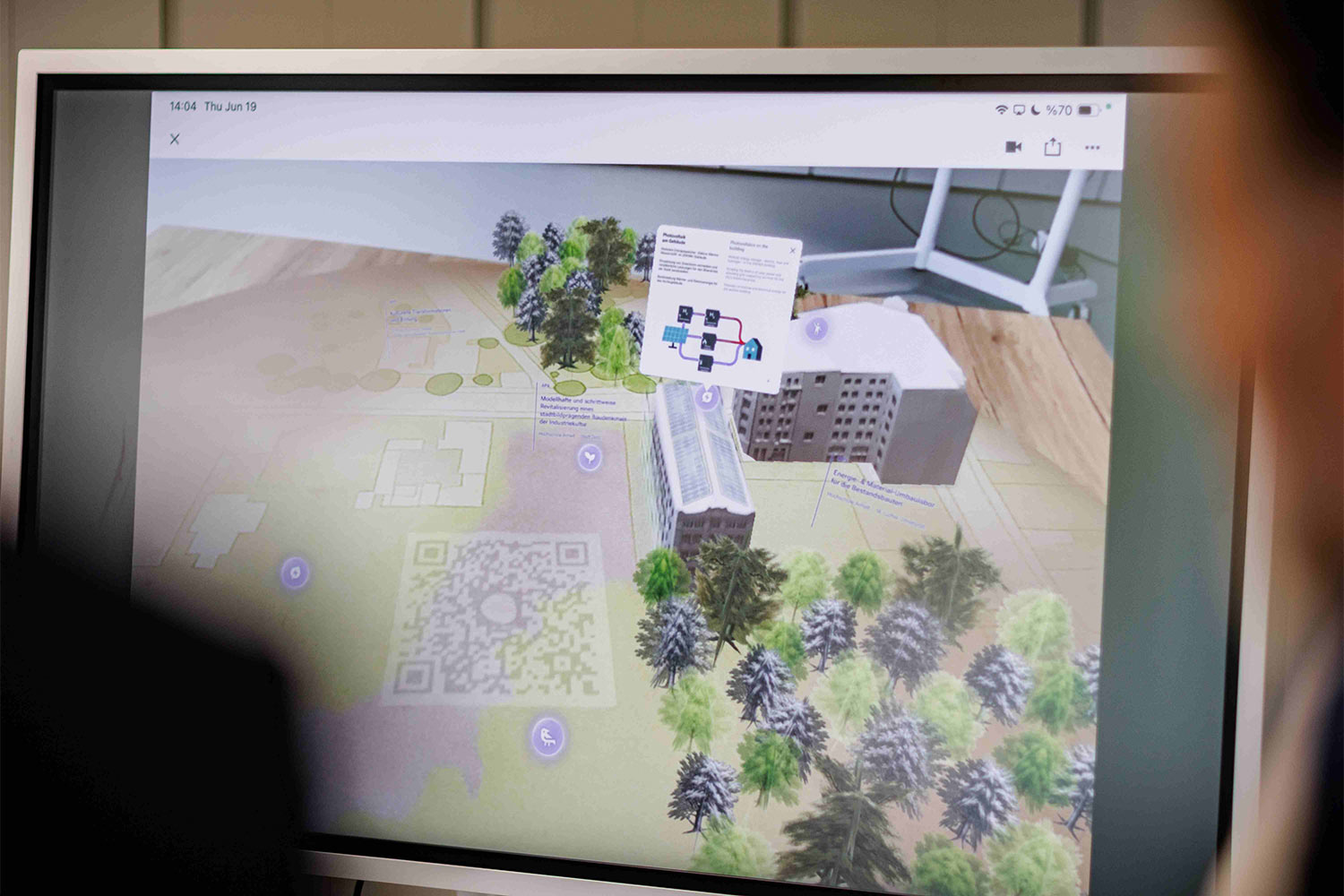
A materials database, a digital twin, and locally oriented material cycles provide the foundation for resource-efficient construction. Digital tools also act as bridges between knowledge, design, and participation. The RZZ researches sustainable materials, circular construction principles, and climate-adaptive façade solutions, developed for example as recycled-material façades, vertical wild gardens, and prototype furniture innovations. Principles of the circular economy, such as reuse, upcycling, recycling, and the use of renewable raw materials, form a central foundation. The RZZ is building a materials database, a digital twin, and digital tools to visualize potential use scenarios, which will be linked in the long term to the Citizens’ App. The goal is resource-efficient construction that combines technical innovation with local value creation and participation.
Participation and Co-Creation
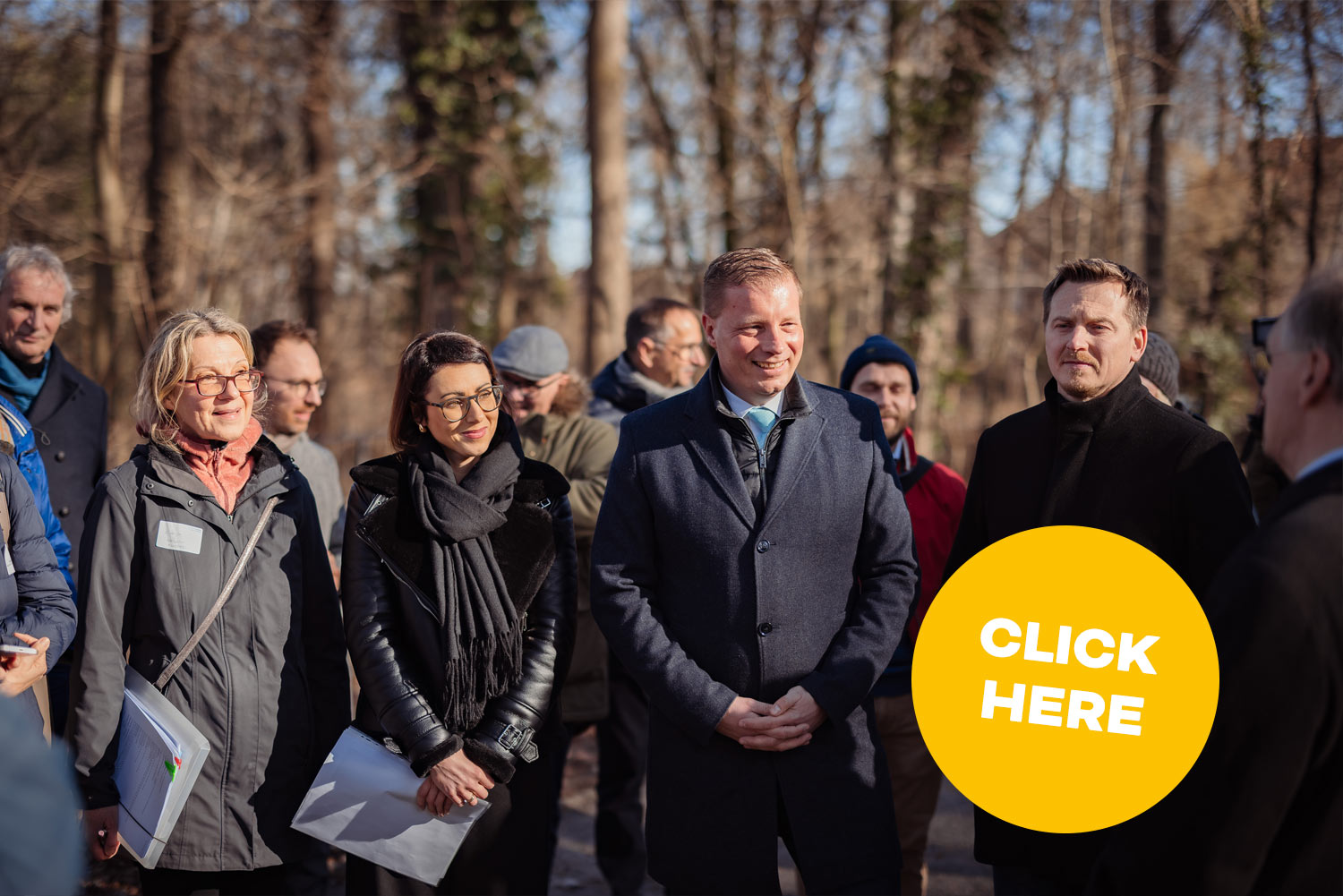
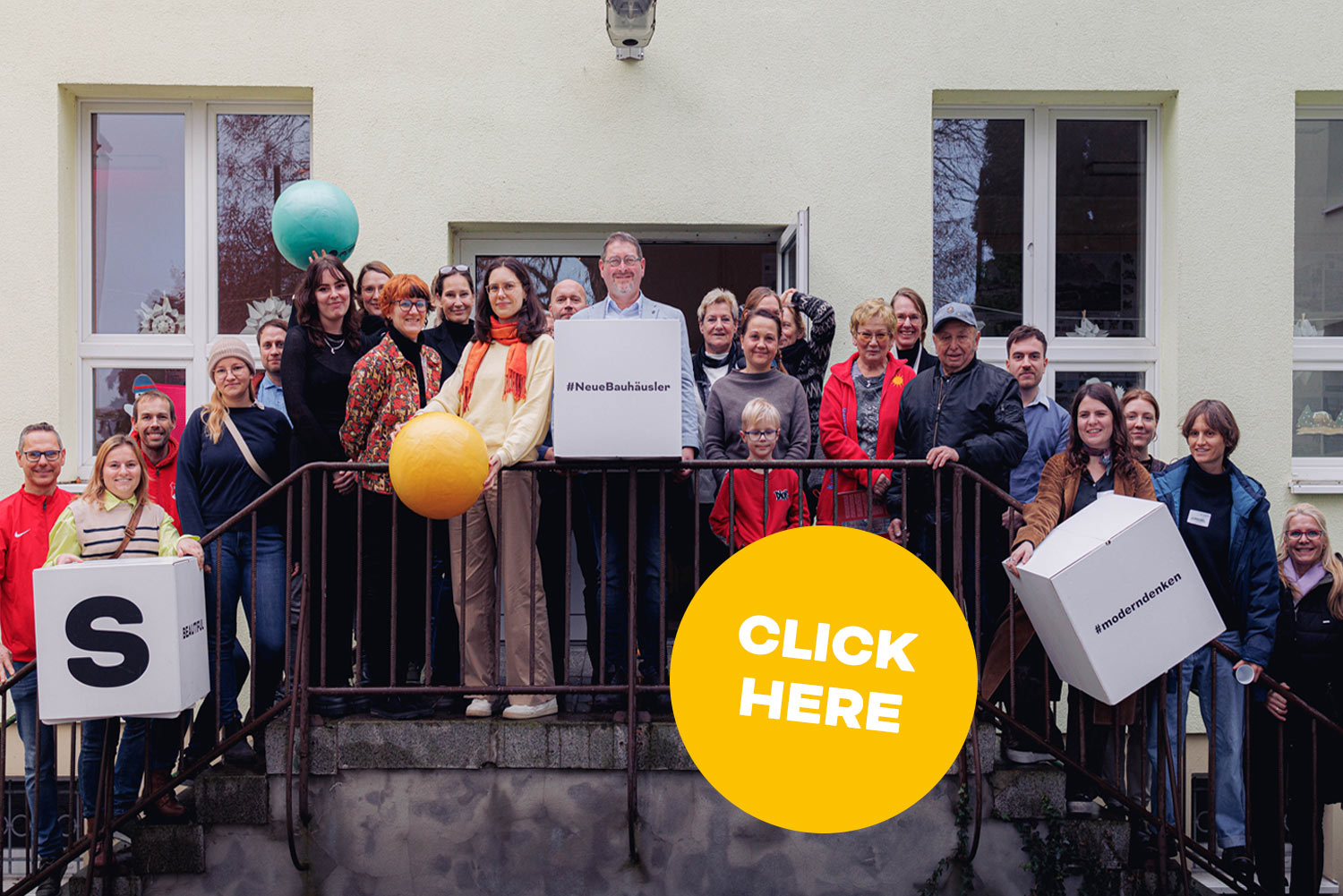
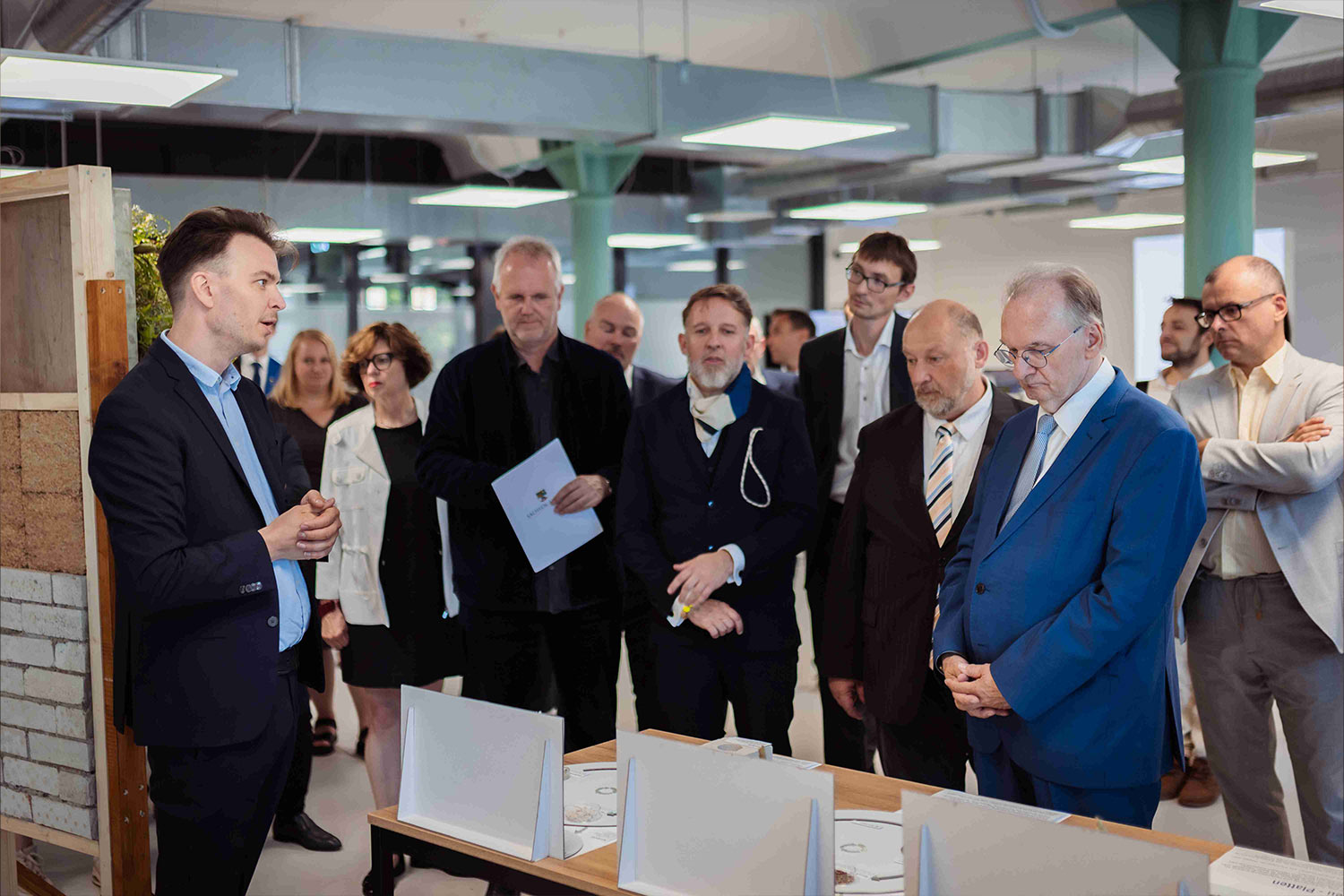
The RZZ emphasizes open and continuous participation by the Zeitz population to shape urban development transparently and collaboratively. A central instrument is the Stakeholder Workshop, where local and regional actors jointly develop ideas, usage perspectives, and spatial scenarios. Workshops, co-creation processes, and the use of digital tools enable participation and convey knowledge about sustainable transformation. A Citizens’ App supports digital participation and allows votes on urban renewal processes and specific subprojects. Participation thus becomes an integral part of the RZZ and strengthens local responsibility and identity. In addition, actor structures are systematically analysed and expanded through learning processes, knowledge exchange, and prototypical interventions in urban space. This involves experimental, flexible interim uses that leave visible traces in the neighbourhood and make material cycles, energy infrastructures, and urban planning options tangible.
Education, culture, and artistic practice
Cultural learning programs, the work of the Bauhaus Agents, and other inclusive, intergenerational formats combine art, research, and everyday practice. The Bauhaus Agents operate in schools, public spaces, and training or workplace contexts, strengthening competencies in environmental awareness and creative self-efficacy, particularly among children, adolescents, and other politically underrepresented groups. At the RZZ, Transfer Residencies provide artistic and design-based approaches to sustainability. Artists and designers live and work in Zeitz for three months, developing new perspectives on on-site processes and presenting their results publicly. Lectures and workshops on sustainability and knowledge transfer are also held. The international Summer Camp will make cultural knowledge transfer visible, promote intergenerational learning, and strengthen future skills in Zeitz and the surrounding region.
Urban ecology, landscape, and neighbourhood development
The ecological potentials of the ZEKIWA site are systematically activated and embedded into a broader urban and landscape context. Biodiversity areas, climate-resilient open spaces, rainwater management, and solar open spaces are linked with energy and material cycle-based concepts. New open-space qualities emerge in the multicoded public space through prototypical partial measures. The insights gained are consolidated for resilient neighbourhood development, laying the foundations for vibrant urban structures and future-proof landscapes through visible interventions and experimental uses.
Research, documentation, and European knowledge transfer
Scientific accompanying research examines the resonance and impact of the project. To process and contextualize research results, a place for archiving structural transformation-related activities within the framework of the New European Bauhaus is being established in the ZEKIWA main building. The data and research results are prepared for the public in the form of exhibitions, lectures, and reports, making the implementation of the NEB’s core principles visible. European networks are being built and strengthened, promoting knowledge exchange and transfer between European coal and energy regions and spatial development practices. The objectives are aesthetically appealing and socially inclusive sustainability strategies and their transferability to other regions. International formats such as the Summer Camp, the Crowd Innovation Challenge, and other exchange formats link local experiences with global knowledge and enable reciprocal learning.
You are currently viewing a placeholder content from YouTube. To access the actual content, click the button below. Please note that doing so will share data with third-party providers.
More InformationYou are currently viewing a placeholder content from YouTube. To access the actual content, click the button below. Please note that doing so will share data with third-party providers.
More InformationYou are currently viewing a placeholder content from YouTube. To access the actual content, click the button below. Please note that doing so will share data with third-party providers.
More InformationYou are currently viewing a placeholder content from Vimeo. To access the actual content, click the button below. Please note that doing so will share data with third-party providers.
More InformationYou are currently viewing a placeholder content from YouTube. To access the actual content, click the button below. Please note that doing so will share data with third-party providers.
More InformationYou need to load content from reCAPTCHA to submit the form. Please note that doing so will share data with third-party providers.
More InformationYou are currently viewing a placeholder content from Google Maps. To access the actual content, click the button below. Please note that doing so will share data with third-party providers.
More InformationYou are currently viewing a placeholder content from Google Maps. To access the actual content, click the button below. Please note that doing so will share data with third-party providers.
More InformationYou are currently viewing a placeholder content from Vimeo. To access the actual content, click the button below. Please note that doing so will share data with third-party providers.
More InformationYou are currently viewing a placeholder content from YouTube. To access the actual content, click the button below. Please note that doing so will share data with third-party providers.
More InformationYou are currently viewing a placeholder content from Instagram. To access the actual content, click the button below. Please note that doing so will share data with third-party providers.
More Information