“Embodied Energy as a Resource for Industrially Shaped Regions”
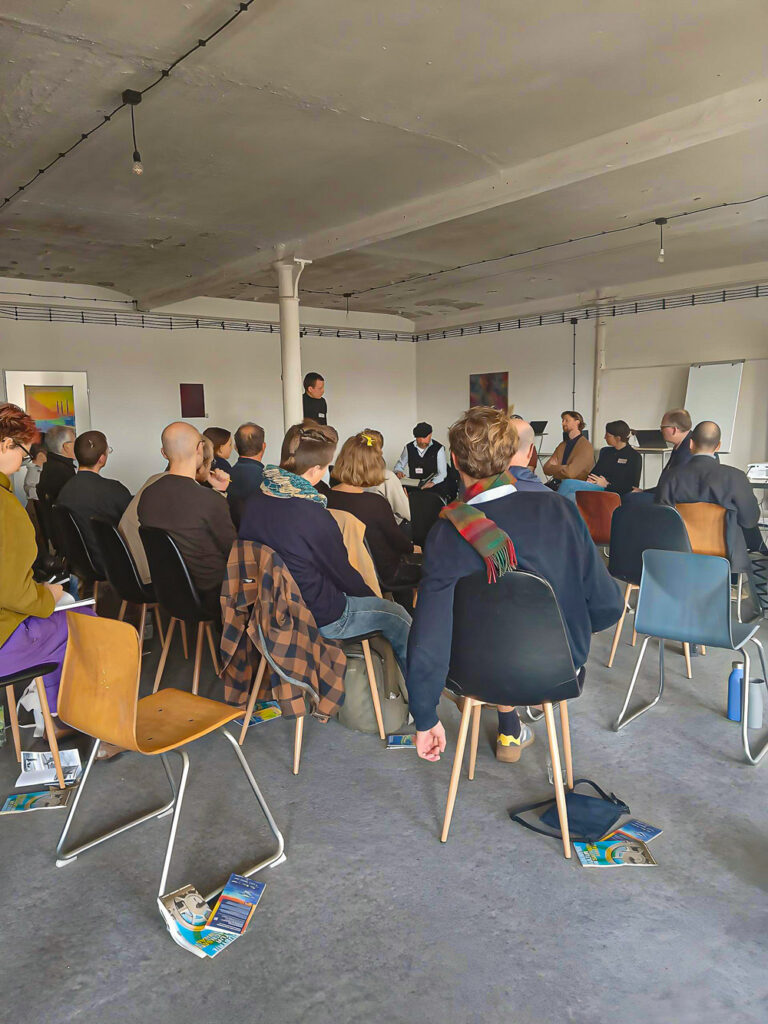
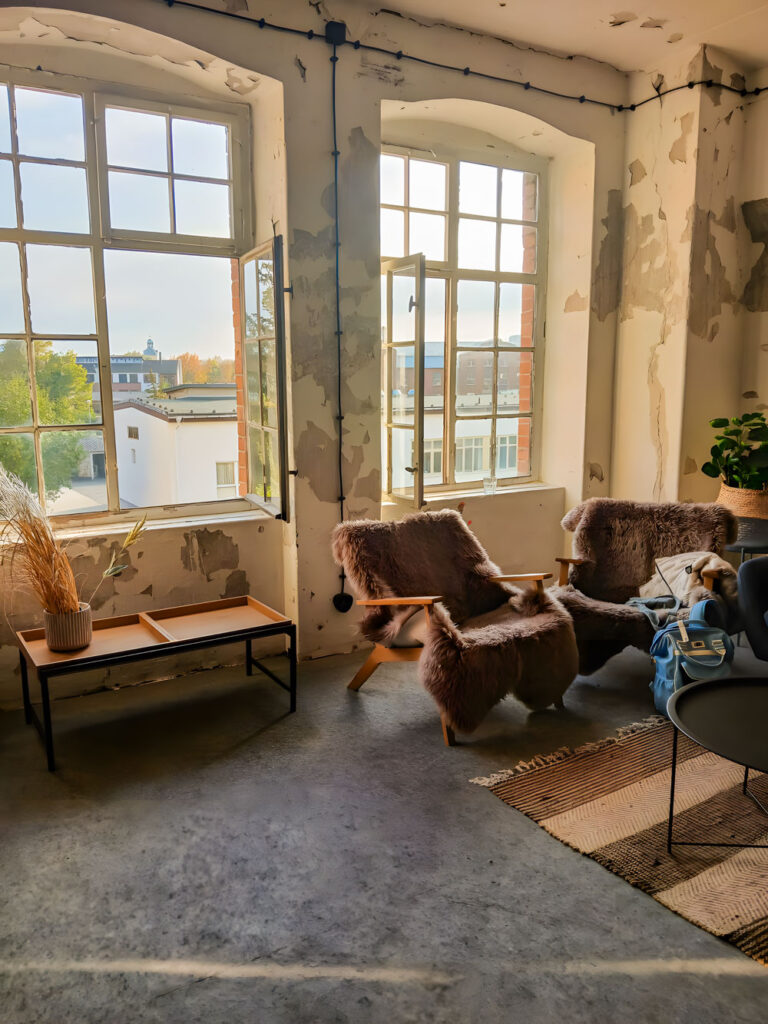
Embodied energy refers to the energy required to produce a good—and it is embedded in everything, including building materials, structures, and infrastructure. In short, a great deal of energy has already been consumed in what has been built. The influence and role of embodied energy in promoting resource-efficient and climate-conscious development in industrially shaped regions was the focus of a symposium held on October 24–25, 2024, organized by the Institute for Embodied Energy e.V. The choice of venue was fitting: Zeitz and its Alte Nudelfabrik—a former industrial site converted into a creative hub—served as a prime example of the very topic at the heart of the symposium. Embodied energy is gaining increasing attention “in light of the construction sector’s importance for achieving climate protection goals.”
The diverse program included lectures and panel discussions, divided into three thematic sessions. The industrial heritage was examined both as a resource with high energetic potential and as a cultural asset in communities shaped by industry. Speakers such as Martin Langhof from the Industriebrachenumgestaltung e. V. (ibug) presented cultural and economic impulses generated by art festivals that revitalize industrial wastelands in small East German towns. Thomas Fischer from the Network for Industrial Culture Saxony-Anhalt (NIK) emphasized the cultural and urban significance of preserved and repurposed industrial buildings.
The symposium also explored sustainable construction practices and the preservation of embodied energy through the maintenance and reuse of existing structures, illustrated with practical examples such as the Leipzig Glass Factory and the Neufert Building. Strategies and experiences for strengthening regional development in former lignite mining areas were shared, and in addition to insights into specific projects, questions and knowledge about funding opportunities were also exchanged.
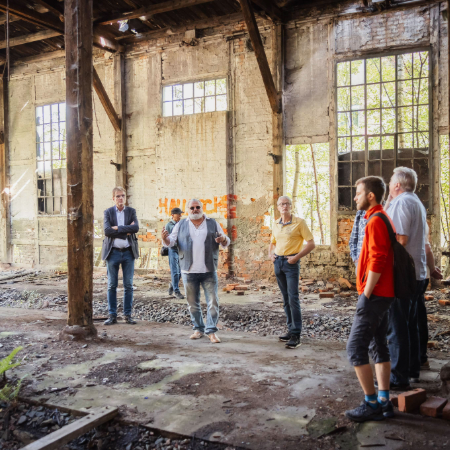
Local perspectives on the host city Zeitz were provided by representatives of the city, who offered compelling insights into exemplary local projects. Among them were the “Nudel” (Alte Nudelfabrik), the cable railway, and the former ZEKIWA site, which were included as part of the symposium’s excursions. The reactivation of the ZEKIWA administrative building is a “NEB living lab” and part of the Saxony-Anhalt state initiative #NeueBauhäusler.
Structural change, demographic shifts, and the climate crisis confront us—especially in industrially shaped regions—with profound questions about the future. The symposium made it clear that viable concepts and solutions can only succeed when they are developed collaboratively within broader structures and networks. This is NEB in its purest form.