How can the New European Bauhaus (NEB) carry the legacy of the historic Bauhaus into the present and support cities and regions undergoing structural transformation with concrete and transferable solutions? What role do small municipalities play in this process, and how can the NEB_CRITERIA of aesthetics, sustainability, and inclusion be translated into European funding structures in the long term?
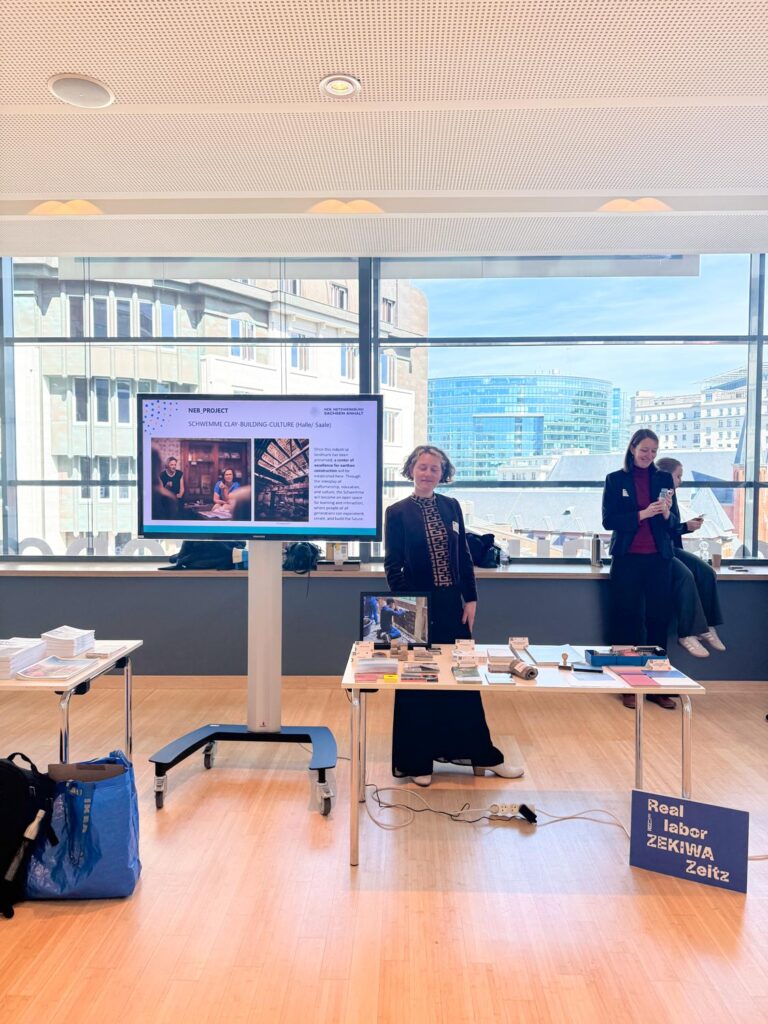
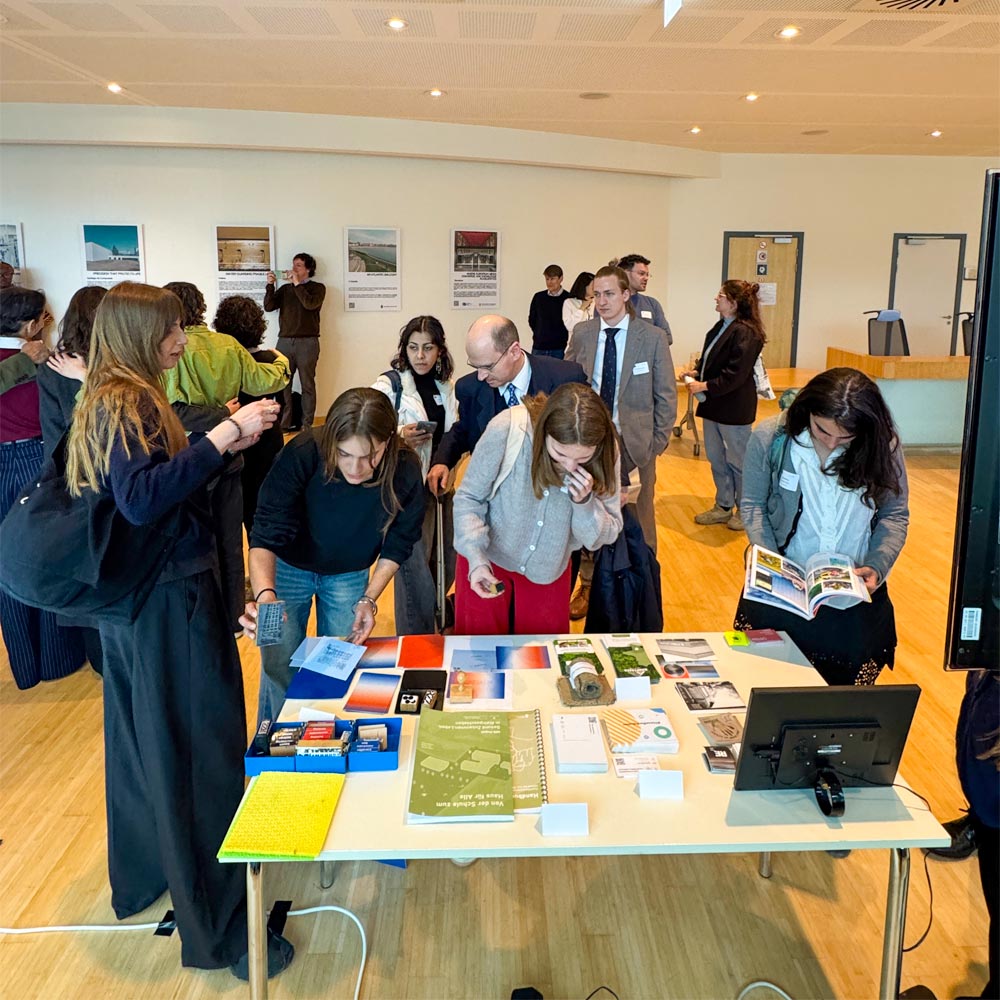
These questions were at the heart of the high-level conference “100 Years of Bauhaus Dessau and the New European Bauhaus: Local Perspectives on Transformation in Europe” held on 15 April 2026 in Brussels. The conference was organized by the European Committee of the Regions together with the European Commission’s Joint Research Centre, the State Chancellery of Saxony-Anhalt, and the Bauhaus Dessau Foundation. The NEB_NETWORKOFFICE Saxony-Anhalt was present on site and demonstrated how place-based projects are already being implemented today.
Local and regional decision-makers, Members of the European Parliament, representatives of the European Commission, experts, and stakeholders from across Europe came together at the conference, united by the shared understanding of how the Bauhaus legacy inspires the EU initiative of the New European Bauhaus (NEB) and promotes aesthetic, inclusive, and sustainable living environments for people today.
In her keynote, Dr. Barbara Steiner, Director and Chair of the Board of the Bauhaus Dessau Foundation, addressed this perspective and —beyond the historical context— specifically connected it to current challenges as well as projects already being implemented in Saxony-Anhalt in line with the NEB_CRITERIA, thereby underlining the relevance and future viability of transformative thinking.
Saxony-Anhalt’s #NeueBauhäusler in Structural Transformation
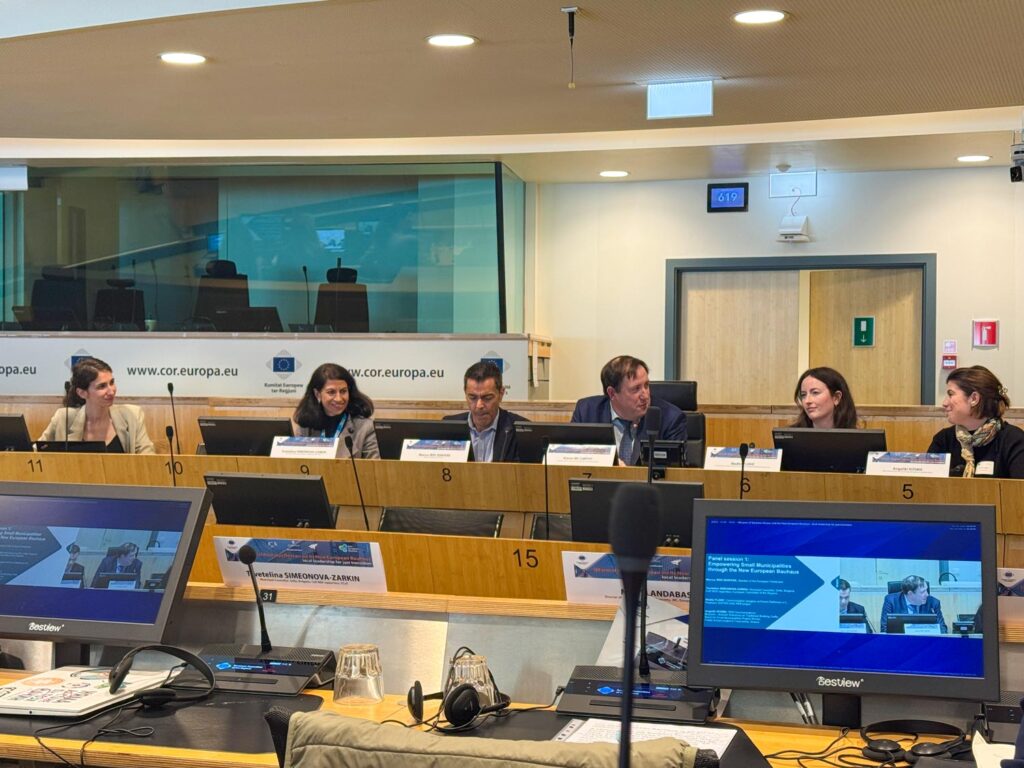
Dr. Jürgen Ude, State Secretary for Structural Change and Large Industrial Projects, participated in one of the two panel discussions. He emphasized the special role of Saxony-Anhalt in implementing the dedicated state initiative “Saxony-Anhalt – Together for a New European Bauhaus (NEB) #NeueBauhäusler” in the context of former lignite mining regions.
With the funding guideline based on the Just Transition Fund (JTF), the state created important framework conditions at an early stage:
“The New European Bauhaus creates spaces through the real-world laboratories where skilled professionals, designers, and citizens jointly develop solutions for their home regions. They face change and shape it together. Structural change is not only an industrial transformation process; it also means social transformation. Regional identity is our driving force.”
At the same time, the joint discussion made it clear that progress must not stop at pilot projects. Long-term planning certainty and stronger integration into future spatial development strategies are needed.
Reallabor ZEKIWA Zeitz as a Practical Example
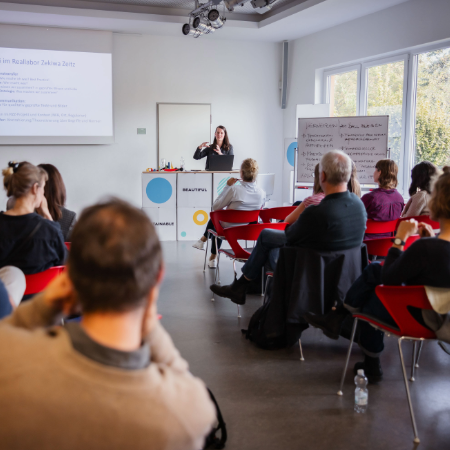
In addition to a keynote speech and panel discussions, the conference also included contributions from pilot projects. Madita Flohe from Forum Rathenau e. V. presented the “Reallabor ZEKIWA Zeitz (RZZ)” as an example from Saxony-Anhalt of how structural change can be shaped collaboratively as a social and cultural process.
Three central aspects were highlighted: material innovation as part of regional transformation, co-creation as a foundation for planning and building, and Bauhaus workshops as open learning spaces.
In this way, new forms of cooperation are emerging at former industrial sites between public administration, civil society, educational institutions, and planning practice.
Exchange Between Regions as Part of the NEB_APPROACHES
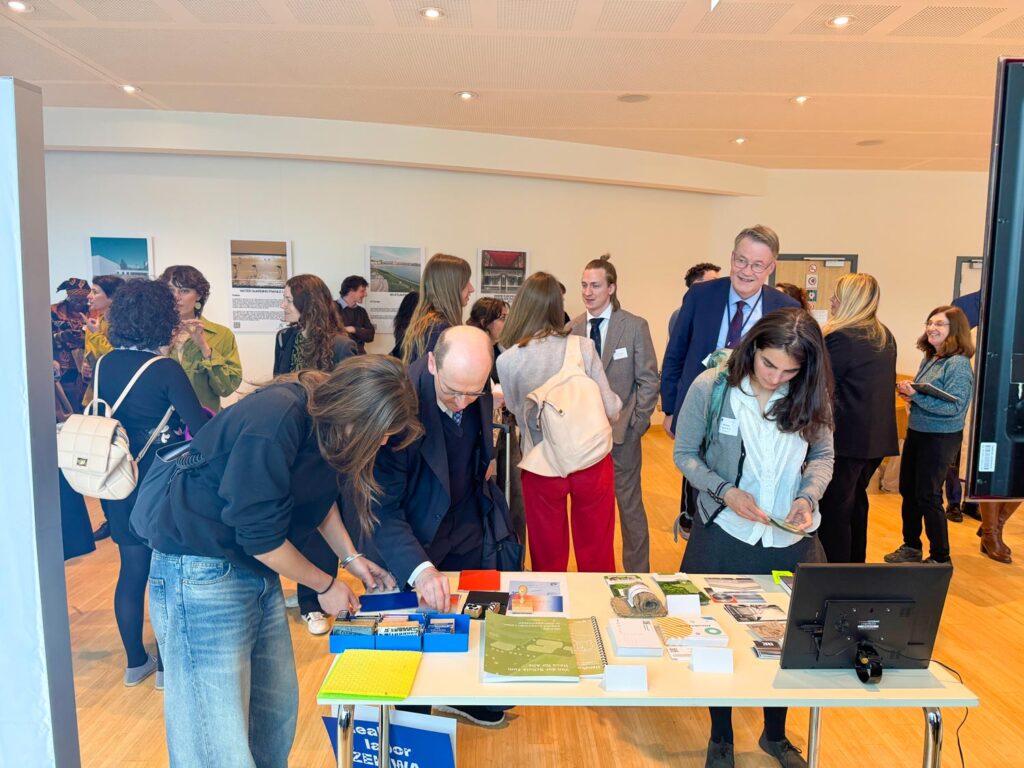
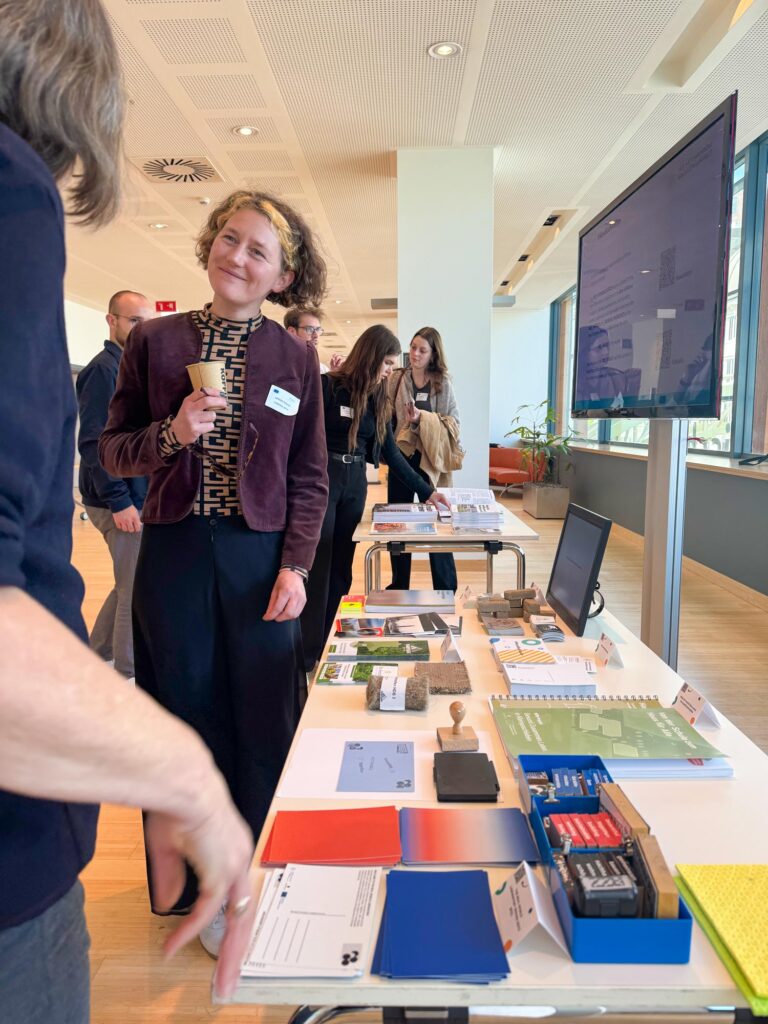
The conference clearly demonstrated how central exchange between regions is. Conversations at the NEB_NETWORK OFFICE stand, the contributions from Saxony-Anhalt within the programme, and direct dialogue with European partners revealed strong interest in concrete experiences from transformation regions.
At the stand of the Saxony-Anhalt state initiative, the NEB became tangible and visible: clay building blocks and insulation fibres made from hemp symbolized how regional materials are already becoming part of sustainable construction practices that integrate the NEB_VALUES.
Exchange between regions thus becomes an important component of the NEB_APPROACHES itself.
Small Municipalities as Drivers of European Transformation
The contributions at the conference made clear that smaller cities and rural regions play a key role in addressing the clean, digital, and social transition. It is here that concrete projects emerge that directly shape people’s everyday living environments.
At the same time, the necessary conditions for this were clearly identified: simplified access to funding, technical support for applicants at the local level, stronger coordination between funding programmes, and greater visibility for local projects.
NEB as a Common Language for Transformation
The New European Bauhaus has long become more than a funding programme: it is developing into a shared European language for transformation.
Contributions from Slovenia, Spain, and other regions highlighted how the NEB is being used as a guiding framework for structural transformation processes—especially in regions with an industrial past, where questions of local identity, building culture, and participation come together. Anja Serc, Director of the Zasavje Regional Development Agency (Slovenia), summarized this succinctly during the panel discussion:
“NEB has created a new language for a just transition.”
Impressions