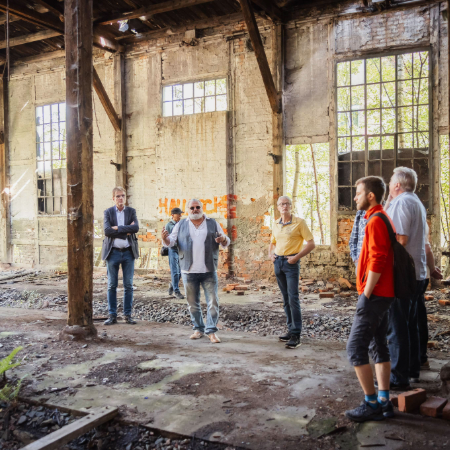
At a community workshop on April 17th 2026, the partners in the NEB_PROJECT “Citizens’ and Energy Park” – Lutherstadt Eisleben and Anhalt University of Applied Sciences – explored the City Park together with local residents. The City Park, which is showing its age but is protected as a garden monument, is to be carefully upgraded and partly redesigned, thereby becoming an attractive, liveable park for everyone. That is why the public is being called upon to get involved. Initial student designs formed the basis for a survey in December 2025. Now, the people of Eisleben have been invited to get actively involved. At four stations in the park, people got together to chat in glorious spring weather, went on a discovery tour, did some gardening or explored different perspectives using a model of the city park. Around 50 enthusiastic participants turned up and agreed at the end: their view of the park has already changed!
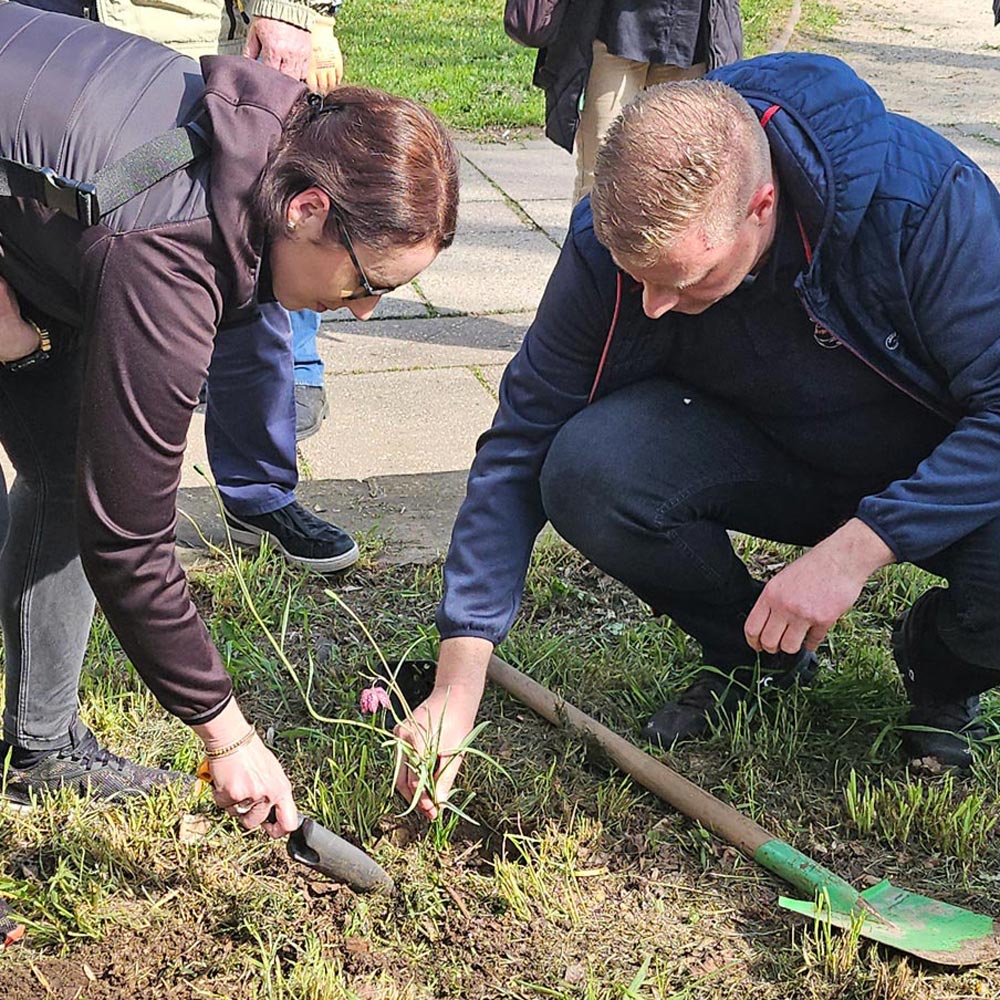
TOGETHER, everything can be so simple. Armed with small spades and a great deal of enthusiasm, around 200 delicate fritillaries and some 200 wild gladiolus bulbs found a new home at the foot of the Scherbelberg on this spring-like Friday. Whilst the fritillary now subtly and discreetly adds its pale pink hue to the landscape, the vibrant purple gladiolus may well display its splendour as early as this summer. This is the vision of Professor of Landscape Architecture Nicole Uhrig and her students on the International Master’s programme at Anhalt University of Applied Sciences. Together with local residents, they were delighted with the successful initiative: “The day felt like a festival!”
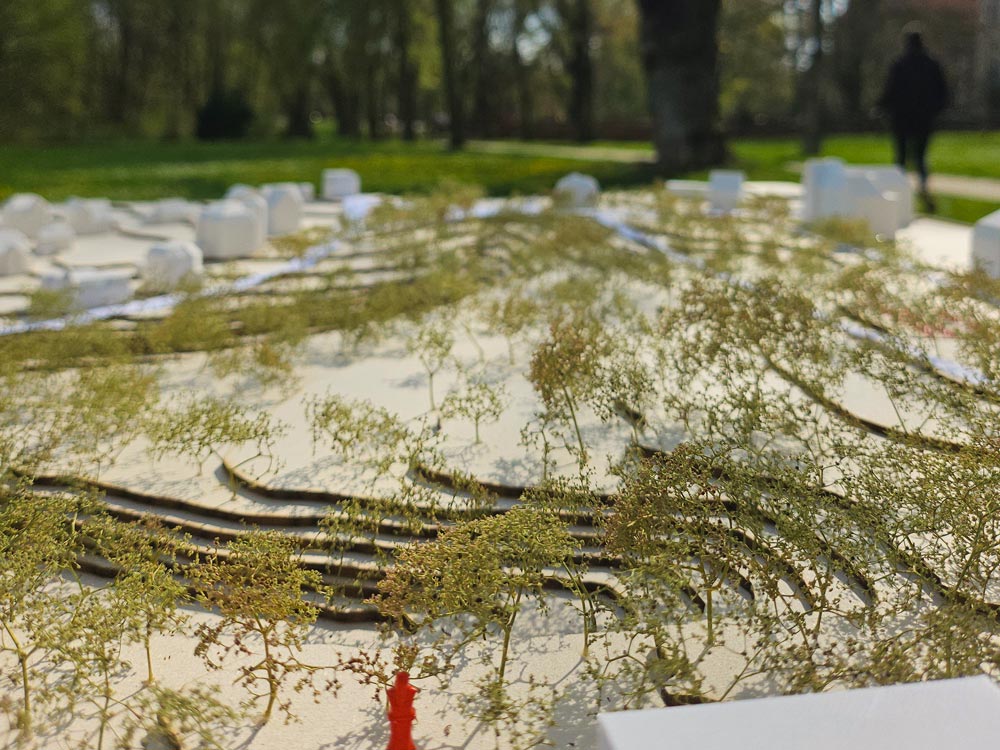
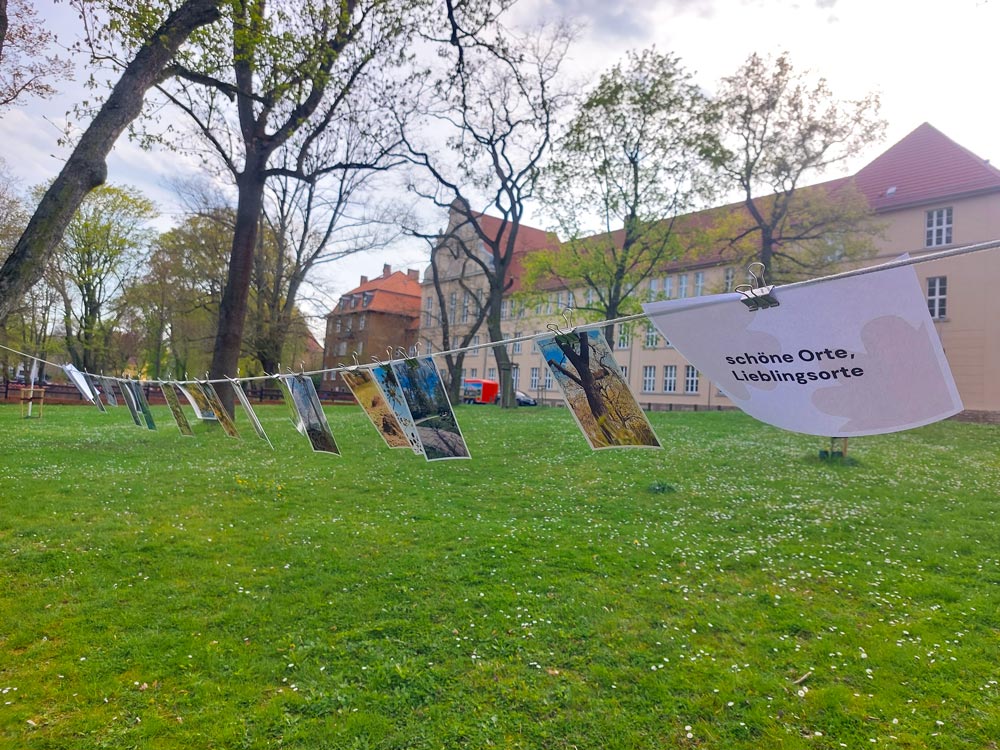
Yet the planting activity at Station 2 was just one small part of the opportunities to get actively involved. Station 1 encouraged visitors to engage more deeply in practical thinking across three categories covering five topics. This was somewhat more challenging. Five topics were put forward for discussion in relation to the ‘planning background’ – including binding laws, guidelines, objectives and recommendations – the ‘citizens’ perspectives’ – featuring extracts from the available survey results – and the ‘design ideas’ from the students’ drafts: heritage conservation, rainwater management, biodiversity, accessibility and quality of use. Here, personal opinions on current perceptions, visions and wishes, as well as design ideas, were sought. Station 3 sent participants through the park with their mobile phone cameras in search of their favourite spots and the most unpleasant places. Using the photos – scanned via QR code, printed out and hung on washing lines – everyone could discover and discuss others’ perspectives. A scale model of the park was the star attraction at Station 4. Existing landmarks, such as the ‘Gate of Remembrance’, were prominently featured here. This allowed participants to examine sightlines from various perspectives and see how planned new elements, such as the proposed stage, would fit in. For many, it was an exciting experience.
The summary: a hands-on experience of the New European Bauhaus (NEB) and a day spent reflecting TOGETHER on the new BEAUTY of the city park, whilst the first plants were already being planted in a SUSTAINABLE manner.
The results of the activity workshop will now be used to prepare for the handover of the project to the landscape architecture firm to be commissioned.