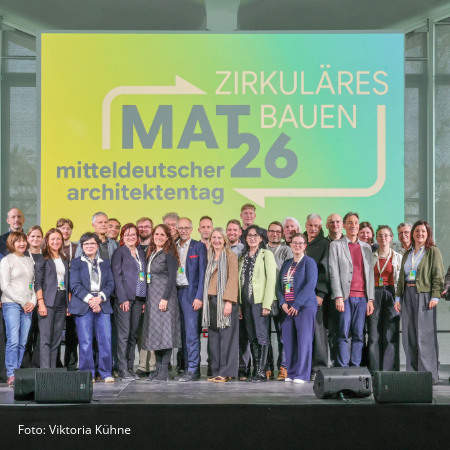
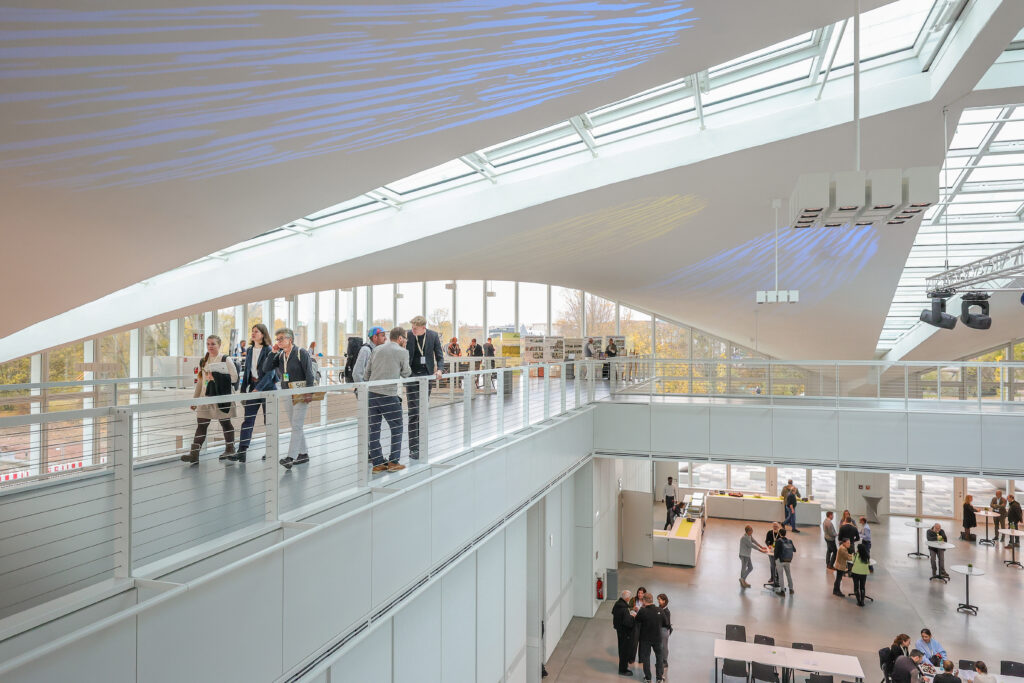
On November 6, 2026, Magdeburg served as the meeting place for architects from Saxony, Saxony-Anhalt, and Thuringia. Approximately 250 participants gathered at the Hyparschale—which had reopened in 2024 after a long period of vacancy and an award-winning renovation—for the 14th Central German Architects’ Day. Under the leadership of the Saxony-Anhalt Chamber of Architects, the three state chambers of architects had dedicated the conference to the highly topical issue of circular construction. In keynote presentations, moderated discussions, and eleven parallel forums, participants explored the opportunities offered by climate-neutral planning and construction, guided by the question: How can demolition and new construction be replaced by a culture of continued use and reuse?
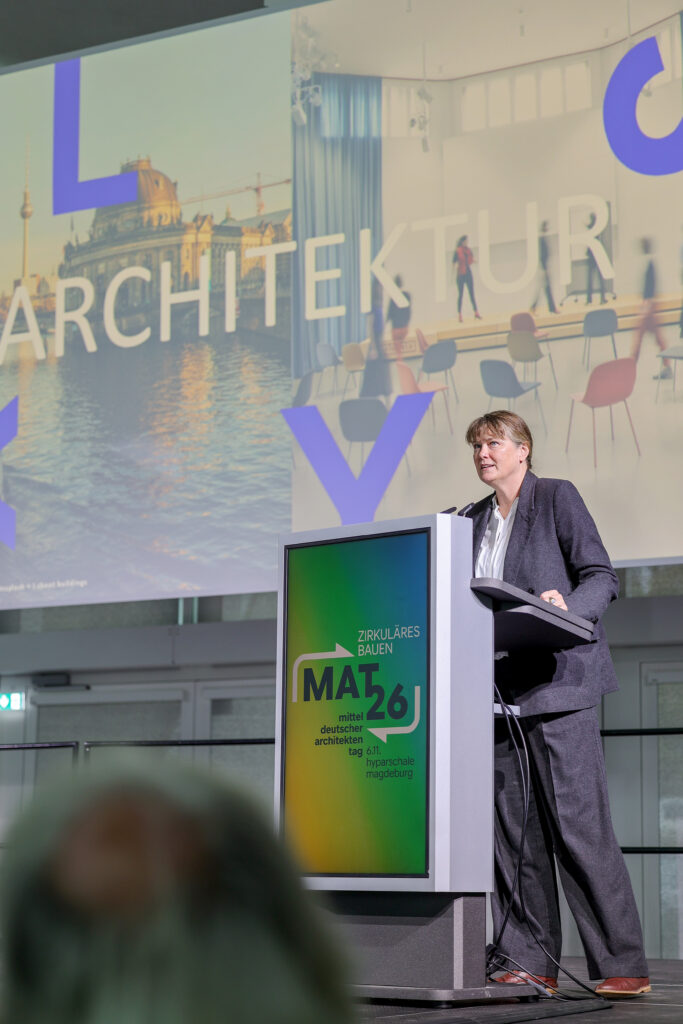
Even the opening remarks from the Federal Chamber of Architects (BAK), delivered by BAK Vice President and architect Wiebke Ahues (partner at LXSY, Berlin), set the tone. She reported on the establishment of the BAK project group “Circular Construction” on the eve of Architects’ Day in Magdeburg. The expert panel is tasked with clearly identifying and compiling obstacles, calling for changes to the framework conditions, and consistently bringing about those changes. This is an important step.
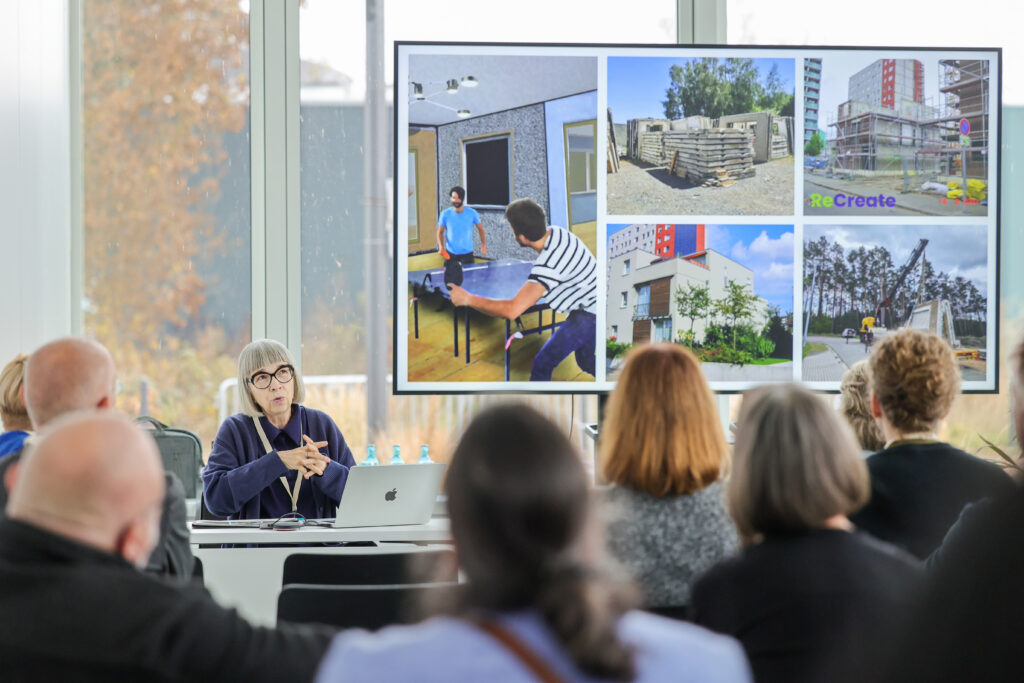
She went on to share insights from her firm’s practical experience, highlighting specific projects that LXYS has successfully implemented in recent years. The firm is regarded as a pioneer in circular construction and the transformation of existing buildings. As an example, she cited the IMPACT HUB Berlin innovation center, a model project that—through the resource-efficient and waste-reducing renovation of a former factory building—demonstrates that circular architecture can be beautiful and that sustainable operation is possible—thereby challenging the ubiquitous prejudice against “second-hand” design! There is no doubt that this also requires a client with the courage to experiment and take risks. (More from LXYS: Wiegand-Quartier, Merseburg). Her message: Appreciate. Simply. Further. Beautifully.
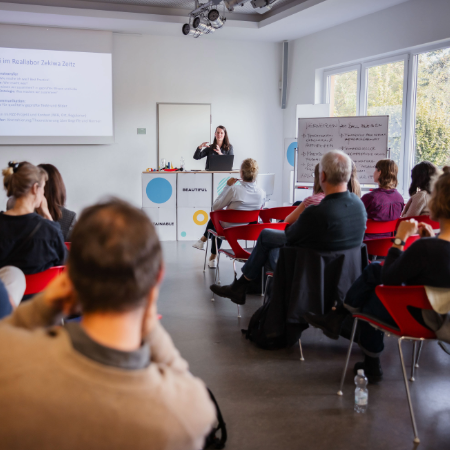
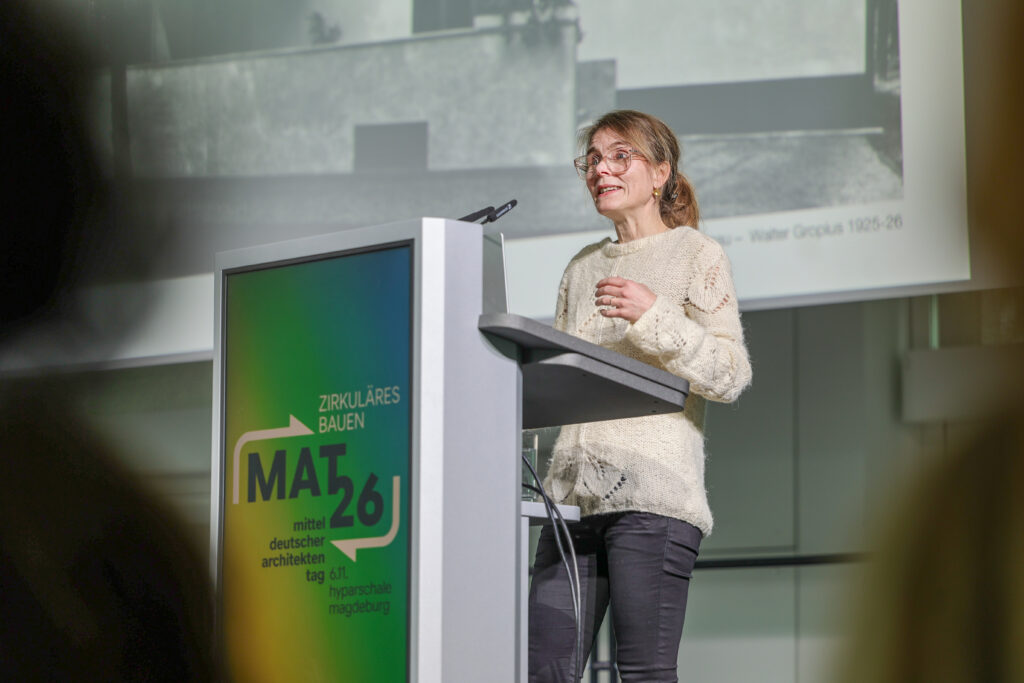
In her keynote address, “The Aesthetics of the Circular,” Danish architect Mikala Holme Samsøe picked up where the previous speaker left off. Samsøe referred to the latest “Planetary Health Check” from the Potsdam Institute for Climate Impact Research (PIK). According to the report, seven of the nine planetary boundaries have now been exceeded. Her presentation was a plea for imperfection—the patina on the facades of aged houses, as we celebrate them on our vacations in Italy—and for a shift away from the ever-new and flawless, coupled with the question of how this shift will change our future and what will come to be considered modern and perceived as beautiful. Samsøe is a co-founder of the Berlin-based firm ensomble Architektur, which is firmly committed to addressing the climate crisis through sustainable, circular construction. Citing her five design characteristics—> serendipity, > mortality, > heterogeneity, > mass, and > luster—she advocated for construction rather than demolition, for a “noble patina,” for collage as an interplay of old and new, and for the existing built environment as a gift; she spoke out against the smooth, the perfect, and the “frenzy of renewal.” Reducing things to the essentials, she argued, is a gift and a revitalizing force that could lead to a “reductive modernity” (Harald Welzer)—this socio-ecological alternative to the expansive modernity of the past.
With the eleven forums, including in the first block on “The Sustainability Phase,” “What to Build With? Sustainable and Circular Materials,” “The New Normal—Putting Circular Construction into Practice,” or in the second block, “Circular and Sustainable Construction—The Upcoming Legal Landscape,” as well as sessions on life cycle assessment and the “Practical Dialogue on Renovation & Additions: Keeping Properties in the Cycle—Circular Use of Existing Stock,” the day was packed with forward-looking topics. A panel discussion at the end tied the day together. Alongside Prof. Alexander Rudolphi, founder and honorary president of the German Sustainable Building Council (DGNB e. V.), who spoke about DGNB certification for circular materials and circular construction, entrepreneur Holger Sasse—founder and managing director of Novo-Tech GmbH in Aschersleben—convinced and inspired the audience. His clear guiding principles: “thinking and acting with our grandchildren in mind,” “more use instead of consumption,” and the exclusive use of healthy and circular materials. A statement that made an impact.
Text: Cornelia Heller on behalf of NEB_NETZWERKBÜRO Saxony-Anhalt
Impressions
Photos: Viktoria Kühne