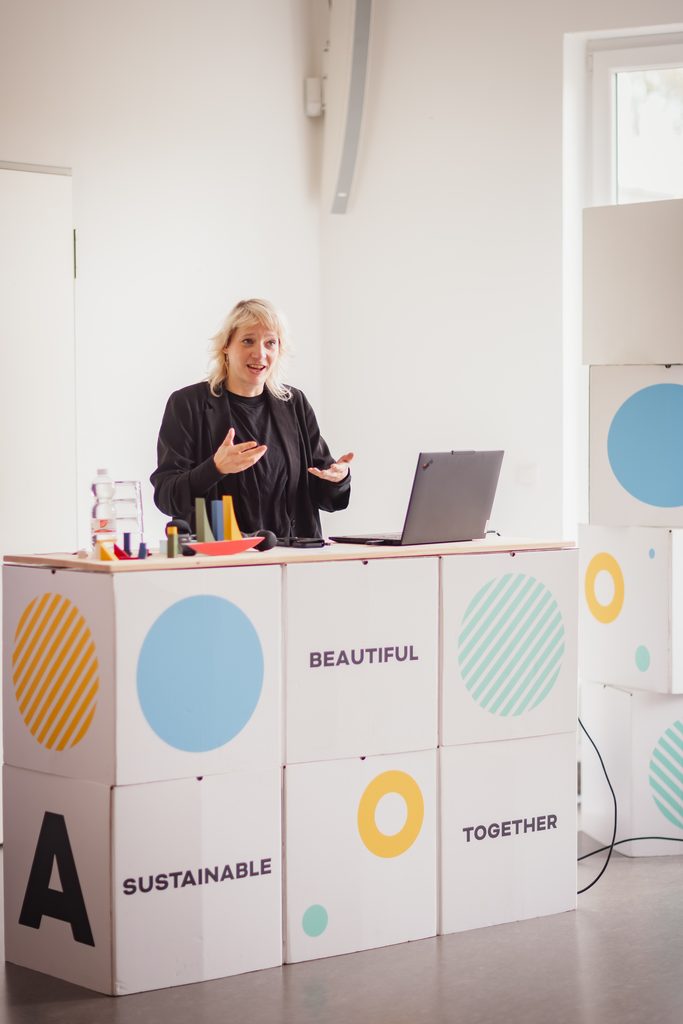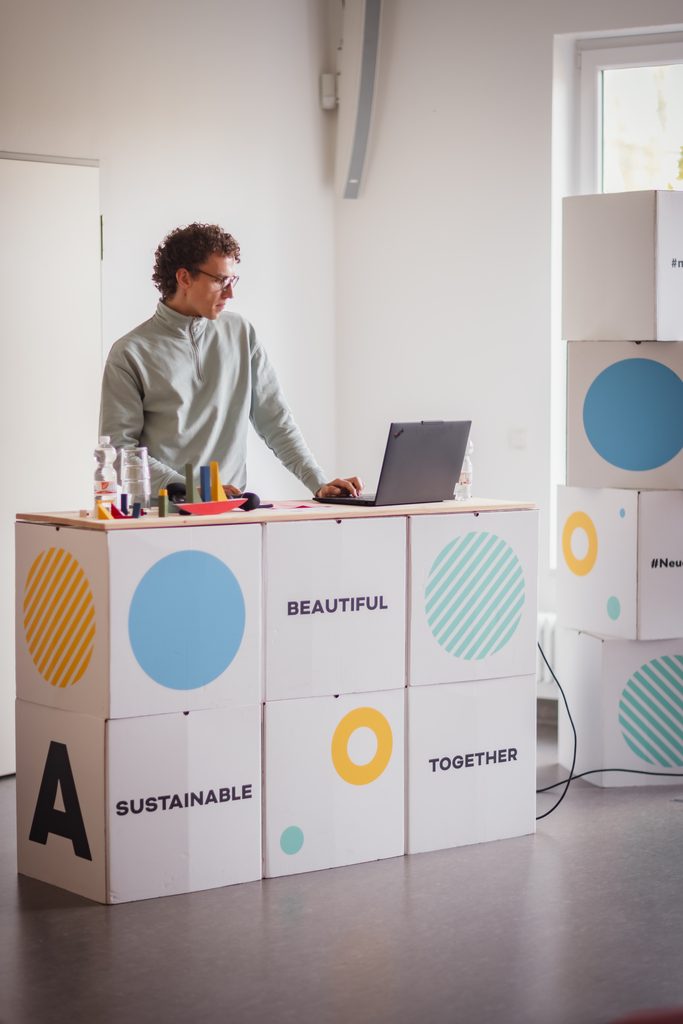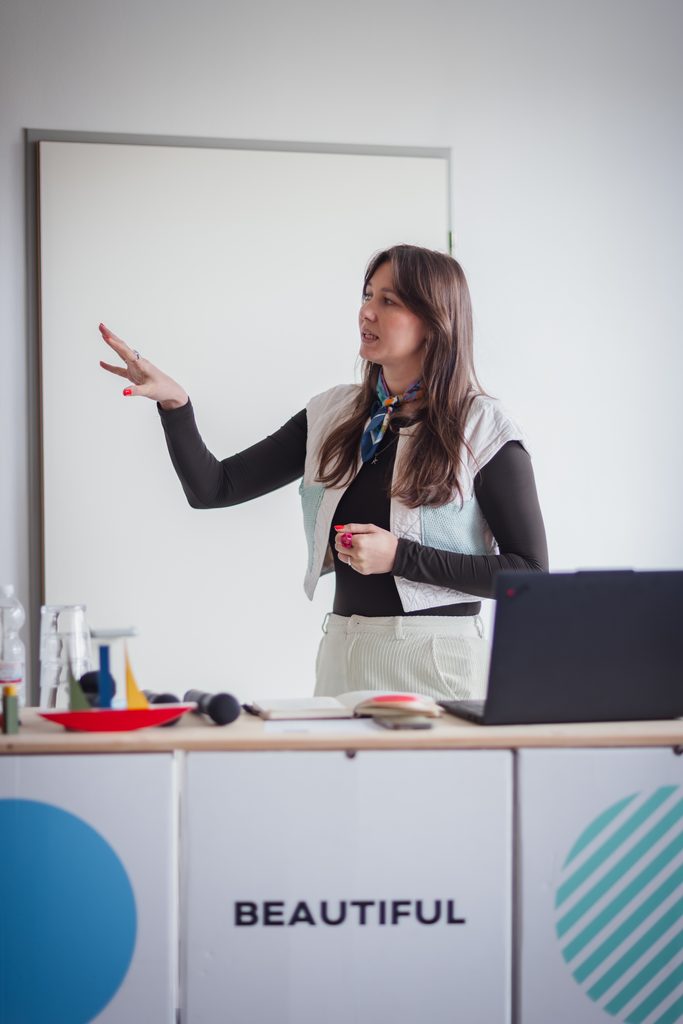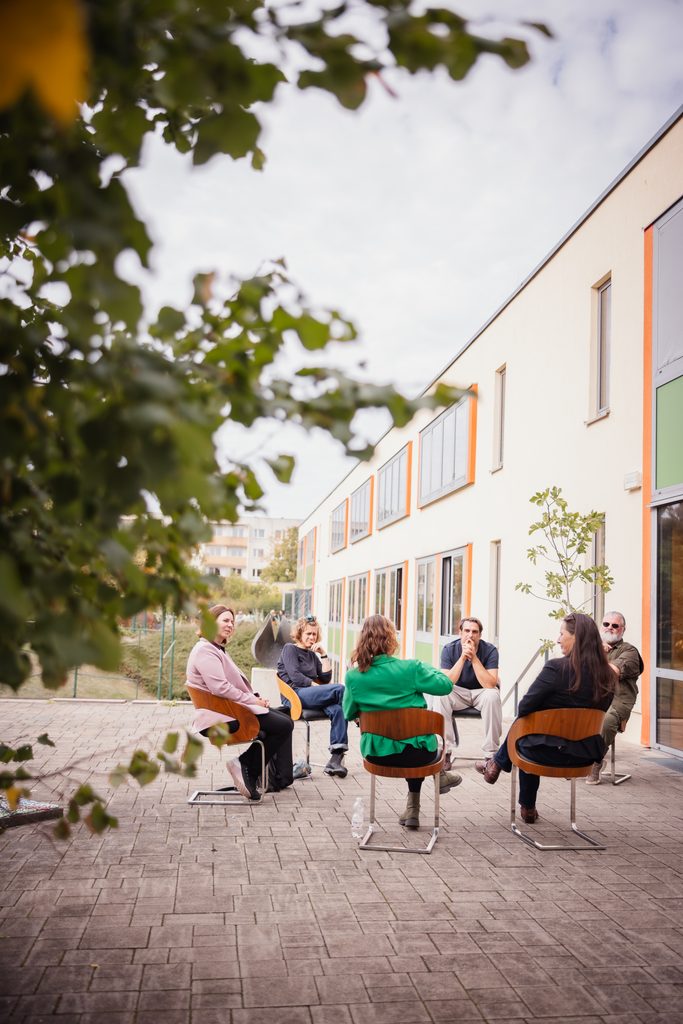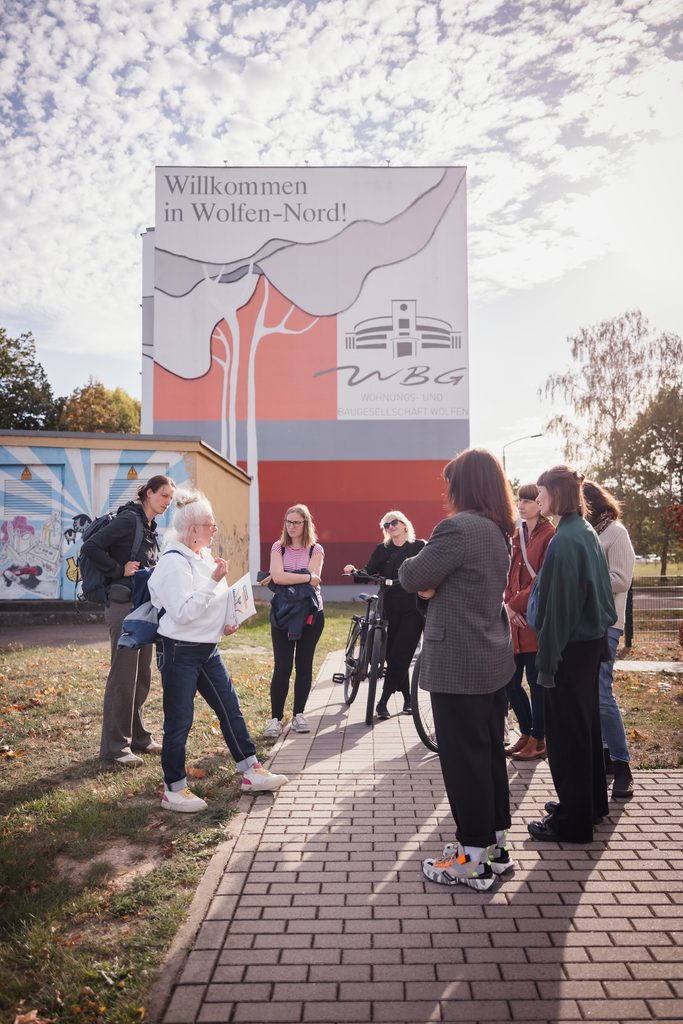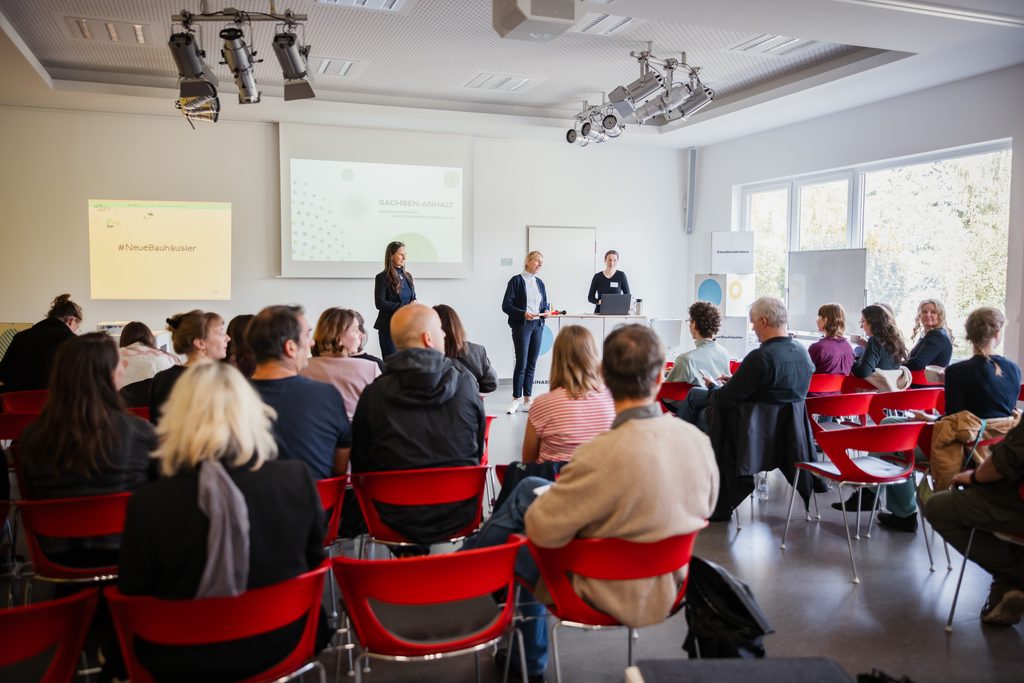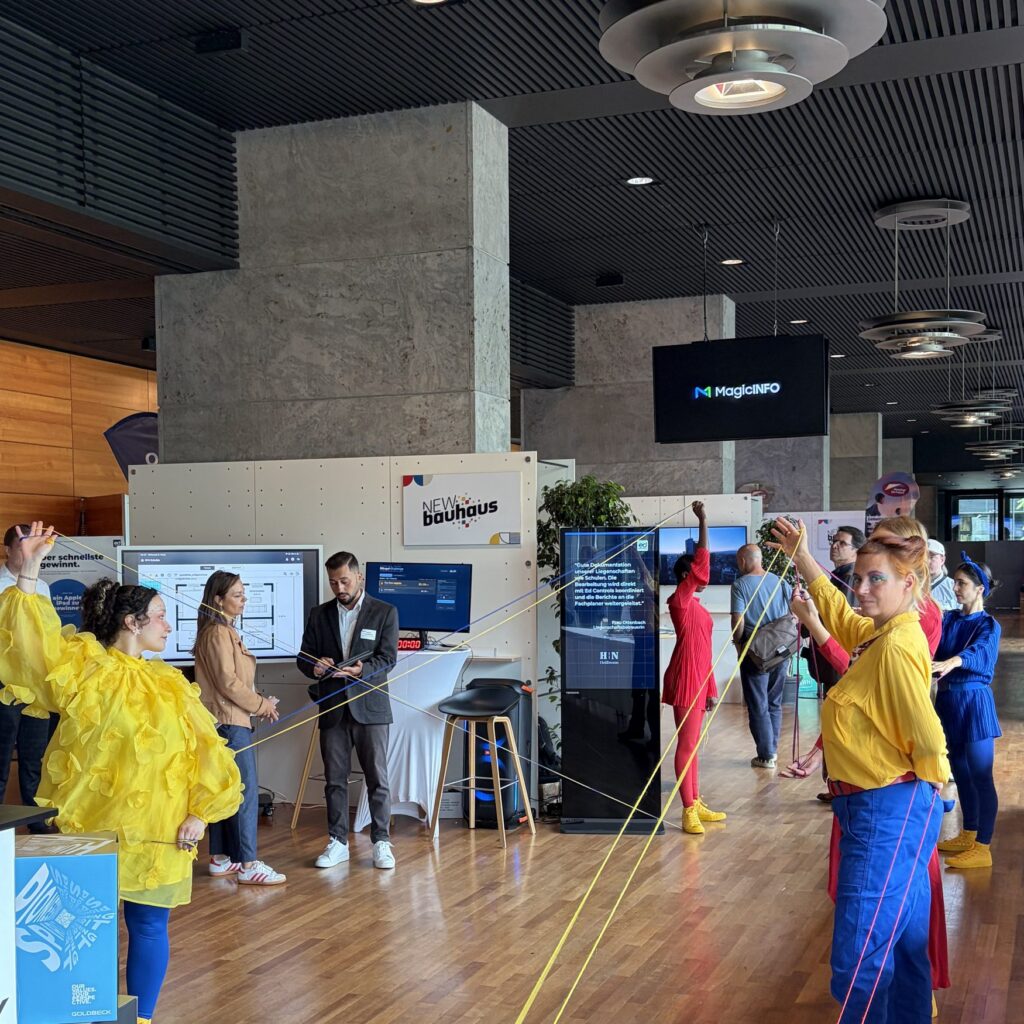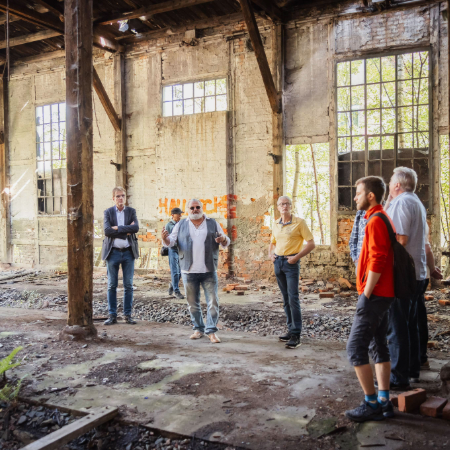
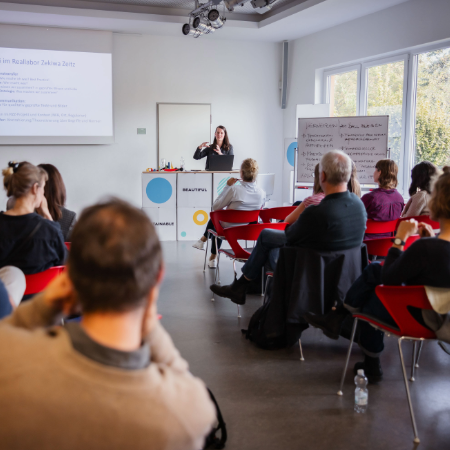
The collective knowledge of all those involved is intended to give rise to new ideas and solutions! This was the purpose and aim of the 'Think Tank' event held on 25 September 2026 as part of the 4th NEB_MEETS PARTIZIPATIV, on the fringes of the OSTEN Festival in Bitterfeld-Wolfen. Around 50 representatives from the NEB_PROJECTS in Saxony-Anhalt had gathered at the Multi-Generation Centre in Wolfen-Nord. They brought with them their experiences of putting their ideas into practice and a great deal of curiosity, coupled with the questions: 'Who is behind the other projects in the state? Where are similar challenges to be found? Where can we join forces?' Short keynote speeches on the key themes of 'activation' and 'continuity' provided food for thought for the subsequent smaller discussion groups. Here, participants asked probing questions, delved deeper into the issues, debated and discussed, and finally distilled the key takeaways. It was a fruitful day for gaining knowledge, finding validation and receiving encouragement within the NEB_NETWORK Saxony-Anhalt.
'Activation' was the focus of the first four presentations. These featured OSTEN Festival curator Martin Naundorf speaking on 'Inspiring enthusiasm', Isabell Wiehmert, Bauhaus agent at the ZEKIWA Zeitz real-world laboratory, on 'Reaching children and young people', sociologist Isabel Müller from the Centre for Social Research e. V. Halle (Saale) on 'Engaging the rural population' in connection with the NEB_PROJECT LandKiez Thondorf; and Prof. Nicole Uhrig from Anhalt University of Applied Sciences on 'Initiating co-creation and implementing it together' with a focus on the NEB_PROJECTS in Kleinpaschleben and Lutherstadt Eisleben. Participants were then asked to choose one of these four topics and, together with the speakers and moderated by the NEB_NETWORK OFFICE, to explore the ideas in greater depth in smaller group sessions.
The discussions within the groups were intense. Everyone came together again for the debrief, and the findings were presented. Here are some of the shared insights from round one: Everyone agreed that for 'activation' to work, the project should have emerged organically rather than been imposed from above: bottom-up rather than top-down! Collaborations with existing local institutions proved to be a valuable foundation for new impulses. Expectations must be fulfilled and goals achieved: here, clearly defining goals is just as important as listening carefully in order to pick up on ideas. 'Outreach formats' – that is, direct, trust-building contact, such as the village survey carried out by LandKiez in Thondorf – were identified as a key driver of activation. But no less important: the fun, the joy and the 'pure happiness' of experiencing SELF-EFFICACY, where individuals – and in particular children and young people beyond the world of TikTok and Instagram – can create something with their own hands, get involved in art and cultural projects, and proudly present a visible result.
The discussions in the second part of the day centred on the broad theme of 'continuity'. The focus was on the question: How do you keep an initiative going once the initial enthusiasm has faded, funding has run out and the membership has aged? Speaking on this topic were Johanna Voll, project manager of 'LEHM_BAU_KULTUR' at Schwemme e. V., on 'carrying on', and Burkhard Schmitt, chairman of the board and director of the Fürst-Otto-Victor-Stiftung Droyßig, on the 'Kulturvilla' project and 'establishing a firm foothold'. Andreas Witt from the Magdeburg regeneration association Ravelin 2 had sent in his presentation on 'rejuvenating'.
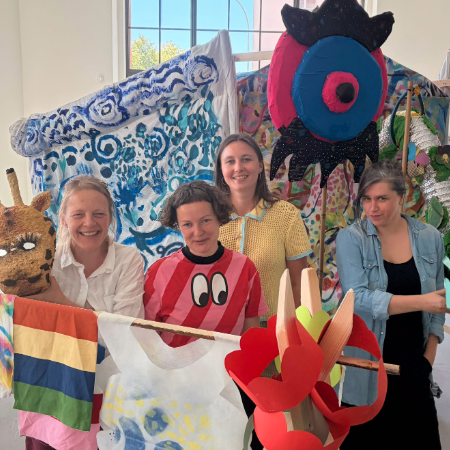
Key insights here: Those who build on local traditions – and thus on existing networks – are sure to find those valuable advocates who foster understanding and tolerance for the project and support its value to the community, both in kind and, ideally, financially. The old adage – 'After funding comes pre-funding' – points to a long-term perspective on establishing a project, for example within a voluntary organisation. But voluntary work cannot shoulder everything. Seeking financial safeguards in a targeted and timely manner is a vital, life-sustaining aspect. At the same time, it is important to guard against commercial exploitation. Johanna Voll spoke about this in the context of the now clearly visible progress being made on the renovation of the Schwemme building. An intriguing proposal was to sustain projects through shared local use, such as a planned energy-sharing scheme as part of the local heating plan in Droyßig, as reported by Burkhard Schmitt. In any case, COLLECTIVE IMPACT was at the heart of the second summary as a key experience in establishing a lasting presence in the area. And that is presumably also the formula adopted by the Ravelin 2 regeneration association, where people can experience working together in a friendly atmosphere, whilst at the same time celebrating successes as an integral part of Magdeburg's cultural landscape. It was much the same at OSTEN, the festival for art and mutual interest, to which the 'Salondenker' then made their way. The Jugendclub 83 e. V. presented 'Zwischen Platte und Perspektive' (Between Prefab and Perspective), showcasing its Wolfen-Nord neighbourhood, and invited visitors to a popcorn oracle performance and a family spectacle.
Text: Cornelia Heller on behalf of NEB_NETZWERKBÜRO Saxony-Anhalt