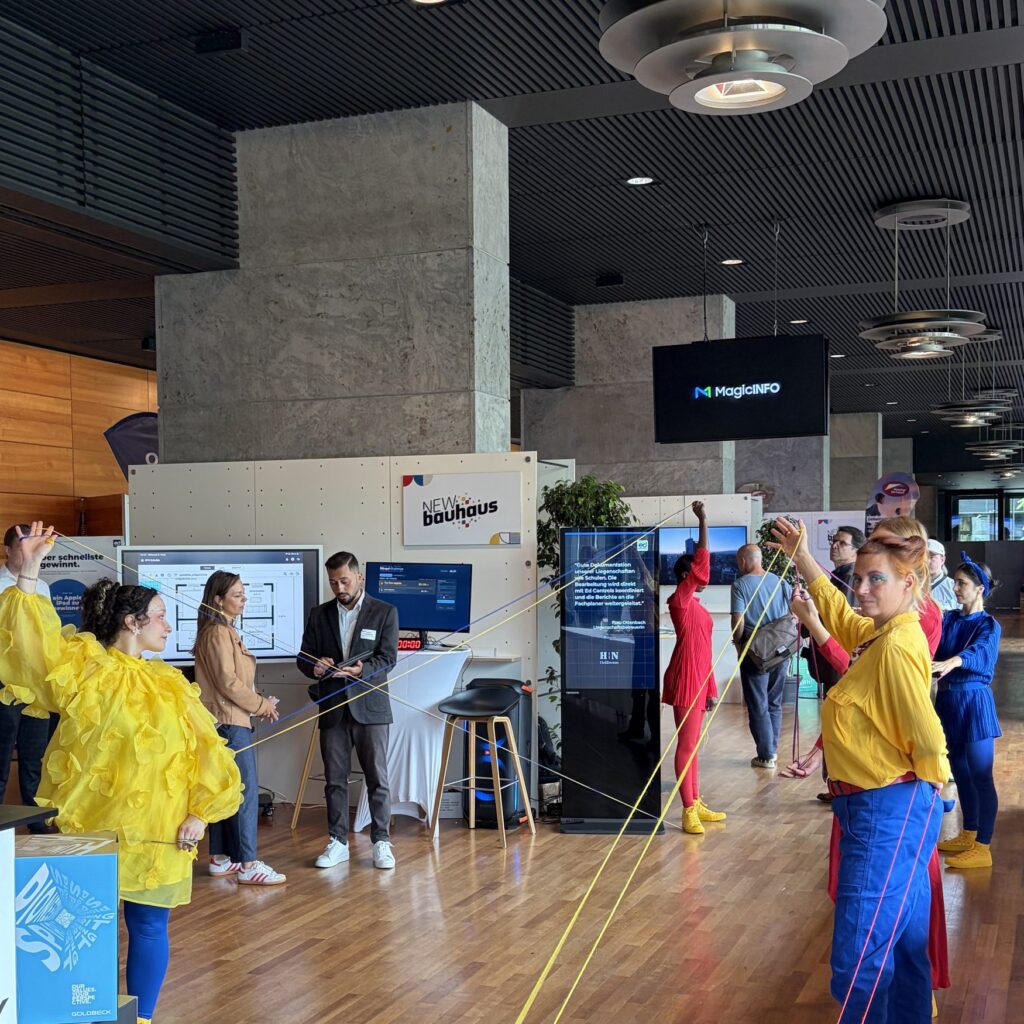
Agora: A Space for Work and Thought
On September 2 and 3, 2026, NEW bauhaus in Weimar brought together—for the fourth time—a professional conference, trade show, and festival at the founding site of the historic Bauhaus. Visionaries, companies, creatives, and decision-makers came together to exchange ideas—in these turbulent times—about the path toward a sustainable, aesthetically sophisticated, and resource-efficient built environment, learning from one another in the process—and inspiring one another! That’s the Bauhaus spirit: a new beginning, interdisciplinarity, and the courage to embrace the future.
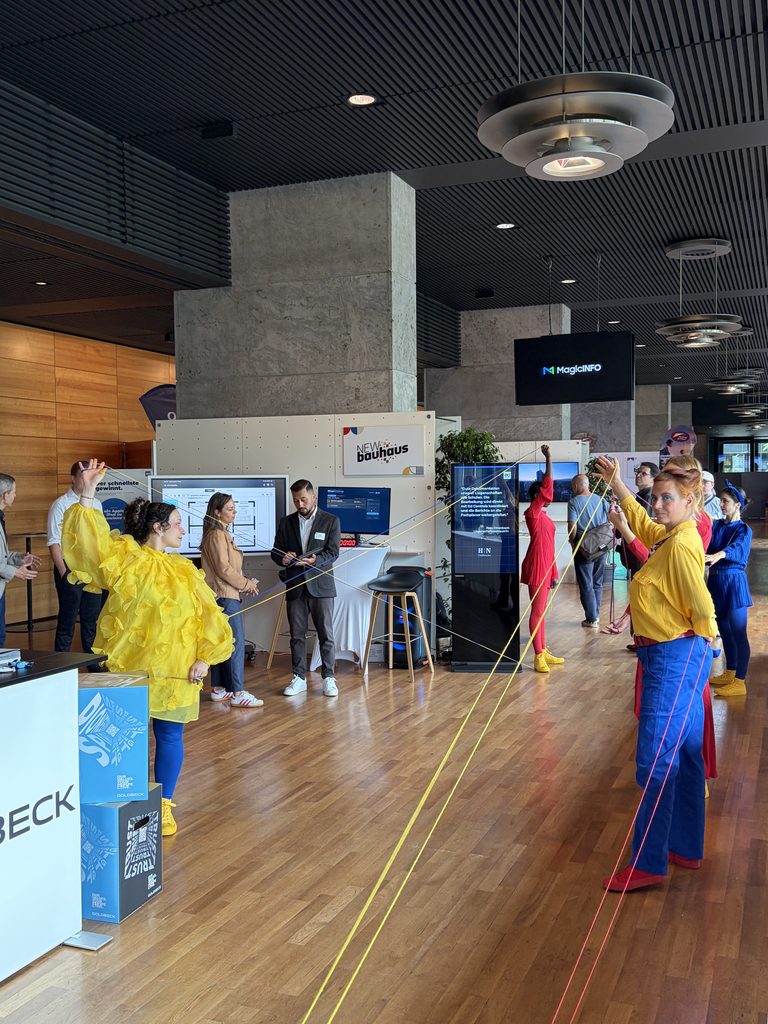
Climate change, resource scarcity, digital transformation. The built environment faces a challenging future. What should a world look like in which upheavals are occurring at an ever faster pace? How do we want to shape and build our surroundings, and how do we want to live in them? What do people really need? And which technologies can help? These are the questions being discussed everywhere in relation to construction and the built environment – including at NEW bauhaus 2026, with well over 400 participants, more than 60 contributions and over 90 speakers and actors from the construction and real estate sectors, politics, academia, the trades, architecture, planning and culture – and among them: #NeueBauhäusler from Saxony-Anhalt. Their impressions:
Johanna Voll, LEHM-BAU-KULTUR at the “Schwemme”, Halle (Saale)
“I’m pleasantly surprised! After taking a look at the programme and seeing the other exhibitors, I had some doubts as to how our comparatively small NEB_PROJECT would fare amongst the large, established companies and sponsors. But there was a great deal of interest and we quickly struck up conversations with people. We are grateful for the invitation to the stand of the NEB National Focal Point at the Federal Foundation Bauakademie and, above all, for the chance to inspire people about building with clay and to draw attention to our ‘Schwemme’ as one of these socially important ‘third places’. This is an aspect that futurologist Harald Welzer emphasised: refocusing on social interaction! I felt valued and recognised for our commitment! ‘Third places’ such as the ‘Schwemme’ in Halle (Saale) offer space for consumption-free, purpose-free, low-threshold and genuine human interaction – for social engagement. Simply coming together, seeing what happens, relying on ‘happy coincidences’. Just like here at the NEW Bauhaus Festival, where our little exhibition stand was able to function as a temporary ‘third place’.”
Dr.-Ing. Susanne Bartholomé, Hemp Information and Competence Centre with Experience Trails in Mücheln/Geiseltal
“It’s good that we’ve been able to raise the profile of our project here and highlight the topic of hemp with its wide range of potential applications. And we’ve done so alongside the ‘big players’ in the housing construction sector. Our usual points of contact at trade fairs tend to be research institutes or centres of excellence, as well as exchanges with young scientists. Visitors to our stand were often surprised to hear about the versatility of hemp as a renewable raw material, particularly when combined with materials such as clay. We even made contact with the start-up ‘willowprint’, which produces 3D-printed items from sustainable raw materials. This is of interest to us as we aim to produce similar items from clay and hemp, for example for interior design. This is part of our NEB_PROJECT, which aims to raise public awareness of hemp – an ancient, traditional raw material – by establishing an information and competence centre. In doing so, we are bridging a knowledge gap. The NEW bauhaus Festival provided an excellent platform for exchanging ideas on new developments in the building materials market. We met many like-minded people.”
Among others, renowned experts such as architectural visionary and engineer Prof. Werner Sobeck and sociologist and futurist Prof. Harald Welzer provided valuable food for thought at the New Bauhaus. Their discussion on ‘The Imposition of the Future – Why We Want Change and Yet Prevent It at the Same Time’ centred on the central paradox of people in the modern world: their desire for progress coupled with a fear of the unknown.
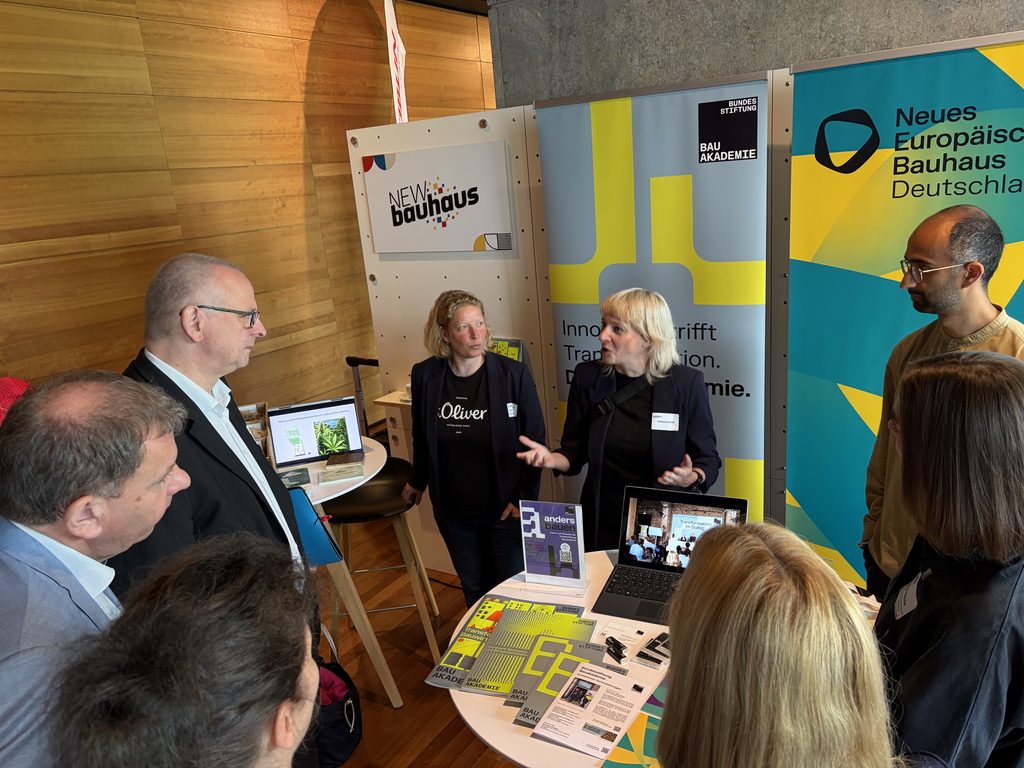
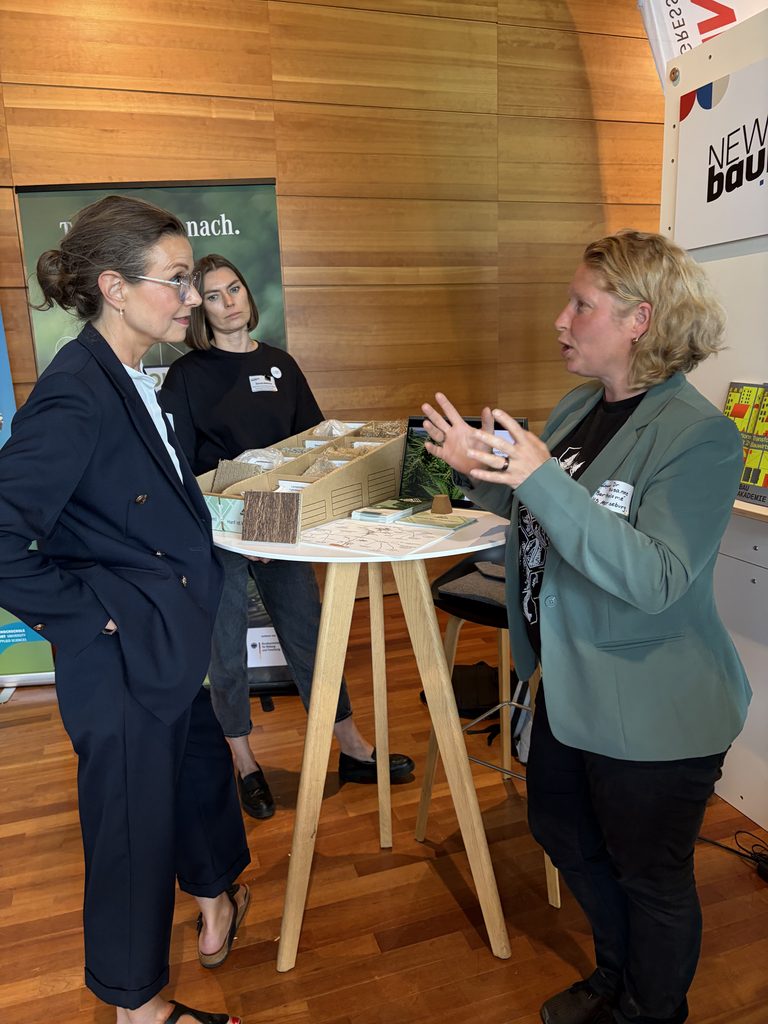
Intriguing: both looked to ‘Third Places’ as one solution for navigating transformation more successfully. Welzer called them the “living rooms of society” and spoke about Futurzwei, a project of the Stiftung Zukunftsfähigkeit (Foundation for Sustainability), a platform featuring stories of democratic success. This could, according to his dialogue partner Sobeck, be one of those important catalysts – much like the many initiatives of the New European Bauhaus (NEB). How fitting, then, that precisely such a project from the Saxony-Anhalt NEB state initiative #NeueBauhäusler was able to present itself at the accompanying exhibition in the foyer, at the invitation of the National Contact Point for the New European Bauhaus Germany / Stiftung Bauakademie: the ‘Schwemme’ from Halle (Saale) with its NEB_PROJECT LEHM-BAU-KULTUR (>> see statement by Johanna Voll). State Secretary Dr Olaf Joachim from the Federal Ministry for Housing, Urban Development and Construction, as well as Pernille Weiss-Ehler, member of the cabinet of EU Commissioner Jessika Roswall and expert there for water resilience and the New European Bauhaus initiative of the European Commission, also stopped by with great interest.
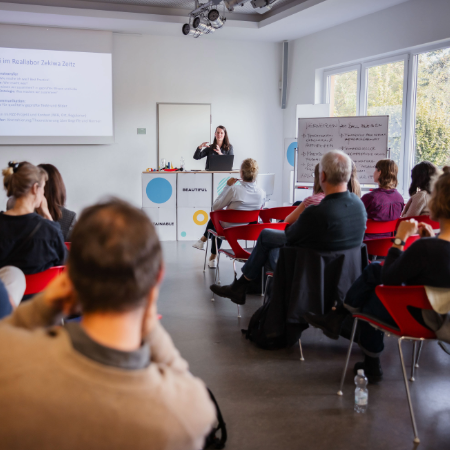
Over the course of the two-day programme, the Agora hosted talks and discussions on the 360-degree stage, whilst panel discussions took place in parallel and attendees exchanged views at the trade fair amidst presentations and exhibitions. The focus was on: the transformation of the construction industry through digitalisation, AI and robotics; the demands on the sector to return to ‘a new simplicity’ with a view to Building Type E; resource-efficient and circular construction; as well as the urgent need to cut red tape, reform funding programmes, ‘The contested home: housing not as a market, but as a conflict’, and – sustainable and alternative building materials! Such as industrial hemp, for example, as a sustainable resource. Another NEB_PROJECT from Saxony-Anhalt had brought this to the trade fair for visitors to ‘touch and feel’ for themselves: the ‘Hemp Information and Competence Centre with Experience Trails’ in Mücheln/Geiseltal (>> see statement Susanne Bartholomé).
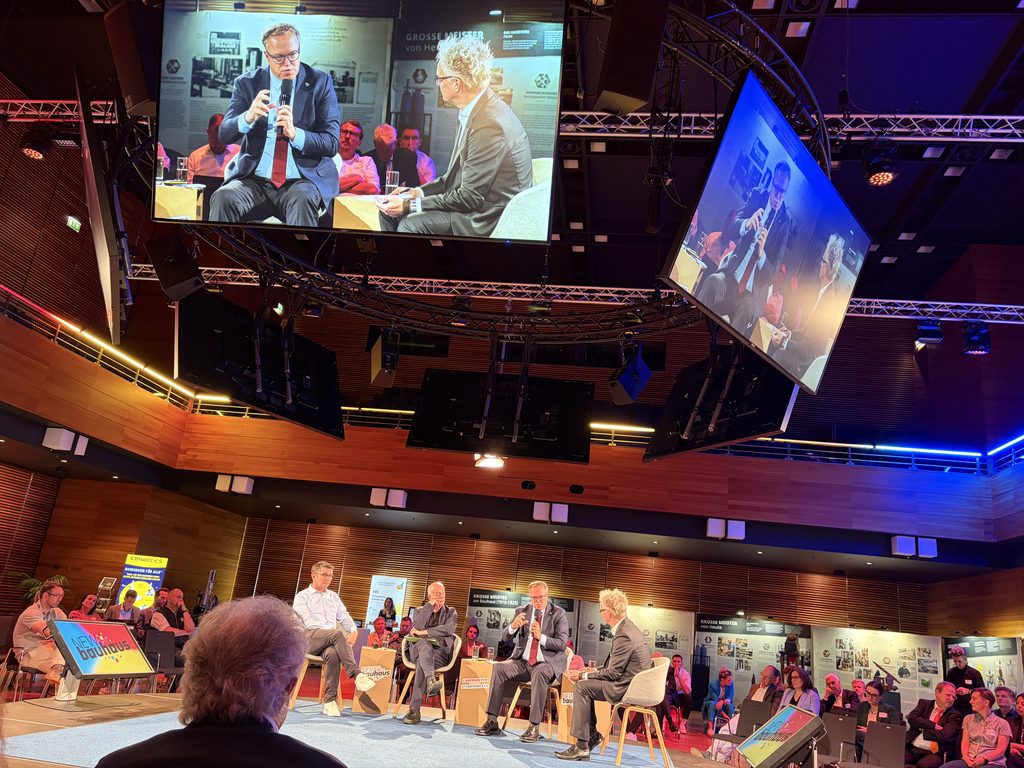
Thuringia’s Minister-President Mario Voigt (2nd from right) and climate impact researcher Prof. Hans Joachim Schellnhuber (2nd from left)
NEW Bauhaus Highlights
Under the title “New Thinking, New Action”, Thuringia’s Minister-President Mario Voigt took part in a discussion with climate impact researcher Prof. Hans Joachim Schellnhuber. Schellnhuber, the driving force behind the NEB initiative, presented the concept of the ‘forest-construction-pump’* in the context of current heatwave temperature trends and called for active and collaborative work on humanity’s greatest project for the future: the transition to a completely carbon-free and sustainable civilisation.
* The ‘forest-construction-pump’: Through photosynthesis, trees absorb CO2 and store it in their wood. When wood is used in long-lasting buildings, the carbon remains sequestered, whilst new trees grow and absorb further CO2. Conclusion: Carbon is pumped from the forests into the built environment.
"Between Digital Progress and Digital Reality" was the title of the engaging talk by publicist and internet entrepreneur Sascha Lobo, who advocated for an anxiety-free approach to AI and recalled the spirit of tinkering and making of past eras. Companies need to become bolder and more willing to experiment, he argued, and a culture of trying things out needs to develop – including at the level of building materials. And: the success of the great AI transformation will be a question of education and training.
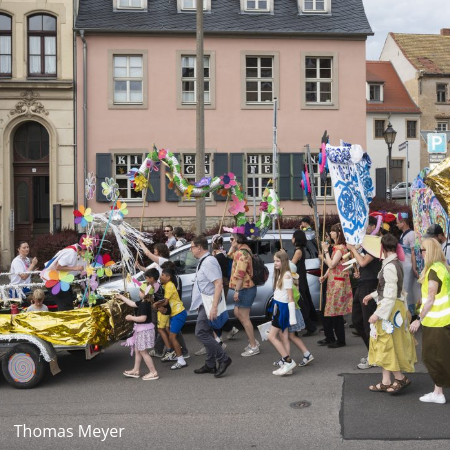
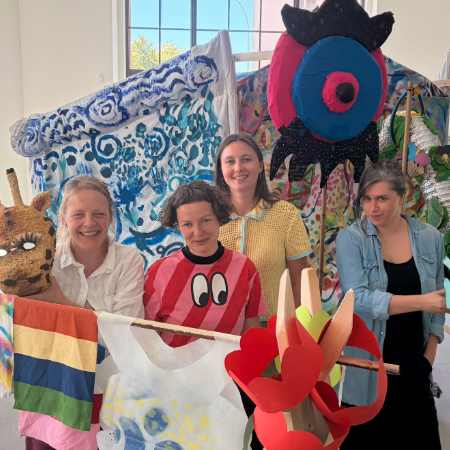
The format run by the Thuringian Agency for the Creative Industries, entitled "New Players on the Construction Site", gave five creatives 180 seconds to show what happens when design and art become part of planning processes. Questioning what already exists, disrupting planning logic and involving the people affected in a spirit of appreciation. As in the case of the architecture firm TAKTAK, which places the Trojan Horse in public spaces to foster creative participation in planning processes, or engagement with and appropriation of urban neighbourhoods: such as the Kiosk of Unknowing for the Chemnitz European Capital of Culture.
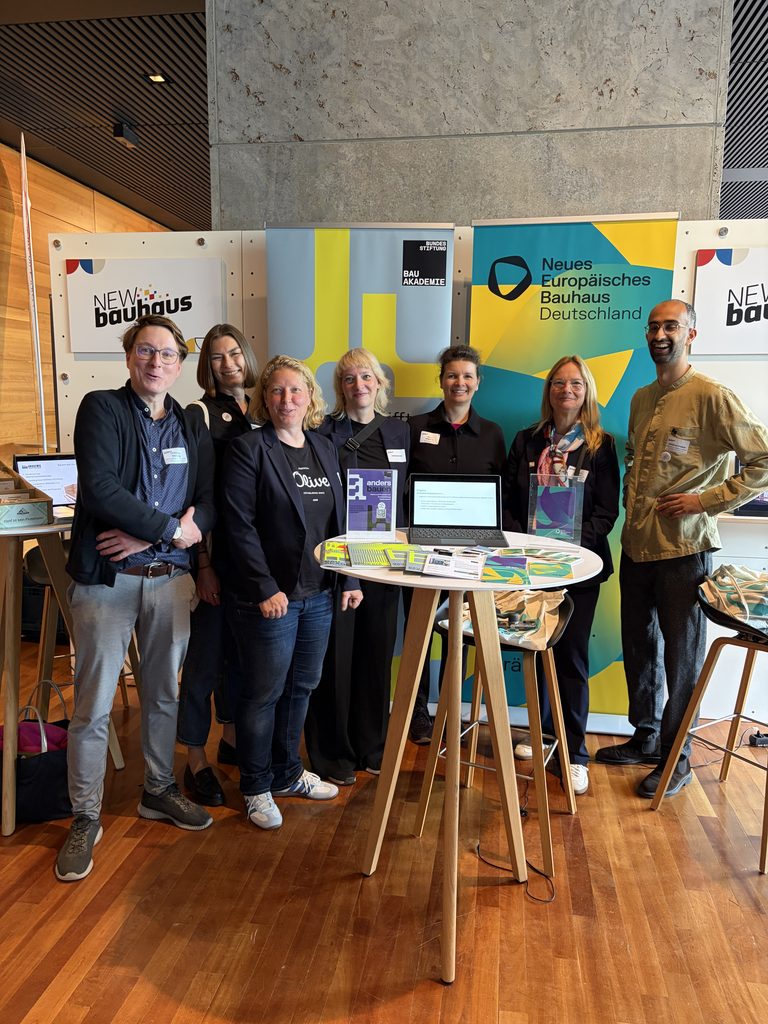
v.l. Christian Hartwig, Architekt für das Projekt Schwemme e.V.; Sarah Reiche, Nationaler Kontakt Punkt NEB; Dr. Ing. Susanne Bartholomé Projektleitung Informations- und Kompetenzzentrum Hanf mit Erlebnispfaden; Johanna Voll Projektleitung LEHM-BAU-KULTUR, Schwemme e.V.; Dr. Elena Wiezorek, Direktorin Bundesstiftung Bauakademie; Architektin Petra Alten, Referentin und Baudirektorin im BMWSB; Abhinav Thakar, Nationaler Kontakt Punkt NEB
All photos © Cornelia Heller