Project Name:

A place for industrial heritage – a place for the future, Festival OSTEN

You are currently viewing a placeholder content from Google Maps. To access the actual content, click the button below. Please note that doing so will share data with third-party providers.

More Information
Project details:
Project Partners:
1. Verein Jugendclub 83 e. V., Steffie Hauck
2. Kulturpark e.V. Martin Naundorf, Judith Paletta
Project Type:
Participatory Transformation and Cultural Project
Size of property: not a building project, but a mobile structure yet to be designed
Project Duration: 2026 – 2027
Contact:
Ehemaliges Kino Bitterfeld-Wolfen
Freiherr-vom-Stein-Straße 1
06766
Bitterfeld-Wolfen
e-mail:
jugendclub_83@gmx.de
kontakt@kultur-park.de

Project Description

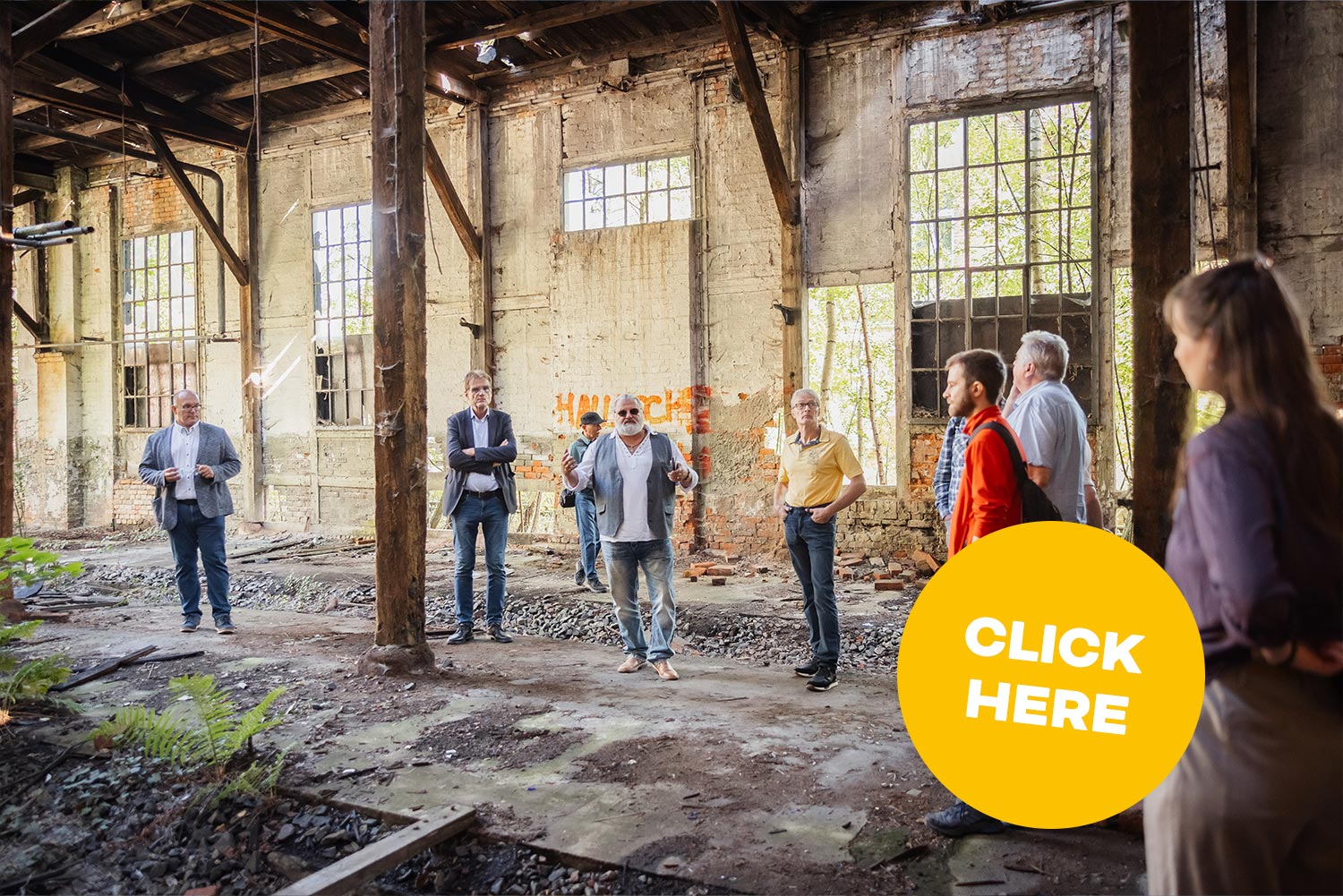
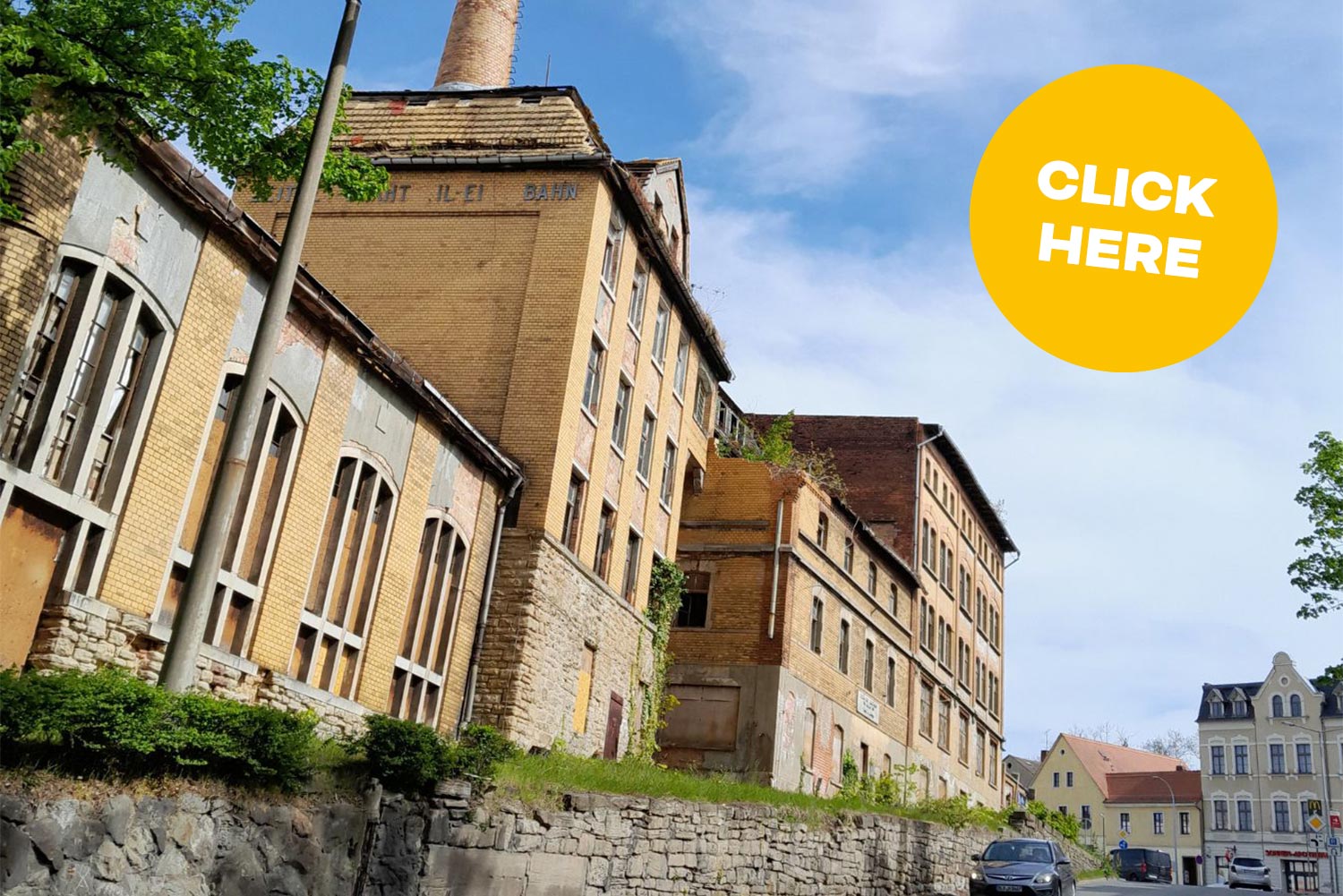
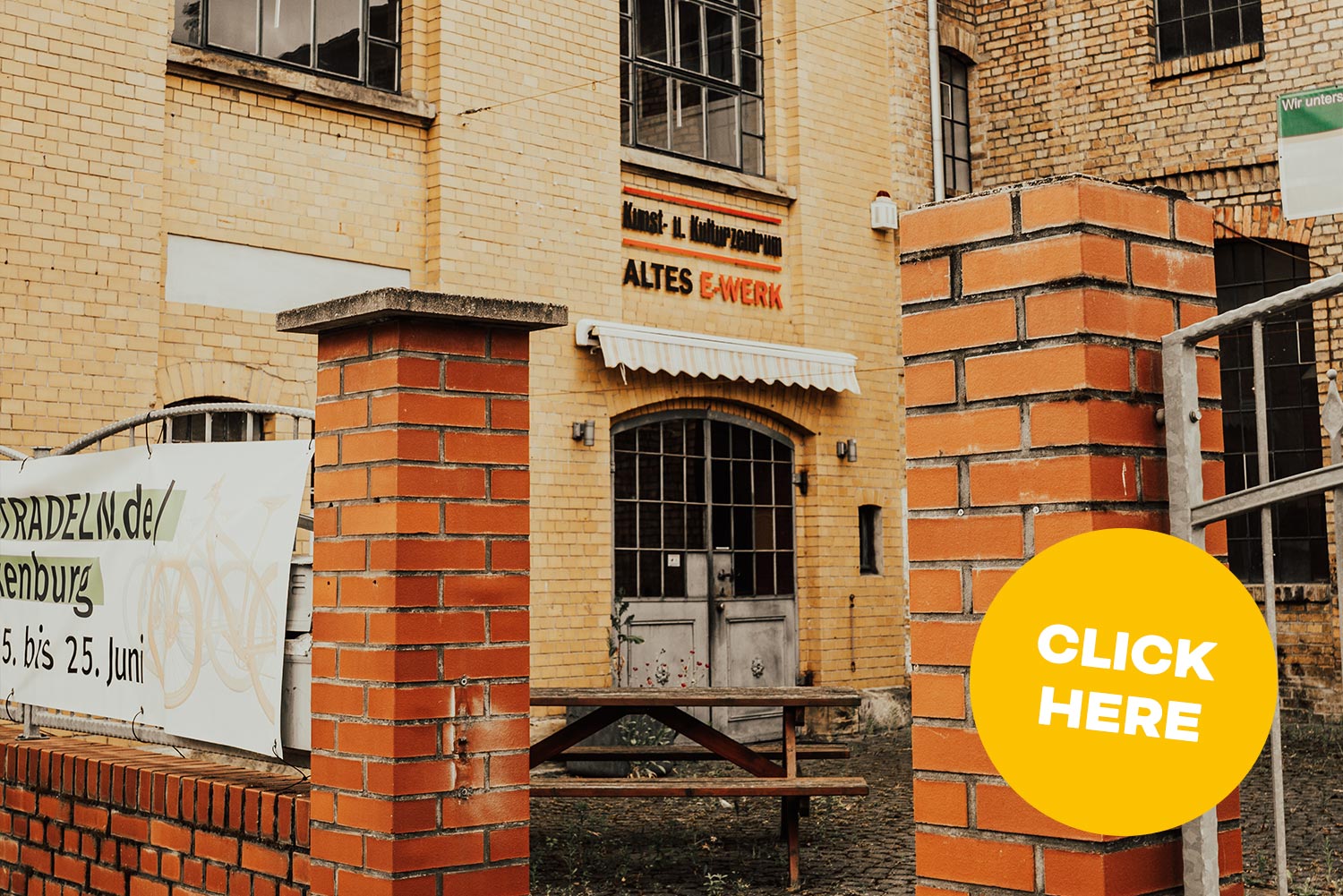
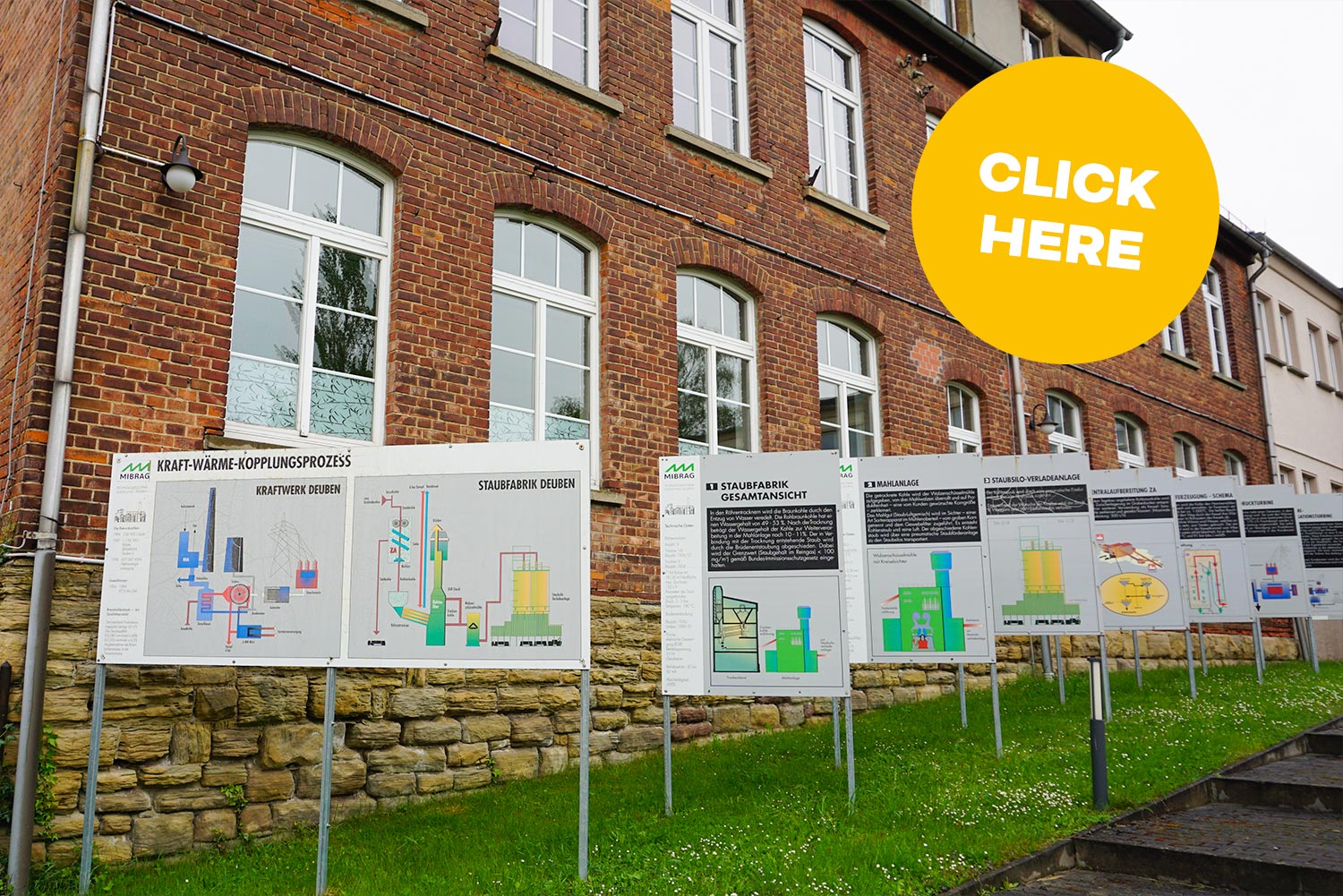
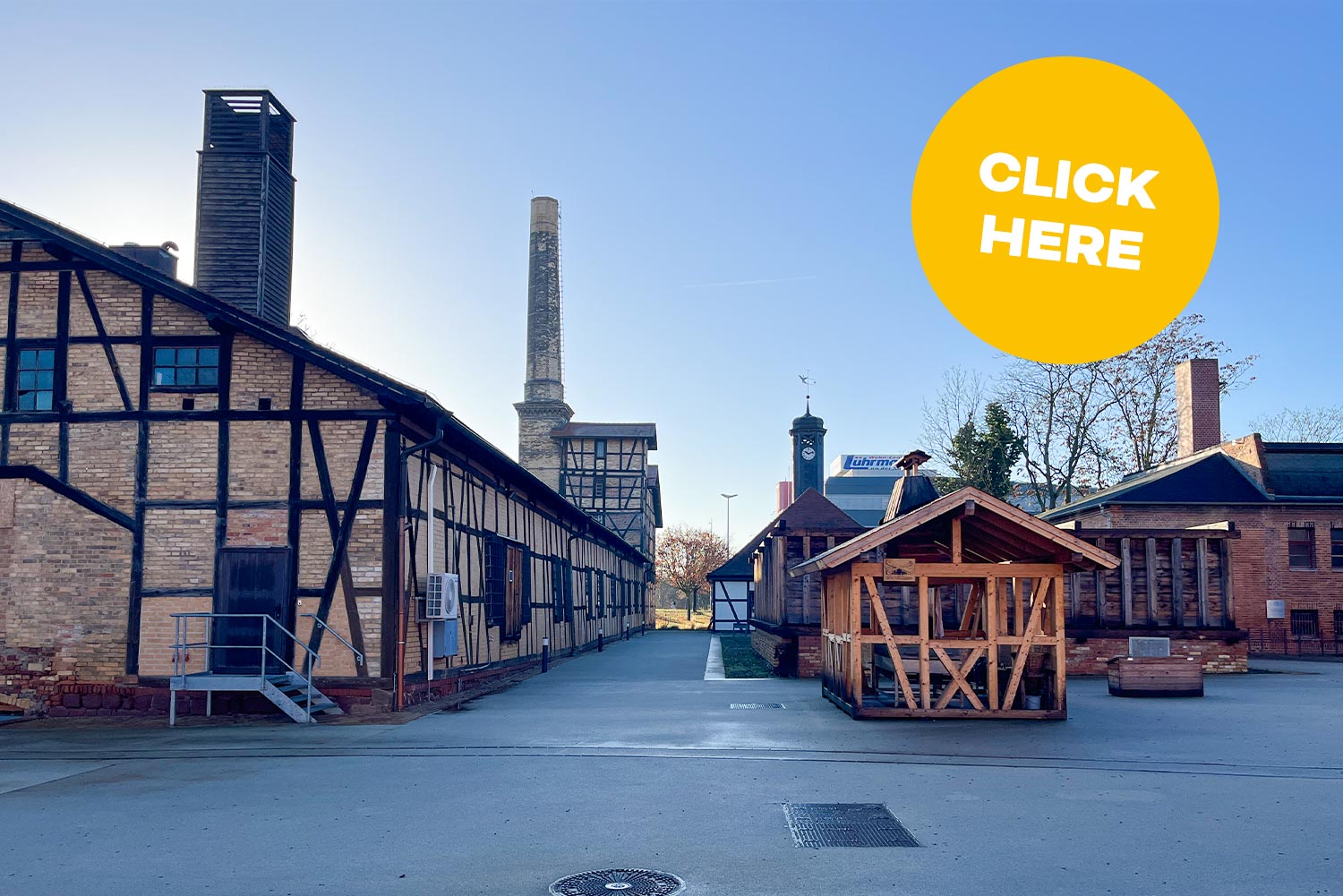
Bitterfeld-Wolfen is a place undergoing profound transformation. As the historic center of Central Germany’s “Chemical Triangle,” the city exemplifies the rise, decline, and ecological renewal of an industrial region. Where lignite mining, chemical production, and the film industry once shaped the landscape, lakes, restored natural areas, and new opportunities have now emerged. Yet the traces of industry remain visible in the landscape as well as in people’s memories, shaping the region’s identity. The project “A Place for Industrial Culture – A Place for the Future” takes up this history and develops a new communal space for exchange, education, and cultural practice.

The project is run by Kulturpark e.V. and Jugendclub 83 e.V. While Kulturpark e.V. contributes its curatorial expertise and its regional and international network in the fields of art, science, and culture to the development of the programs, Jugendclub 83 e.V. opens up the program through local youth work to encourage the active participation of young people and other initiatives. Together, they create an open process that connects different generations and perspectives.

This gives rise to a place that makes the past visible, reflects on the present, and collectively negotiates the future. The site thus becomes a model for dealing with post-industrial spaces and their cultural potential.

Project Goals

Planning and Construction of a Pavilion Through Collaborative Efforts

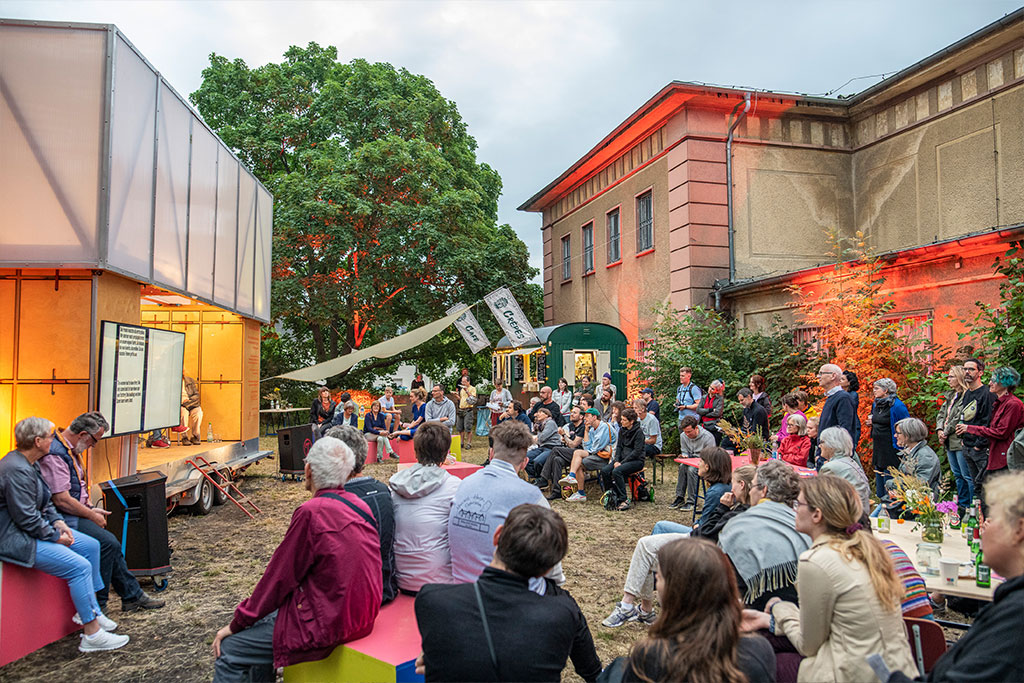
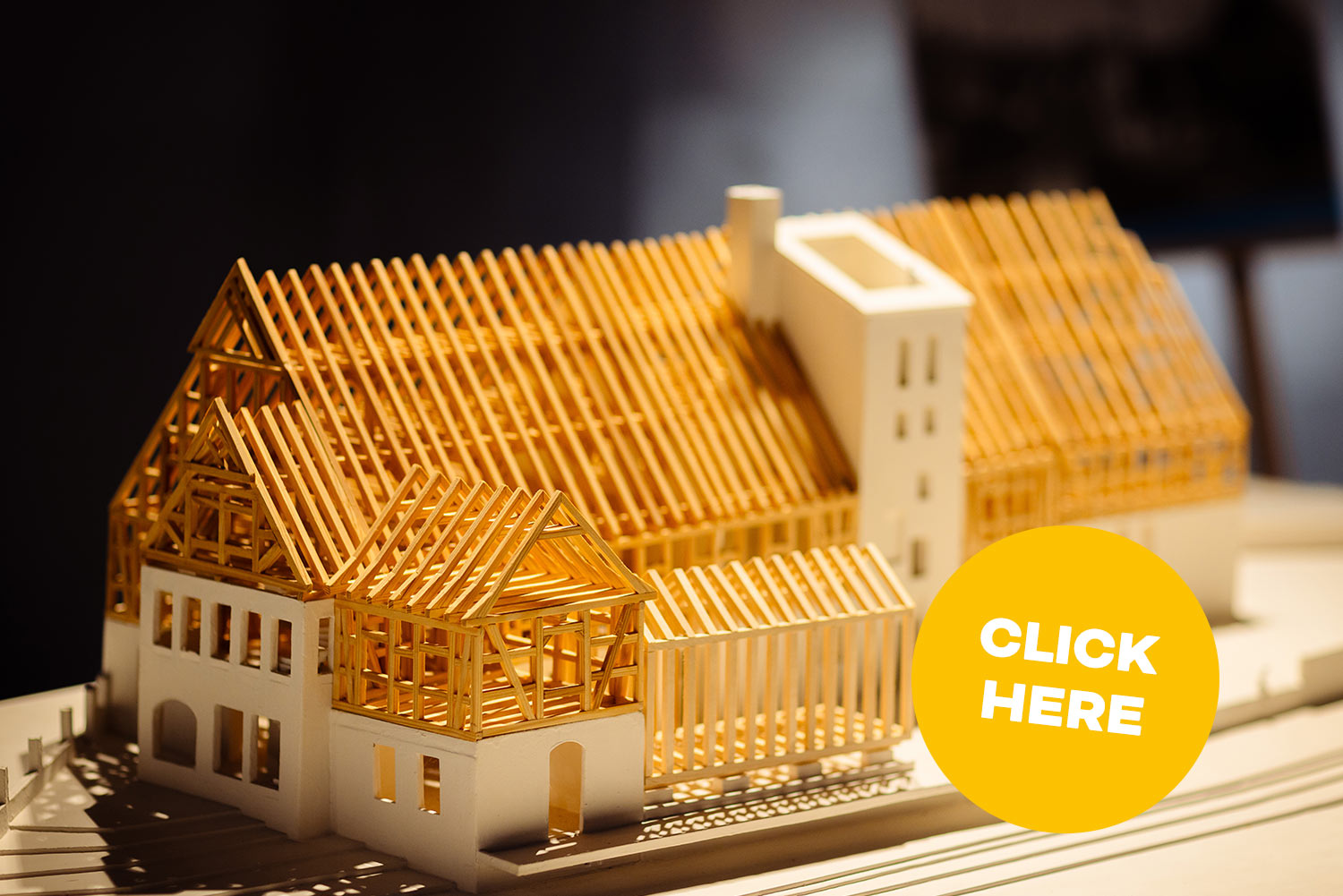
A consortium consisting of the architectural firm raumlaborberlin, the architecture and exhibition firm lfm 2, and the construction collective la relève is collaborating with residents of Bitterfeld-Wolfen, young people from the region, and students from nearby universities to develop a mobile pavilion that will serve as a multifunctional space for gatherings and exchange, a workshop, a kitchen/cafeteria, exhibition space, and information point.

Festival OSTEN – Workshops, Discussion, Art

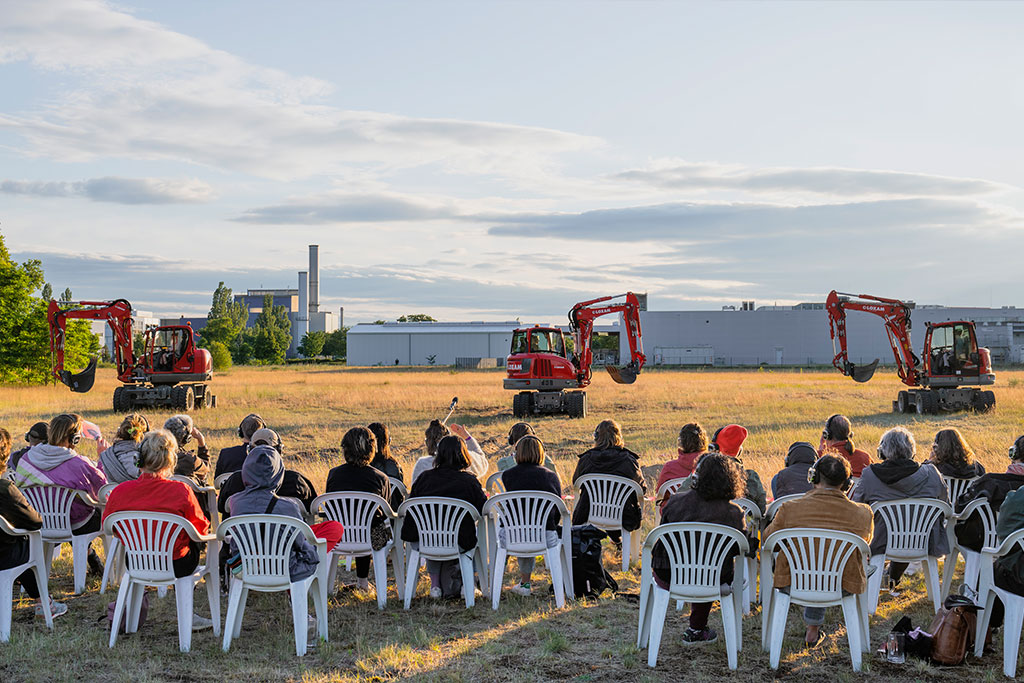
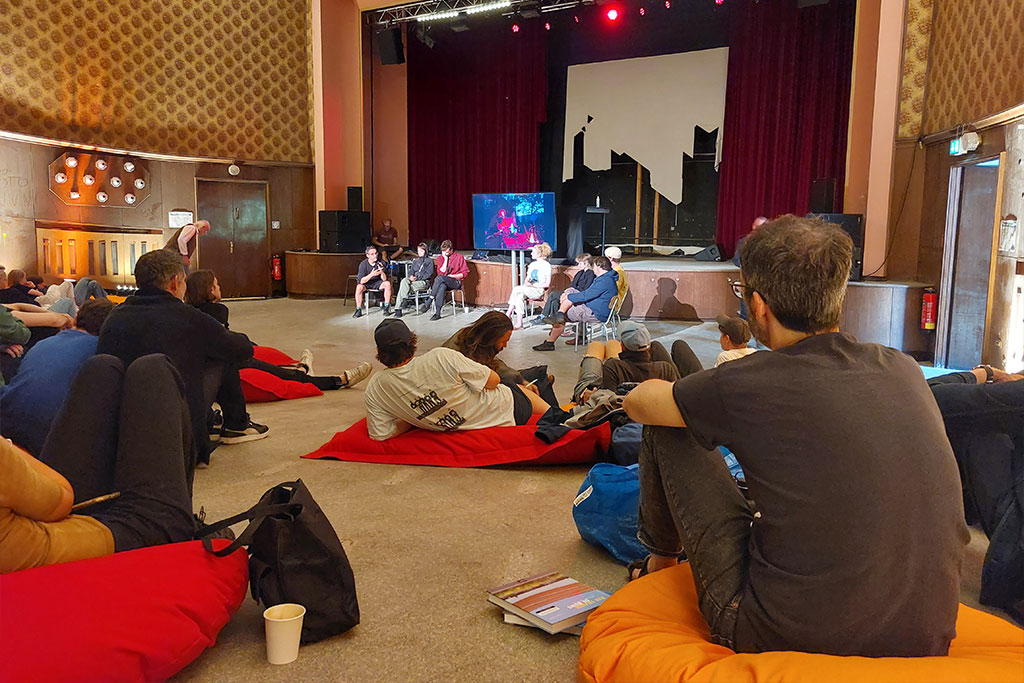
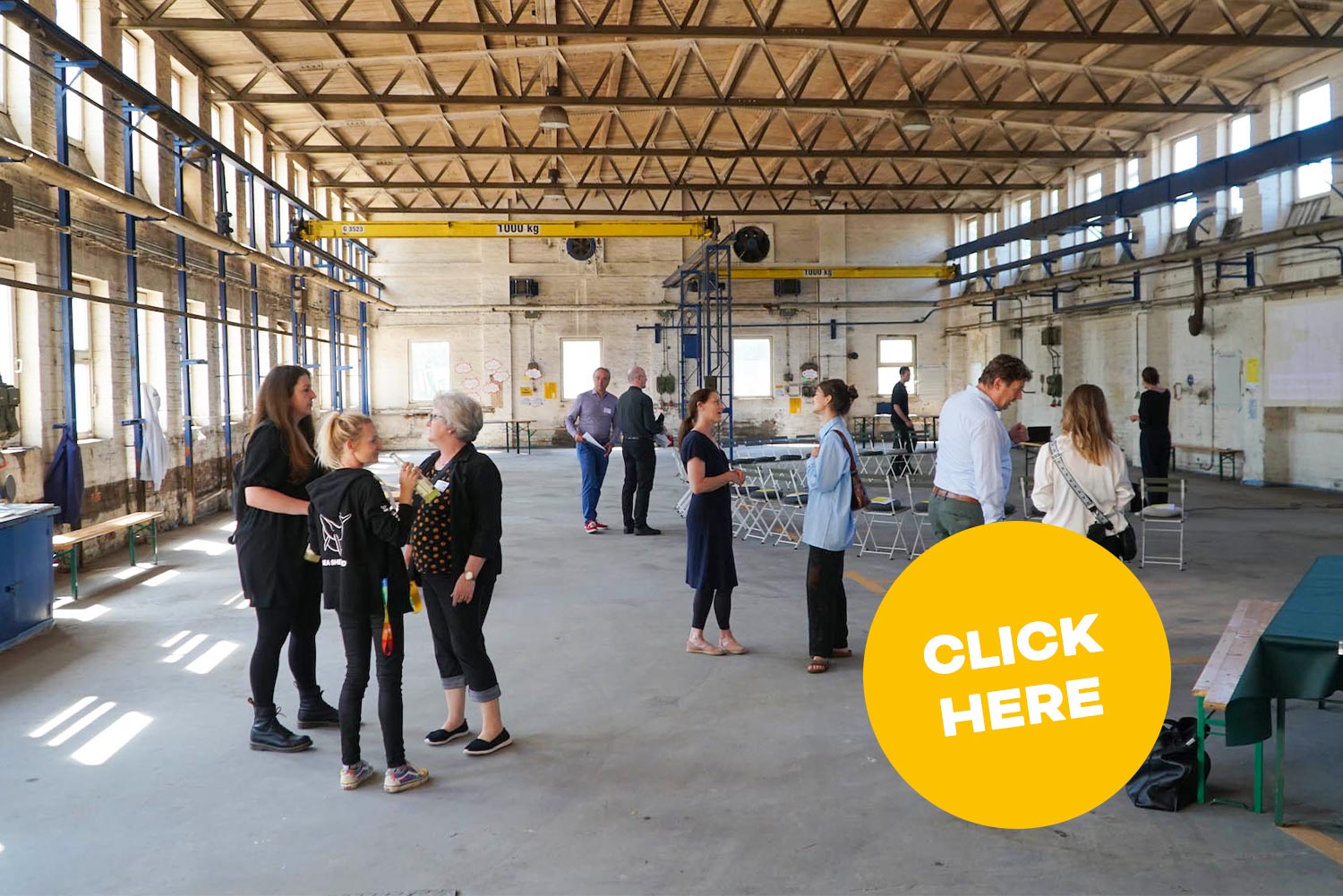
The mobile pavilion will be used for the first time during the OSTEN Festival in September 2026. Here, the pavilion will serve as a space for conversation, a workspace, and a starting point for various excursions and explorations of the industrial and chemical region, artistically tracing the legacy of the (chemical) industry and contextualizing it culturally. The festival also draws on the tradition of the Bitterfelder Weg, which once connected artists and workers in collaborative art production. Together with former workers and residents of Bitterfeld-Wolfen, as well as artists and scholars, workshops, discussion panels, bus tours, and many other formats will be developed and carried out.

The Pavilion as Part of the newly reopened Kino Wolfen starting in 2027

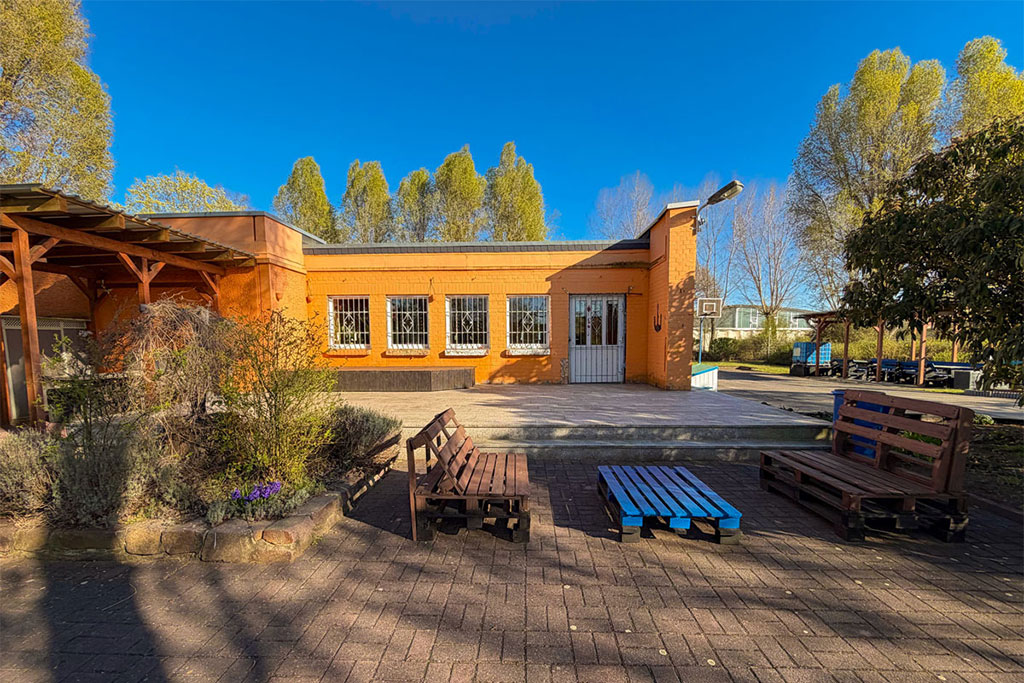
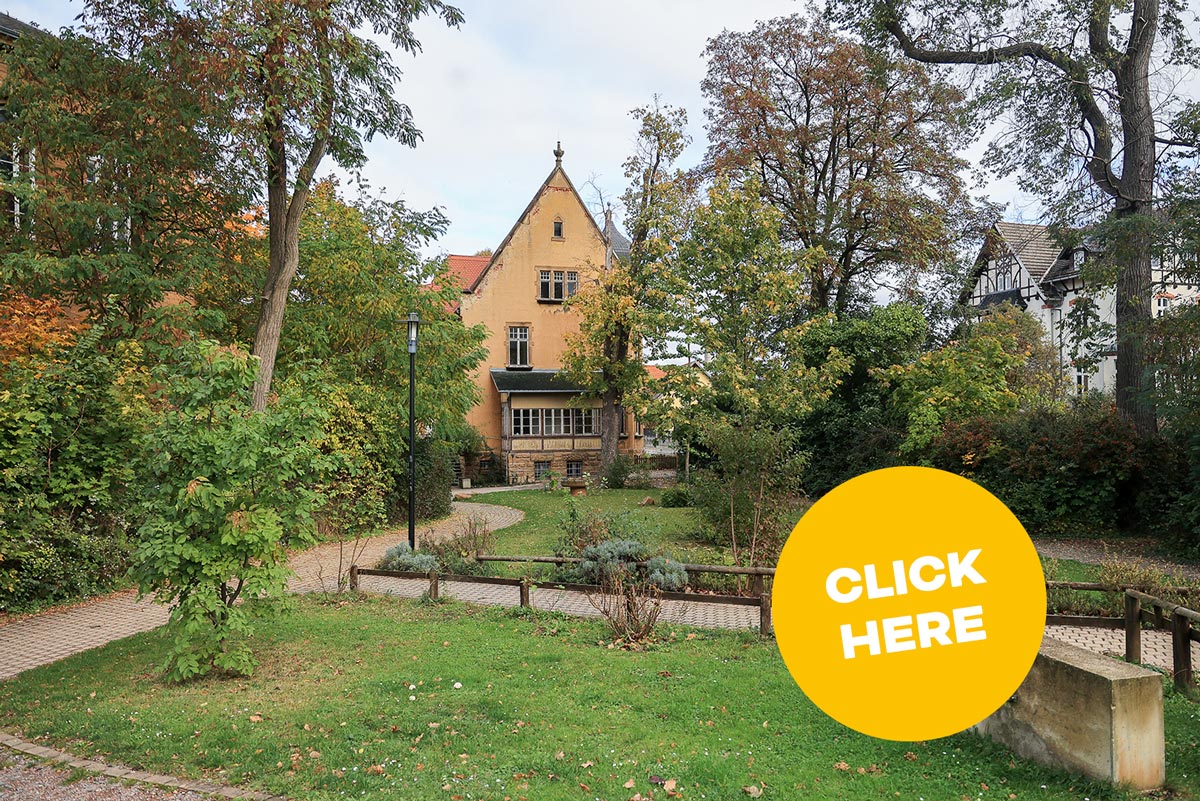
In the spring of 2027, the mobile pavilion will move into the garden of Kino Wolfen, which is set to reopen as a hub for civil society to mark its 70th anniversary. Once there, the pavilion will become a permanent fixture at Kino Wolfen, serving as a space for events and community gatherings.

With the cinema’s opening, a film program will also launch, discussed and curated by a citizens’ advisory board.

Bitterfeld Youth Engaged in Industrial History and Urban Development

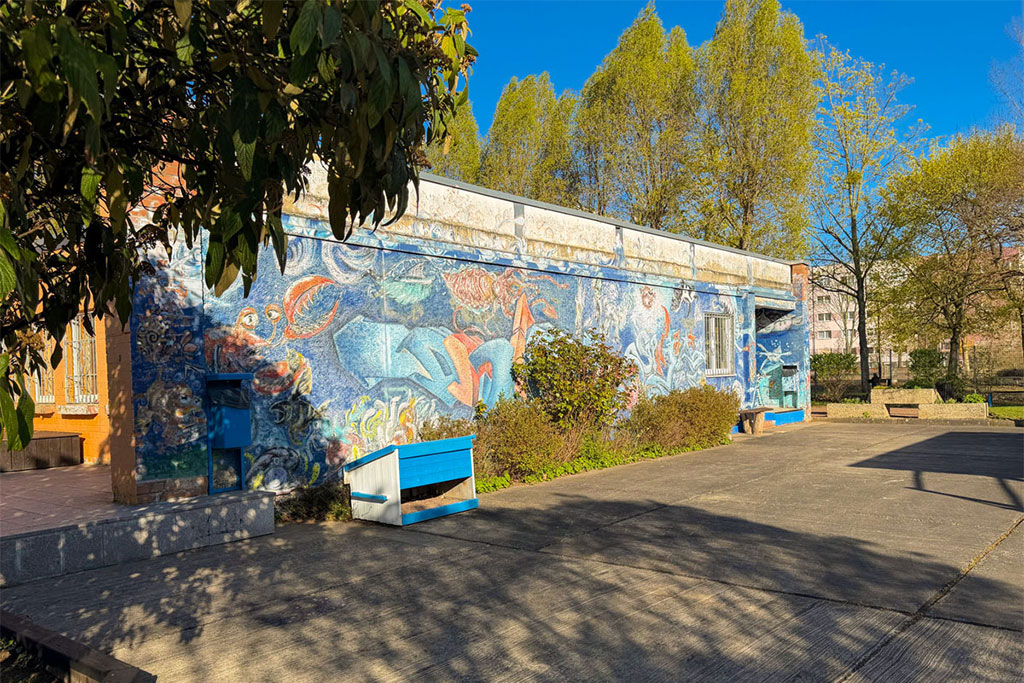
Through the work of Jugendclub 83 e.V., children and young people will be introduced to the industrial cultural heritage and the aesthetic dimension of the industrial-influenced architectural and living culture in Bitterfeld-Wolfen and will help shape the city’s development for the future. To this end, the needs of young people in their residential and living environments are first being researched. Through surveys, workshops, and various activities—ranging from graffiti workshops to online building—the design and functionality of a community space are being practically determined and developed.

Project impressions

Criteria according to the NEB_Compass

Ambition II – to connect
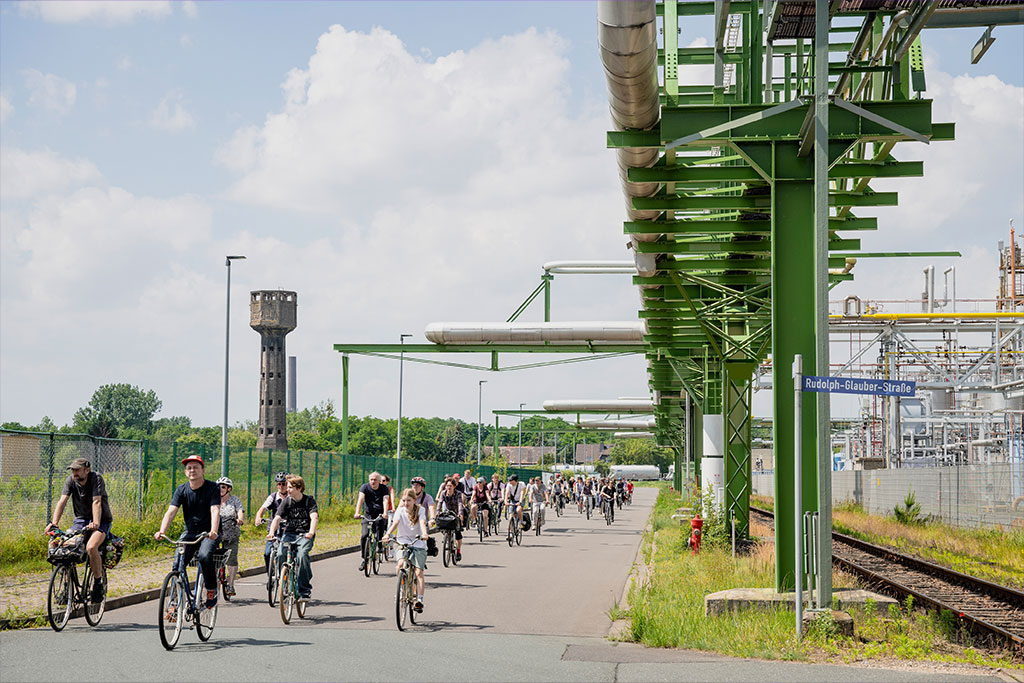
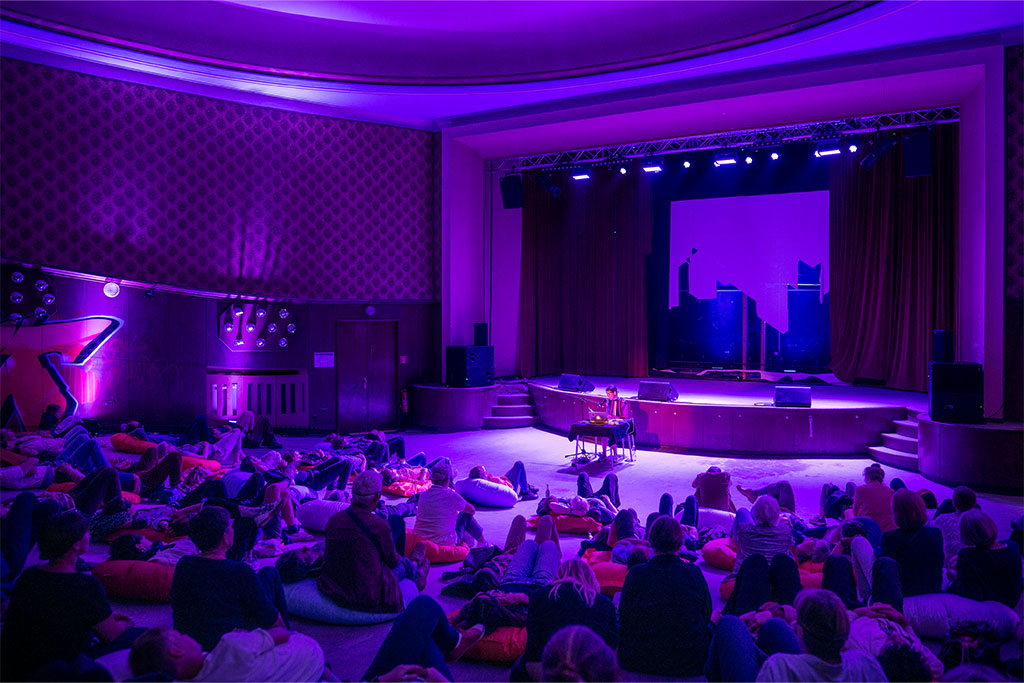
The project views aesthetics as a collaborative and process-oriented design approach that unfolds through participatory artistic practice, site-specific formats, co-creative spatial design, and a conscious engagement with industrial cultural heritage. The goal is to open new perspectives on Bitterfeld-Wolfen, create spaces that can be experienced through the senses, and actively involve people from diverse backgrounds in aesthetic processes. Based on a participatory approach, artists collaborate with local stakeholders—including former industrial workers, children, young people, and community initiatives—on long-term projects that combine social, cultural, and ecological themes and enable new perspectives on the region. The formats evolve from the respective contexts and range from night walks through former industrial sites, synchronized swimming in the Goitzsche, lyrical bike tours through the chemical park, to walks, performances, film screenings, or workshops at various locations throughout the district. This aesthetic openness makes it possible to precisely connect content and target audiences, creating unusual experiential spaces in which encounter and perception take center stage. In addition, children and young people in particular play an active role in shaping their environment: In workshops and community art initiatives, methods such as mood boards, upcycling projects, and iterative design processes give rise to vibrant spaces that make deliberate use of colors, shapes, and materials and bring the participants’ individual perspectives to light. The neighborhood’s distinctive aesthetic—such as the architecture of the prefabricated buildings—is consciously incorporated and reinterpreted as part of the cultural heritage. Through the development of prototypes, the collection of feedback, and collaborative refinement, functional, sensually appealing, and identity-forming places emerge that have an impact both visually and atmospherically, strengthen positive emotions, and promote well-being. Aesthetics is understood as a collective practice that connects design, participation, and cultural reflection and makes the diversity of the place tangible. The project builds on the long-standing local experience of both associations: In recent years, around 20 regional associations and institutions have participated, while approximately 25 network partners collaborate with Kulturpark e.V.
Ambition I – to repurpose
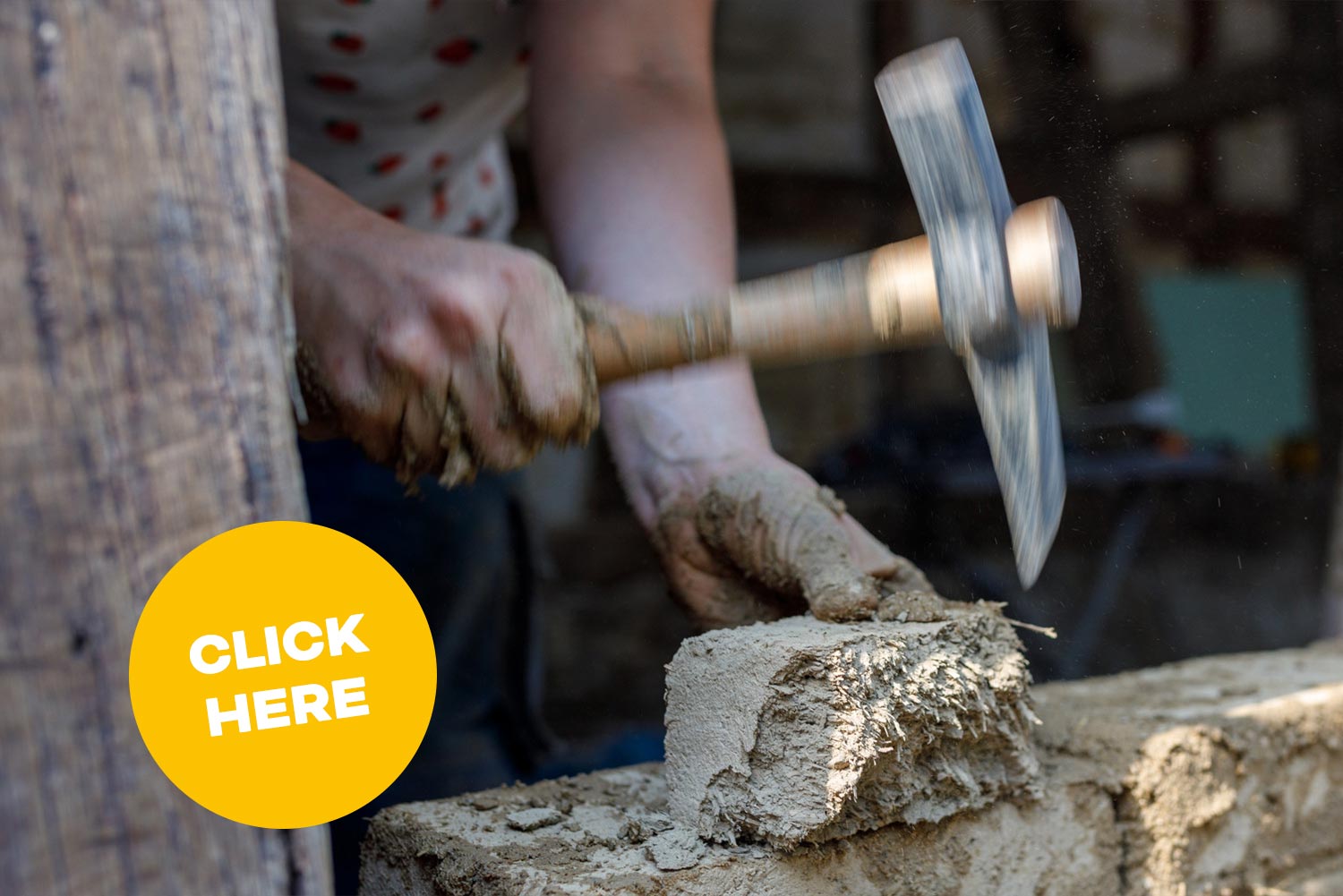
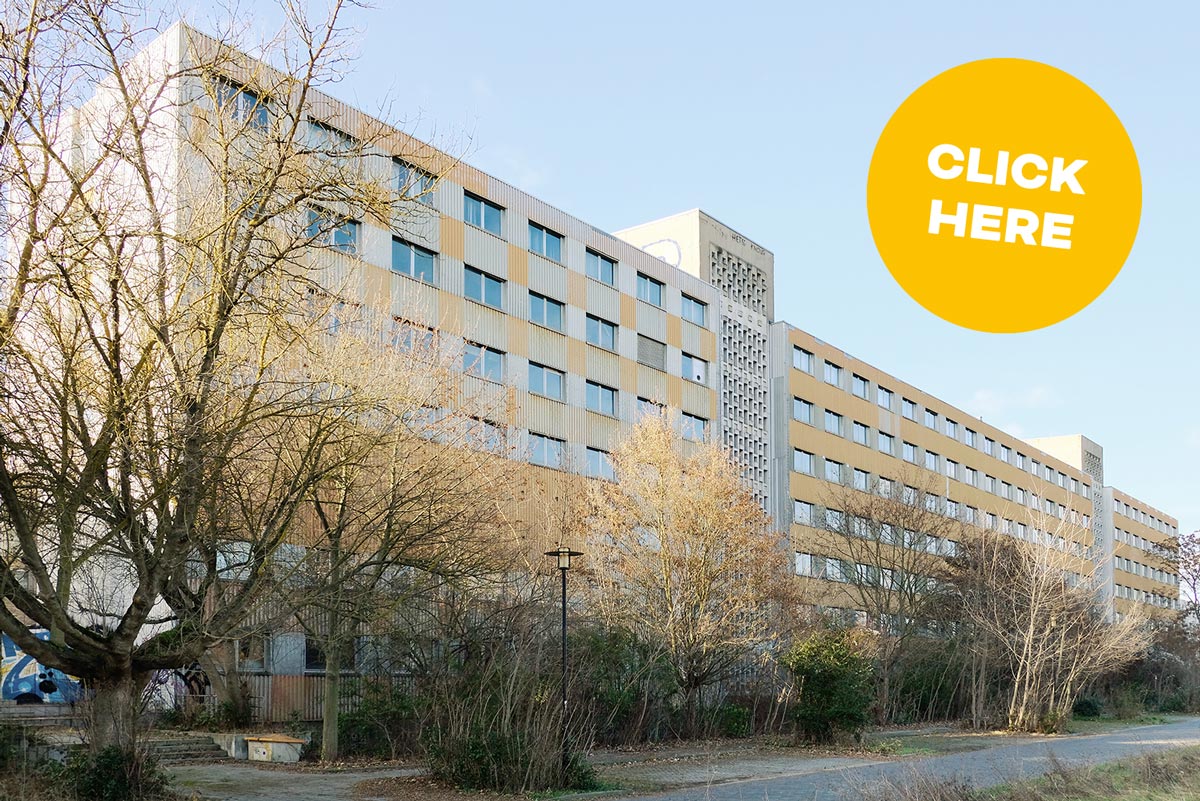
Wolfen-Nord exemplifies the profound structural transformation of post-industrial regions, characterized by population decline, social upheaval, and the loss of industrial identity. The project views sustainability as a multifaceted approach that integrates ecological, social, and cultural dimensions and unfolds across five key areas of action: participation and social inclusion, climate-conscious project management, resource-conserving circular thinking, local value creation, and energy and food concepts. The goal is to create long-term social prospects and to actively involve young people in transformation processes, while at the same time building on the successful ecological renewal of the Bitterfeld-Wolfen region. At the heart of the initiative is the active involvement of children and young people as experts on their own living environments, who explore their neighborhoods, identify strengths and weaknesses, and work with experts to develop sustainable development strategies. Through participatory workshops and community art formats, concrete designs for vibrant spaces are created, consistently using environmentally friendly, existing, recycled, and reused materials, and reducing waste through upcycling approaches. Sustainability is also understood here as a social and political process based on empathy, creativity, and the ability to engage in dialogue, aimed at strengthening young people’s democratic agency by involving them as equal partners in planning processes. At the same time, the project sets standards in climate-neutral project management through comprehensive CO₂ reduction, the use of green IT, the prioritization of climate-friendly mobility such as rail and bicycles, and a strict limitation on air travel. Resources are conserved through the selection of durable, modular, and demountable materials, recyclable packaging, waste prevention, and proper disposal, while environmental criteria and reusability are considered in all purchases. The pavilion itself reflects these principles, as it is constructed from recycled and local materials with a connection to industrial heritage, is built in collaboration with residents, incorporates local knowledge, and enables long-term use through interchangeable and repairable components. This is complemented using green electricity, a goal of self-sufficient energy supply via solar panels, and predominantly vegetarian and vegan catering. In this way, the project combines ecological innovation with social participation and creates a sustainable practice that fosters resource awareness, regional identity and sustainable development.
Ambition II – to consolidate
The project focuses on inclusion through collaboration with various institutions, associations, and local initiatives to reach as many people in the region as possible. Partners include Diakonie Wolfen, with which Kulturpark e.V. has already carried out projects in 2024, as well as numerous schools in the region, including the Sonnenlandschule Wolfen special education school. Furthermore, there is a partnership with the Mehrgenerationenhaus Wolfen to specifically reach refugees, as well as with the inclusive film editorial team AugenBlicke of the Wuppertal Media Project to foster participation for all. By directly involving the respective communities, diverse voices and stories are made audible and shareable within the project, for example regarding contract or forced labour as well as queer life in the GDR. The program is wide-ranging and appeals to diverse audiences: non-academic and academic, young and old, German-speaking and international—all are welcome. This approach views diversity as an enrichment while avoiding the explicit naming of groups, thereby establishing a new sense of normality in collective action. Special effort will bring together diverse, sometimes marginalized groups to work on projects together, fostering a more comprehensive understanding of community. Through diverse peer groups, collaboration is encouraged, visibility is enhanced, understanding is deepened, and the exchange of cultures, experiences, and perspectives is supported. Regular training sessions and awareness-raising methods strengthen the project team’s awareness of inclusion. Feedback loops help identify and remove barriers early on. The project values equality, accessibility, and affordability to ensure fair opportunities for everyone. The goal is a welcoming, inclusive environment that offers safe spaces, promotes equality, and gives everyone a voice.
Ambition II - to co-develop
The project “A Place for Industrial Culture – A Place for the Future” is based on a consistently participatory approach. The project’s content is developed in close collaboration with the people of Bitterfeld-Wolfen. Art and culture serve as a shared space for work and communication, bringing together local experiences, international perspectives, and artistic practices. Kulturpark e.V. builds on its long-established method of social and artistic practice: artists from the region and from international contexts collaborate with residents on long-term projects. In this way, dialogues emerge between different generations, social backgrounds, and worlds of experience. This form of active engagement also builds on the tradition of the Bitterfelder Weg, which consciously linked cultural production with the lived realities of the region’s workers and residents. Building on this, the project brings artists and former industrial workers together once again to symbolically “go into production”—this time in a cultural and social sense. One example of this approach is the “Werksorchester” project, launched in 2022, in which children and young people taught former industrial workers how to play an instrument and developed a concert program together with composer Ari Benjamin Meyers. Such initiatives demonstrate how artistic collaboration fosters local experiences and new connections. Through this open and multifaceted approach, the project reaches diverse target groups—from young people and intergenerational groups to perspectives that are often underrepresented in cultural discourse. Participation not as a method, but as a fundamental principle for the long-term development of a shared cultural space.
Ambition III: to work globally
The starting point is close collaboration with existing stakeholders in Bitterfeld-Wolfen. Kulturpark e.V.’s approach aims to highlight, strengthen, and connect existing initiatives rather than building new structures alongside them. In a city where public spaces for social interaction are increasingly disappearing and institutional scope for action is shrinking, the project creates an open space for exchange, shared storytelling, and new collaborations. In this way, it serves as an interface between local initiatives, cultural institutions, academia, business, and artistic practice. The ecological, social, and cultural legacy of industry in Bitterfeld-Wolfen reveals parallels with other post-industrial sites around the world. For this reason, Kulturpark e.V. has been collaborating for years with artists from Ukraine, Argentina, the U.S., Japan, and Belgium. Since 2018, Kulturpark e.V. has built a wide-ranging network: from local partners such as schools, social institutions and cultural initiatives to regional institutions such as universities and theaters, to national and international cultural organizations, festivals, and educational institutions. This network enables new artistic formats, expands target audiences, and creates learning processes that connect local experiences with global discourses. In this way, the project develops a model of cultural urban development that is rooted in the local community, takes a systemic approach, and remains compatible with international standards. It combines everyday knowledge, artistic practice, and social responsibility, thereby creating spaces where new forms of collaboration, participation, and shaping the future can emerge.
Ambition III – to be beyond-disciplinary
The process brings together non-academic partners, associations, schools, urban planners, policymakers, the business community, the academic sector, and artists in collaborative design initiatives. Young people, as experts on their own lives and communities, are actively involved in the development of sustainable, inclusive, and aesthetically pleasing urban spaces. Creative methods such as participatory workshops, mobile action spaces, and community art projects combine formal knowledge from administration, education, and research with informal cultural and practical knowledge. This creates public spaces for learning and design where new narratives for industrial transformation will be developed. Excursions and thematic walks exploring chemical culture and industrial heritage—for example, in cooperation with the Just Transition Center at Martin Luther University Halle-Wittenberg or the Bauhaus Dessau Foundation—convey knowledge on-site and create concrete points of connection for transformation. The targeted bringing together of diverse stakeholders gives rise to transdisciplinary formats in which, for example, artists, scientists, and the local business community jointly exchange perspectives and develop new projects. The project serves as a transferable model for intergenerational, participatory, and impact-driven urban development and demonstrates how transdisciplinary work connects local participation, knowledge exchange, and creative urban design.
This is how it works:
NEB-Compass (PDF)

Durchführung

Verwendete Tools mit Darstellungen des Arbeitsprozesses

Weitere Projekte