Project Name:

Forge of the Future:
Industrial Culture — Youth Shaping Change

You are currently viewing a placeholder content from Google Maps. To access the actual content, click the button below. Please note that doing so will share data with third-party providers.

More Information
Project details:
Project Partners:
1. Bildungszentrum Wolfen-Bitterfeld e.V.
2. Forum Rathenau e.V., Bitterfeld-Wolfen
Project Type:
Educational project / sustainable vocational training / industrial cultural identity linked to structural change
Size of property:
Project Duration: 2026 – 2027
Contact:
Project management Sándor Mohácsi
Bildungszentrum Wolfen-Bitterfeld e.V.
Saarstraße 6
06766
Bitterfeld-Wolfen
Forum Rathenau e. V.
Andresenstraße 1A
06766
Bitterfeld-Wolfen
e-mail:
zukunftsschmiede@forum-rathenau.de

Project Description

In rural regions such as Anhalt-Bitterfeld, traditional career guidance no longer reaches many young people. In particular, future-proof careers in the fields of sustainability, climate protection, technology, and social services are often not presented in a sufficiently appealing way.

This is where the project comes in, developing low-barrier, hands-on programs right in the community (schools, youth clubs, public events) to spark interest in future-oriented careers. The goal is to inspire young people starting in 7th grade to pursue sustainable career paths in the region and to actively involve them in shaping their own futures.

The project links the industrial cultural identity of the Bitterfeld-Wolfen region with the current challenges of structural change: sustainability, digitalization, and securing a skilled workforce. It connects the legacy and heritage of Bitterfeld’s industrial history with its innovations in materials and education—in the spirit of forward-looking career guidance.

Project Goals

The goal is to provide young people in the Central German Mining Region (Anhalt-Bitterfeld district) with a tangible bridge between the past and the future.

Specific project objectives are:

  • Equal educational opportunities through mobile, outreach-based career guidance in urban and rural areas
  • Strengthening the supply of skilled workers in sustainable technical and social professions
  • Promoting creative competence: young people as agents of change
  • Activating industrial culture as a space for education and experience
  • Communicating innovations in materials and techniques
  • Increasing the visibility and appeal of sustainable career fields


The project is structured into five interlinked modules that together form a practical, aesthetically appealing, and participatory educational concept—mobile, grounded in industrial culture, and methodologically diverse:

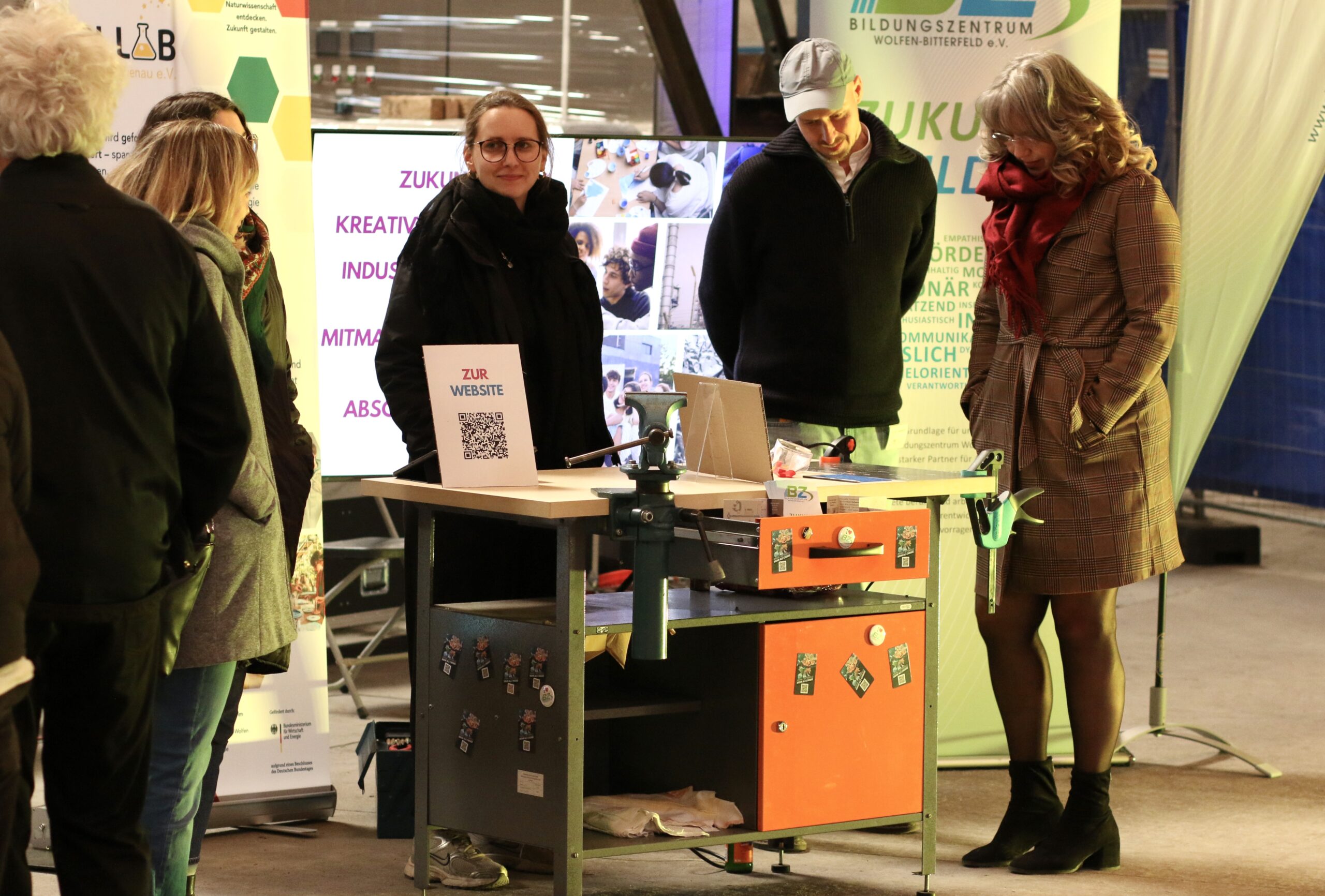
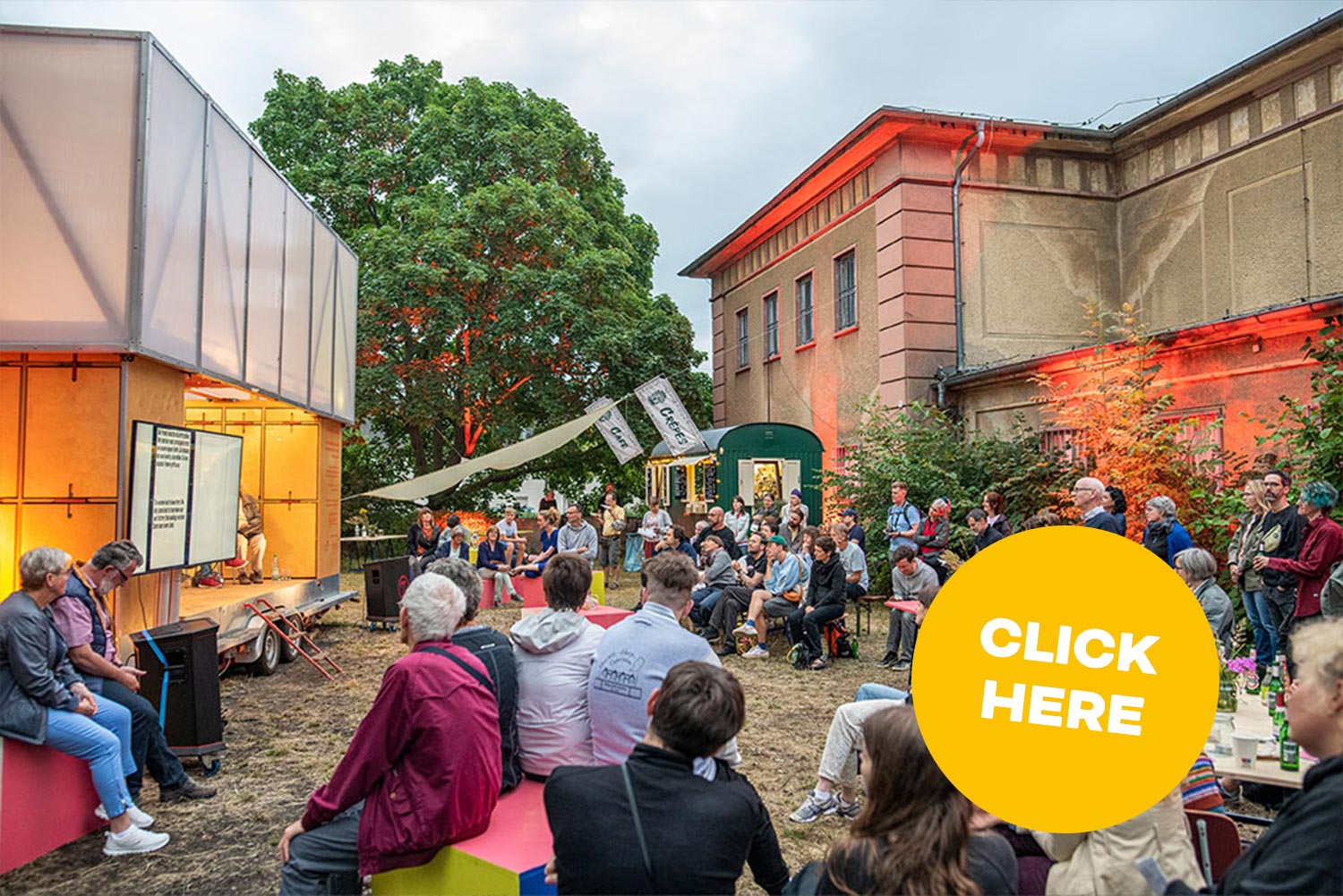
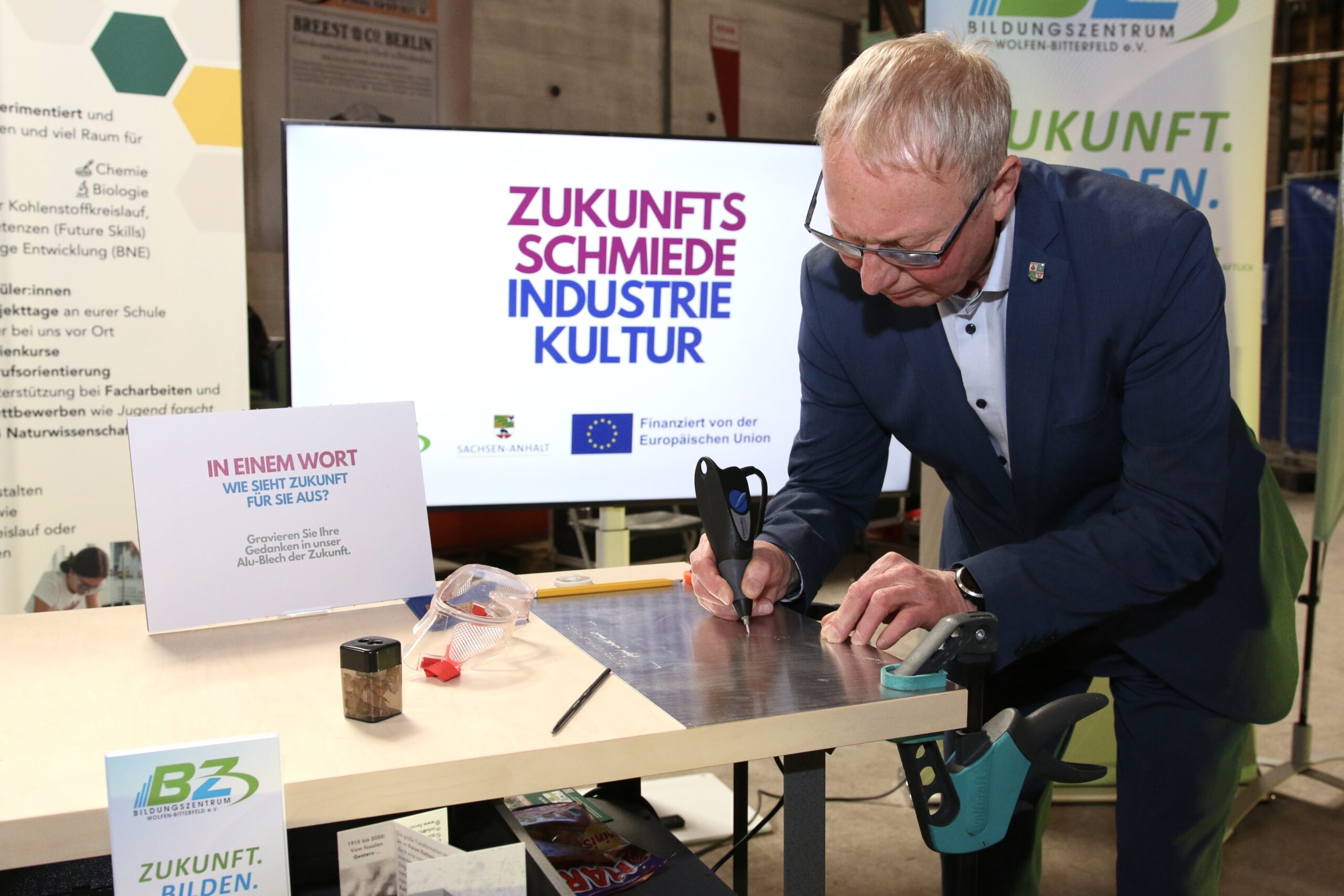
The future needs curiosity. The Future Mobile comes right to the schoolyard or the town square for the city festival. Using VR headsets, interactive stations, and workshops, participants explore sustainable careers in the region.

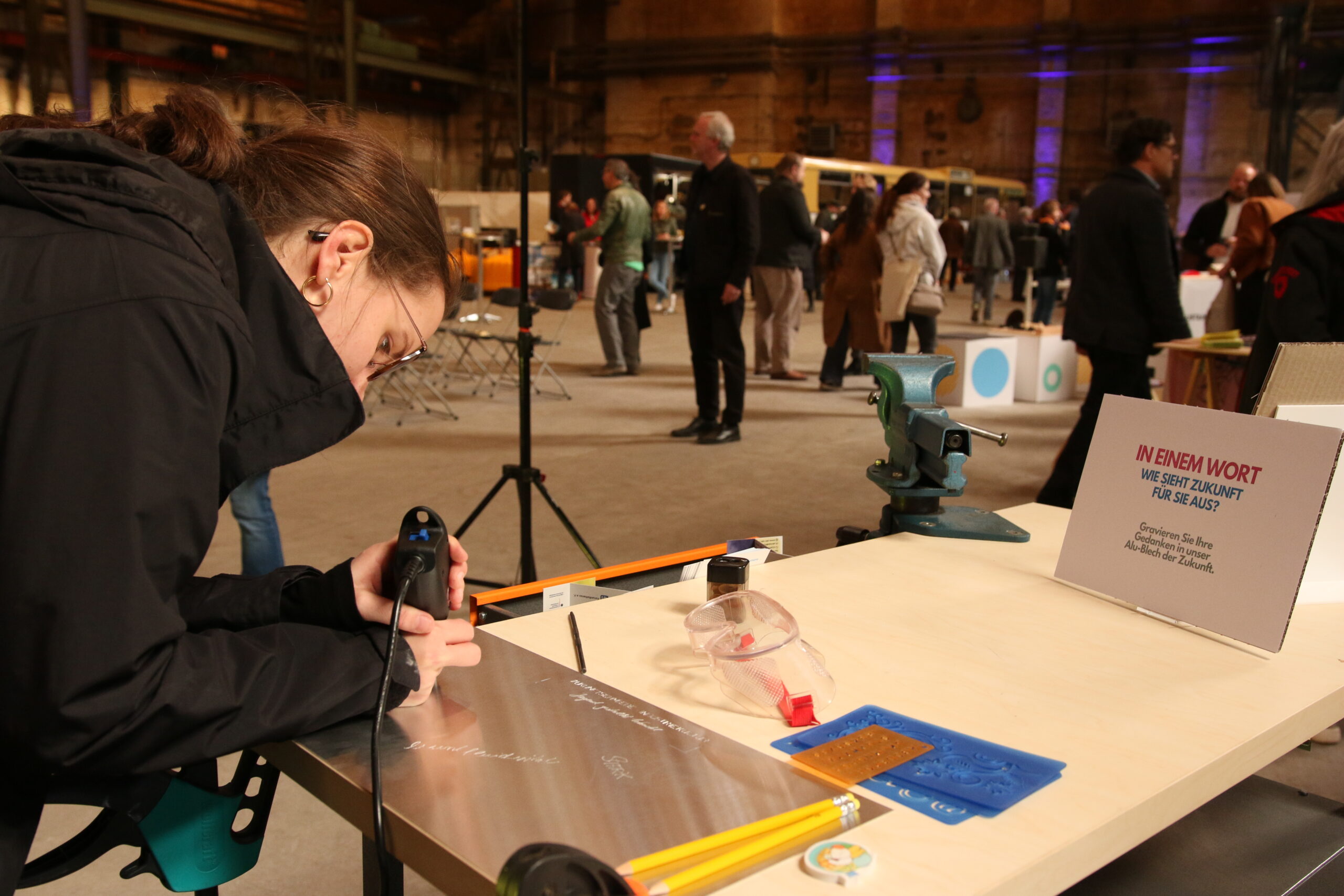
The future needs creativity. In artistic workshops, participants develop their own ideas: career profiles, objects, or future scenarios. Here, the future isn’t just talked about—it’s touched, shaped, designed, and presented.

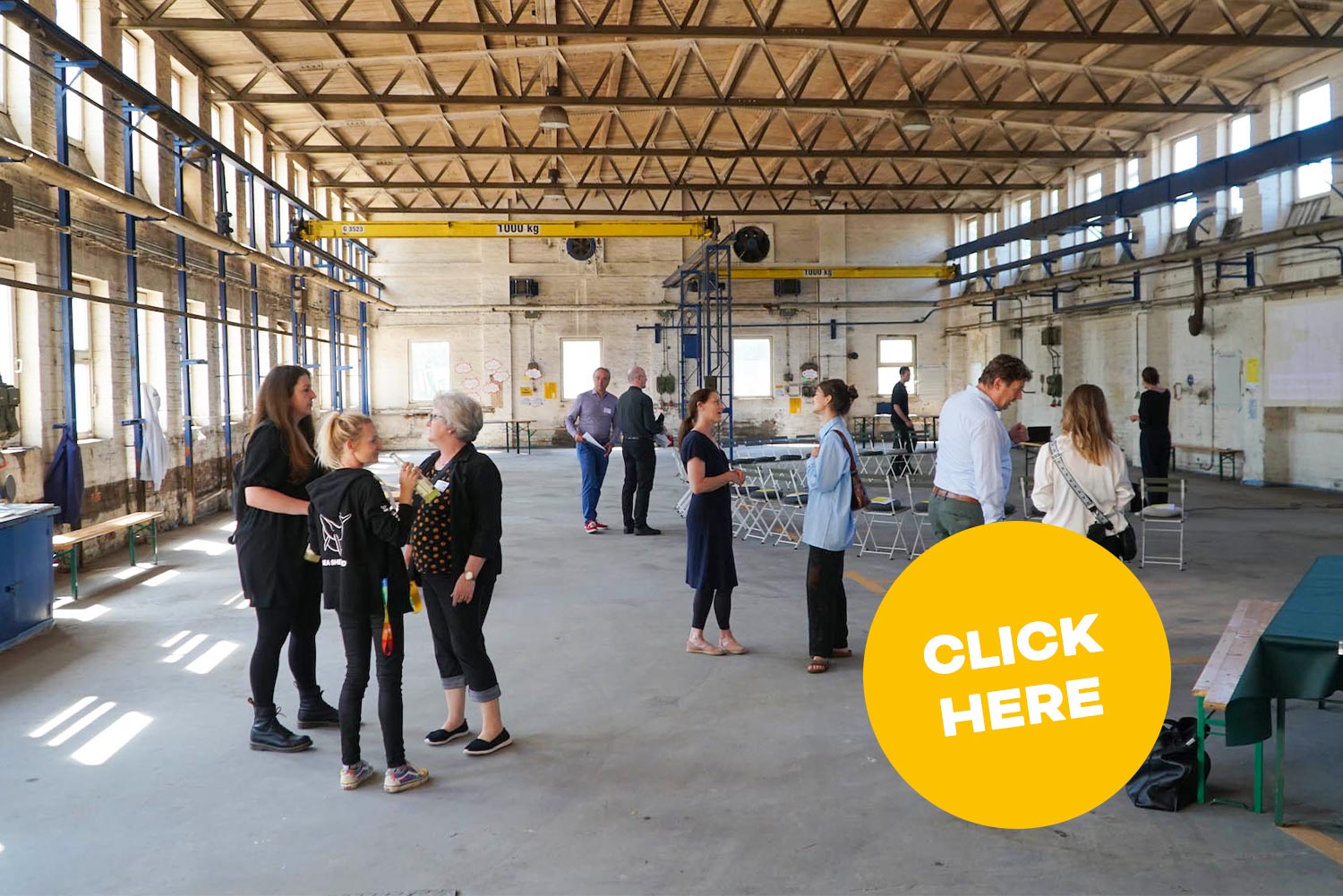
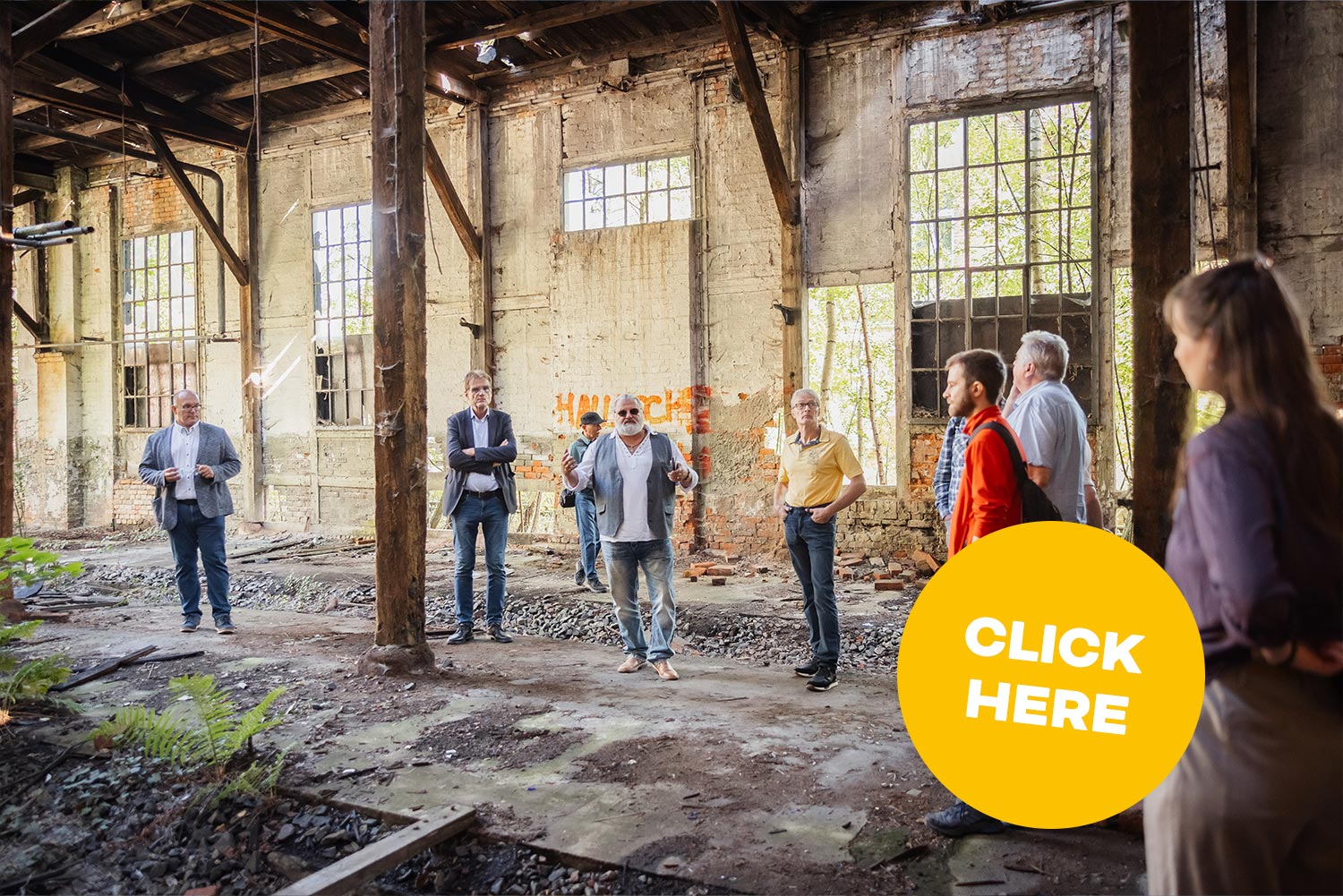
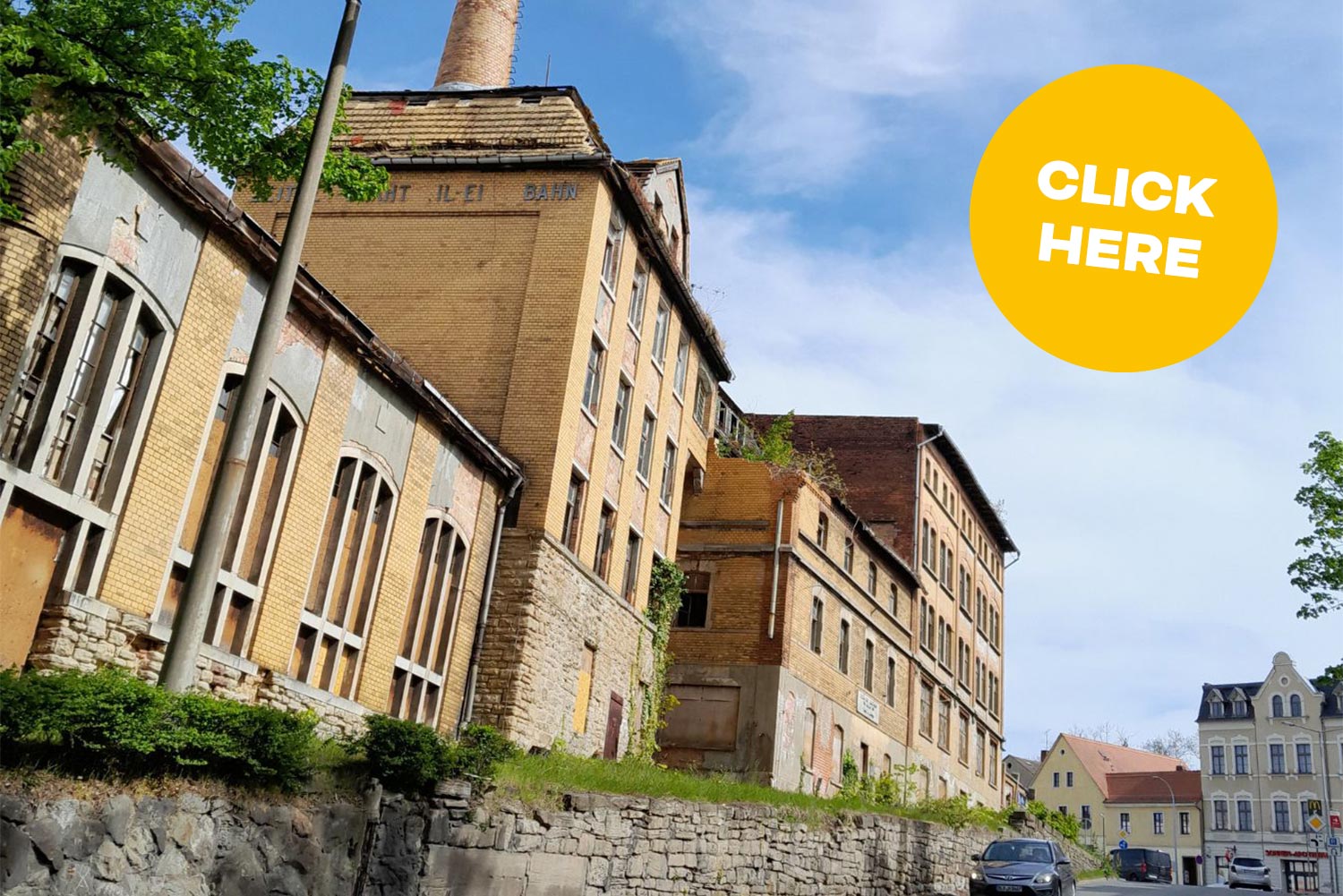
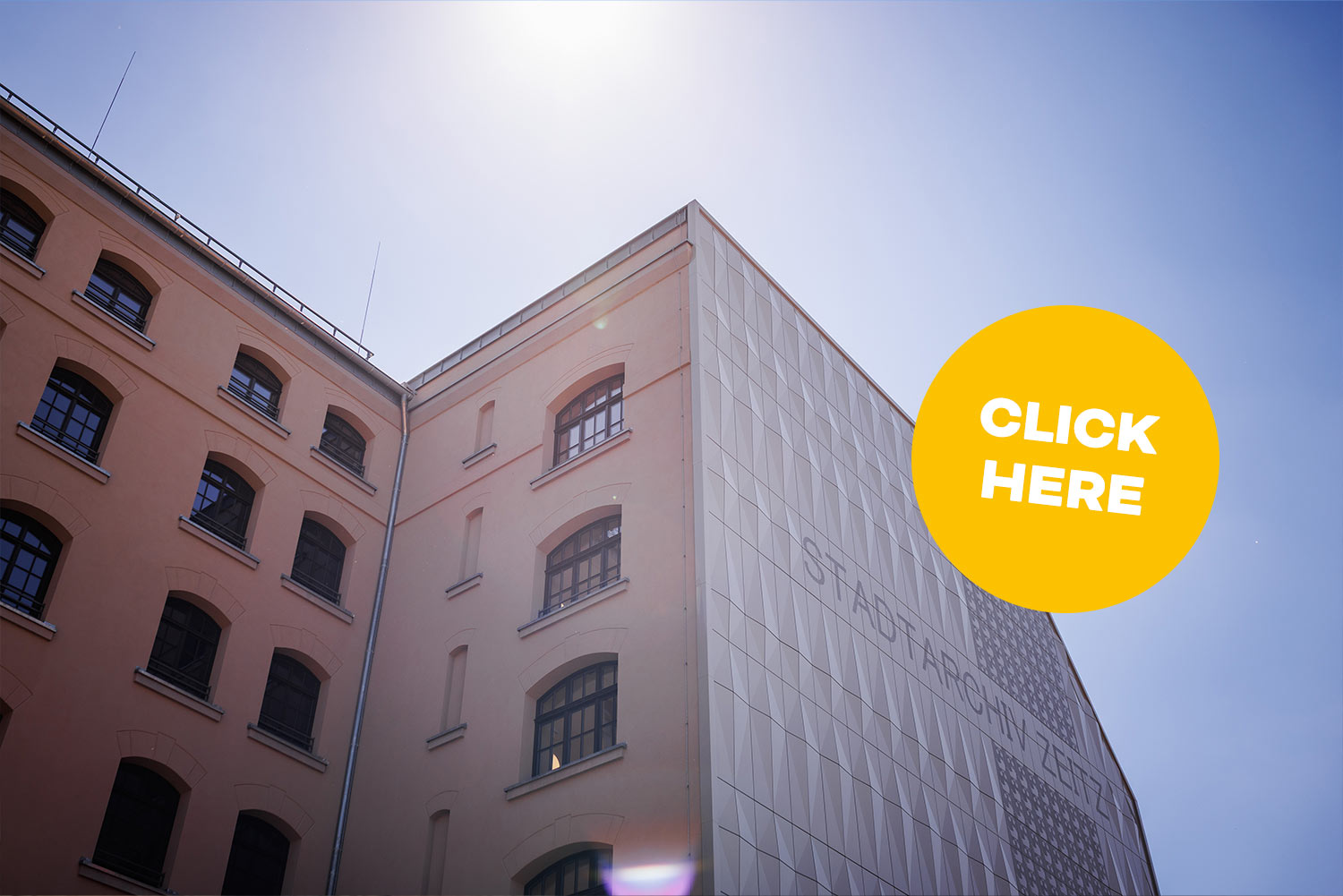
The future needs the past. At industrial heritage sites in Anhalt-Bitterfeld, young people meet eyewitnesses who have experienced the transformation firsthand. Those who understand where a region comes from have a better sense of where it can go.

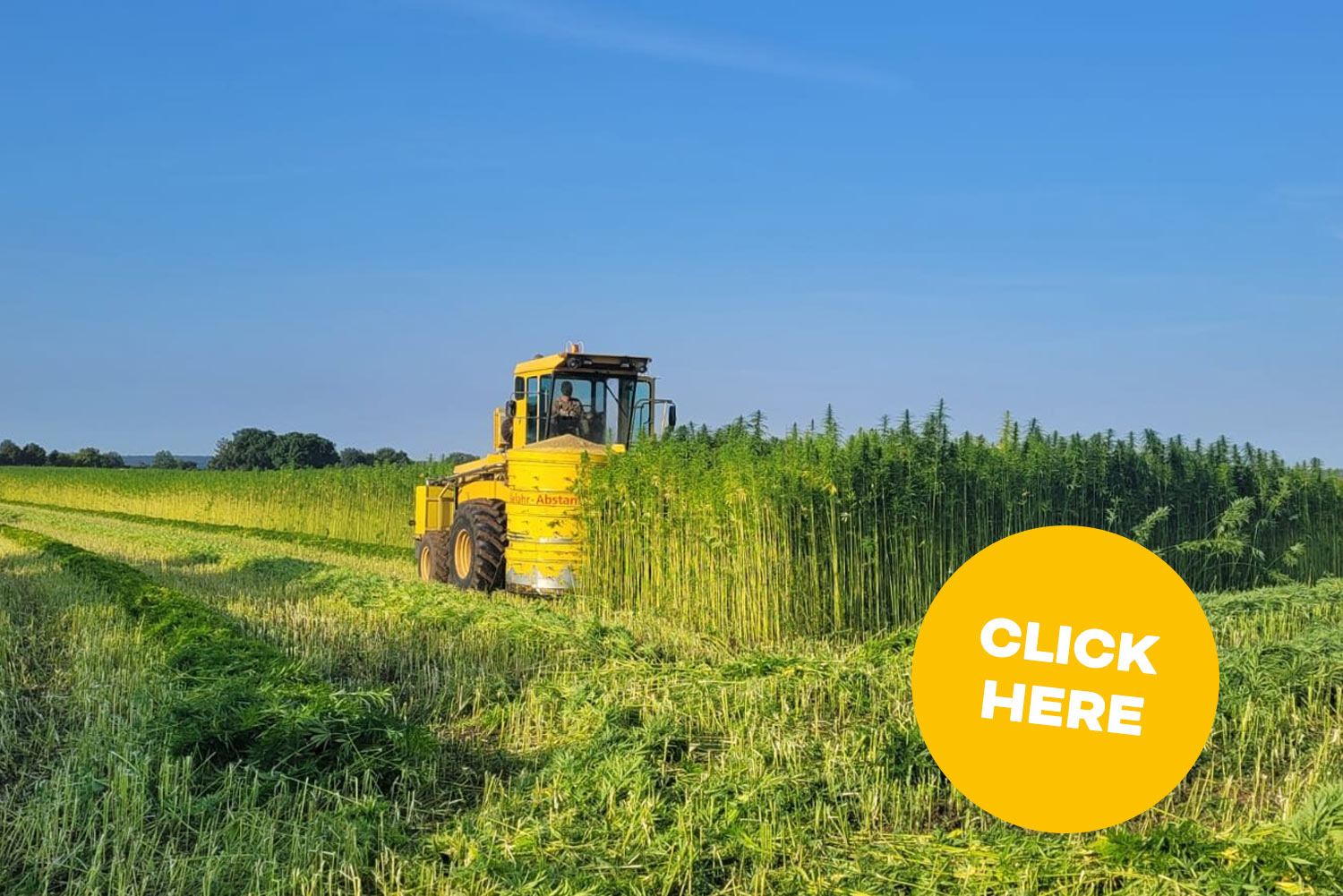
The future needs substance. From the bauxite mine to the beverage can: In the mobile hands-on exhibition “Aluminum: From Bitterfeld to the World,” participants discover a material that surrounds us constantly and is a key material of the future.

The future needs all of us. The closing festival belongs to the young people because they can organize it themselves. They plan, design, and present what truly interests them. What emerges is not a school project, but a celebration by young people, for young people, for their region.

Using innovations in vocational training as a model, the project demonstrates how the legacy of industrial culture and NEB_PRINCIPLES interact, making the findings transferable to other regions.

Criteria according to the NEB_Compass

Ambition III – to integrate
The project draws on approaches from aesthetic education to help young people cope with changes in their region. Aesthetic education fosters creativity, imagination, and the ability to reflect on oneself and one’s surroundings. In this way, it empowers young people to actively shape transformation in their own lives and in society. Aesthetics are also reflected in the commitment to designing appealing learning environments and outcomes: the pop-up exhibitions are intended to be beautiful and creative. Students’ work (e.g., upcycled artworks) demonstrates that sustainability and good design can go hand in hand. Aesthetic approaches to places (e.g., photography, storytelling, mapping) and presentations with sustainable content open new perspectives and encourage active engagement.
Ambition I – to repurpose
In the project “Zukunftsschmiede Industriekultur – Youth Shaping Change,” sustainability is a guiding principle—both in terms of content and implementation. It combines an exploration of industrial heritage with the active shaping of sustainable living and working environments. In the mobile learning stations, sustainability becomes a tangible experience: multimedia formats, tactile materials, and the key material aluminum open up pathways to the circular economy, recycling, and related career fields. The past and the future enter into dialogue—as an invitation to rethink industrial innovation. The creative workshops translate this vision into collective action. Through co-creation and design thinking methods, young people develop their own ideas for a sustainable future. Upcycling becomes a creative practice: seemingly worthless waste materials are transformed into meaningful new objects—blending everyday utility with artistic expression. Aesthetics and sustainability intertwine, demonstrating that transformation is also a matter of design. The results continue to have an impact beyond the project’s duration: through exhibitions, media formats, and public presentations, the young people’s ideas are brought to light and shared throughout the region. This fosters a sustainable transfer of knowledge that strengthens participation and provides long-term impetus for education, career choices, and regional development. Here, sustainability is put into practice—resource-efficient, collaborative, and forward-looking.
Ambition I – to include
Inclusion is achieved through the participatory approach of co-creation and the involvement of diverse target groups, regardless of educational background or social origin. The project creates spaces for interaction where students, teachers, older adults, industry representatives, and artists can develop ideas for the future together. In this way, it fosters cross-disciplinary and intergenerational collaboration. Through outreach programs (in schools, youth clubs, and at neighborhood events), the project also reaches those who rely on low-barrier access. The project is aimed at people of all genders and backgrounds and places special emphasis on inclusion. This includes a gender-sensitive approach—such as promoting girls in STEM careers—as well as barrier-free access to the programs.
Ambition II - to co-develop
The project is divided into several modules that together form a holistic approach to career guidance centered on industrial culture. Each module uses creative, participatory formats (co-creation) and mobile learning units at real-world learning locations. Module 1 (Mobile Learning Stations “Industrial Culture & the Future”): Each station features an interactive combination of analog and digital learning elements, such as participatory question formats. Module 2 (Creative Workshops & Co-Creation): In the creative workshop, artistic and design-oriented methods are combined with career orientation and participatory practice. In co-creation, young people develop their own ideas for careers, products, or solutions at the intersection of sustainability, the region, and transformation. Module 3 (Industrial Cultural Experience and Meeting Spaces): Through guided excursions, interactive tours, and participatory workshops, young people experience firsthand how work, technology, and society have changed and what career profiles, technologies, and sustainability issues are emerging as a result today. Module 4 (Aluminum from Bitterfeld to the World): Setting up a mobile, hands-on exhibition on the topic of aluminum as an example of innovation. Module 5 (Making the Future Visible – Conclusion and Transfer): Here, the project results will be showcased at a participatory closing festival. To this end, the young people will develop multimedia visions of the future and prepare them for an exhibition and presentation.
Ambition I – to work locally
The project connects local schools, educational and cultural institutions, and regional businesses within the district. The goal is to strengthen the region through joint educational and cultural initiatives by establishing collaborations and partnerships within the district and the state of Saxony-Anhalt, and by organizing joint events and workshops. This promotes education, cultural exchange, and local economic networking. A connection to the NEB_NETWORK and the Saxony-Anhalt Industrial Culture Network ensures knowledge transfer by sharing experiences, concepts, and best practices. This exchange promotes the professionalization and quality assurance of the project. The formats and approaches tested in the project can be transferred to other regions and integrated into existing structures. As a result, the outcomes will continue to have an impact beyond the project’s duration. The project creates a foundation for educational innovation that will be further developed and utilized by the project partners after the project concludes.
Ambition II – inter-disciplinary
The project combines education, design, sustainability, and industrial culture—four distinct subject areas that touch on both theoretical knowledge and practical experiences. The focus is on interdisciplinary collaboration across disciplines and the active involvement of young people and experts from a wide range of social sectors. Formal knowledge (e.g., school-based learning, theoretical expertise) and informal or experience-based knowledge (e.g., from craftsmanship, professional life, or everyday culture) are regarded as equally valuable and integrated into the project process. By involving non-formal knowledge partners (crafts, design, environmental educators, and industry representatives with practical experience and expertise outside the traditional education system) in joint workshops and co-design processes, perspectives, methods, and problem-solving strategies from real-world practice are incorporated. They act as mentors, coaches, or equal project partners and are thus active co-creators of the learning process, not merely supporters. The project process is designed to be collaborative. It combines co-creation with project-based learning and close cooperation with the community foundation as a representative of civil society. Real-world challenges are analyzed and addressed together.
NEB Kompass Zukunftsschmiede
This is how it works:
NEB-Compass (PDF)

Durchführung

Verwendete Tools mit Darstellungen des Arbeitsprozesses

Weitere Projekte